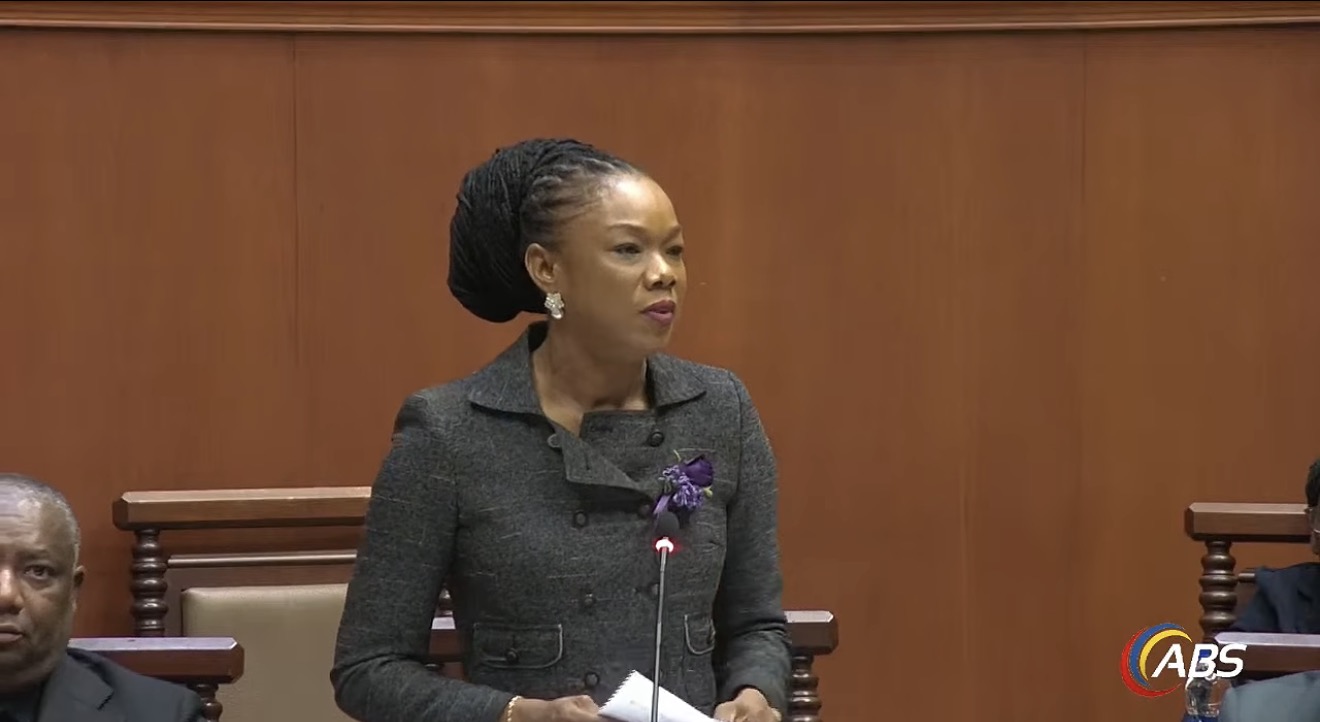
A fiery Senate debate over the 2026 Sexual Offences Amendment Bill in Antigua and Barbuda has ignited national conversation about systemic silence around child sexual abuse, after opposition Senator Malaka Parker delivered a forceful address calling out influential leaders who she claims have escaped scrutiny over alleged offenses. Parker’s core argument is unflinching: political power, public office and elevated social status must never act as a shield for anyone accused of sexually violating children, and the nation cannot genuinely confront this crisis while turning a blind eye to misconduct by powerful figures.
Parker pointed to what she described as a long-standing, troubling pattern of politicians implicated in child sexual abuse in Antigua and Barbuda’s national history, but stopped short of naming specific individuals or presenting concrete evidence against any single person. She pushed back against the idea that holding high public office erases a person’s harmful past or grants them the right to control public narrative. “Some people think that time, power and position can erase who they are,” Parker stated, adding that powerful authority figures often operate with a false sense of immunity, exerting control over homes, institutions and political offices without facing public scrutiny.
Her remarks immediately drew pushback from government-side legislators. Senate Vice President Phillip Shoul accused Parker of repeatedly referencing political predators without offering supporting proof. Senate President Alincia Williams-Grant echoed that objection, noting that Parker’s broad claims lacked substantiation and reminding the chamber that parliamentary statements are held to a stricter standard of evidence. Despite the intervention, Parker refused to back down from her core warning that status and influence should not protect suspected offenders.
The opposition senator also addressed what she described as ongoing personal attacks against her own private life, rejecting moral criticism from fellow politicians and affirming she would not be silenced by intimidation. “I have a history. I have a past,” she said. “I can stand tall. I cannot be intimidated, never, into silence.”
Beyond her critique of political complicity, Parker rooted her remarks in long-standing professional and personal engagement with the issue of child sexual abuse. As a former Social Transformation Minister, she recalled firsthand encounters with mothers and child survivors who had been failed by systems and communities. She shared heartbreaking accounts of children who reported abuse only to be disbelieved, and of families that prioritized protecting male breadwinners over vulnerable young victims. Parker emphasized that child sexual abuse is not confined to any socioeconomic group, cutting across all class lines rather than being limited to low-income or unstable households.
During her time in cabinet, Parker launched the Innocence Project, a year-long national anti-child abuse campaign centered on the slogan “Break the Silence.” The initiative brought together schools, entertainers, psychologists, dancers, religious leaders and other community stakeholders to deliver age-appropriate sexual education that teaches children to recognize inappropriate behavior, understand personal boundaries, and report abuse when it occurs. The campaign reached more than 20 schools across the country, and Parker noted that after many presentations, students and teachers approached campaign staff to share personal experiences or report concerns, proving the urgent need for open dialogue.
Parker argued that public education and early intervention are far more critical than post-harm punishment, noting that “the best deterrent to a sexual predator is the fear of being apprehended or detected.” She also secured participation in public service announcements from senators and participants in a national queen pageant, but revealed that her attempts to recruit Lower House politicians for the effort failed. While she suggested some politicians may have been uncomfortable publicly aligning with the campaign, she again declined to name names or provide evidence for the claim. She used her long record of child protection advocacy to push back against politicians who have only recently acknowledged the severity of the crisis.
Despite her sharp criticism of institutional silence, Parker expressed support for multiple key provisions in the 2026 Sexual Offences Amendment Bill. She particularly welcomed the removal of gender-based distinctions between offenders, arguing that female perpetrators of child sexual abuse must face equal legal accountability to male offenders. “They must be equal under the law,” she said. “They’re equally bad.” She also backed provisions addressing delayed abuse reports, noting that many survivors wait years to come forward due to fear, trauma, dependence on their abuser, or family pressure, and they should not be dismissed as unreliable simply for waiting to speak out.
Parker called on legislators to go further than the current amendment, however, urging the body to explicitly remove all statutes of limitations for child sexual abuse offenses. “Just as it is with murder, 50 years later, the crime can be solved,” she argued. She also pushed for an immediate increase in the age of consent from 16 to 18, noting that this change would align sexual offense law with other national legislation that defines anyone under 18 as a child. “Let us raise the age of consent and stop talking about it,” she said.
In closing, Parker called for broader updates to national child protection frameworks, noting that harsher prison sentences only address punishment after the fact, and do not build a comprehensive system to prevent abuse and protect vulnerable children. She argued that the Sexual Offences Act should be updated alongside child justice and child care legislation to create a cohesive protective system. Ultimately, her address challenged Parliament to uphold child protection standards consistently, even when allegations involve powerful politicians or people with institutional influence.