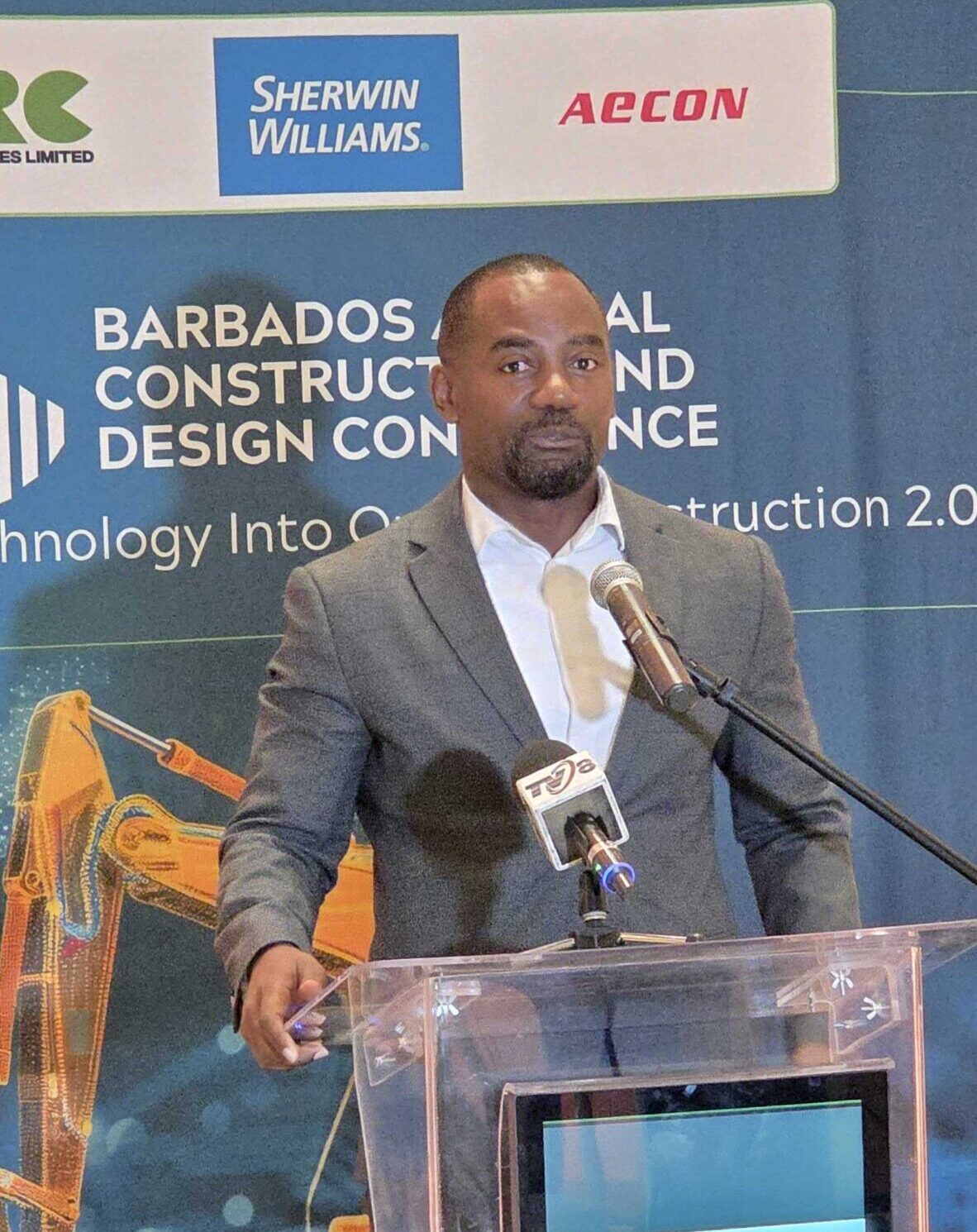
As Barbados gears up for an unprecedented wave of large-scale construction activity, Transport Minister Kirk Humphrey has issued a urgent call for sweeping industry reform, calling on stakeholders to modernise outdated building practices, rein in rampant cost overruns, and deliver more climate-resilient infrastructure that stands the test of time.
Humphrey laid out the government’s ambitious vision for a refreshed, forward-thinking national construction sector – branded “Construction 2.0” – during the opening address of this year’s Barbados Annual Construction and Design Conference, hosted Tuesday at the Wyndham Grand Sam Lord’s Castle. Speaking to an audience of industry leaders, contractors, and public sector officials, he pushed for widespread adoption of cutting-edge digital technology, strict financial accountability across all projects, and intentional adaptation to the growing threats posed by climate change.
Drawing on his experience leading the country’s social services portfolio in a previous role, Humphrey drew a striking parallel between the outdated regulatory frameworks that once hampered social welfare progress and the current stagnation he sees in Barbados’ construction industry. He argued that even early 20th-century leaders of the nation would recognise current construction practices as largely unchanged from their time, highlighting how the sector has failed to keep pace with global technological advances that have transformed building over the past century.
“Despite game-changing leaps in construction technology and methodology that have swept the globe since the Industrial Revolution, most of our domestic building practices have remained stagnant,” Humphrey noted.
The minister shared key takeaways from a recent study tour to Curitiba, Brazil, a city widely lauded for its trailblazing approach to urban planning. Curitiba began developing its data-driven urban planning system more than six decades ago, and the effort has resulted in a centralised digital management platform called an “urban hypervisor”, which integrates data across all areas of urban development – from civil works and national defense to transportation, construction, and climate resilience planning, all in one unified system.
Following that model, Humphrey confirmed that Barbados is already developing its own integrated digital infrastructure tracking system through the Office of Infrastructure and Planning (OIP) and the National Infrastructure Asset Register (NIAR). Currently, the OIP oversees more than 300 active public and private projects across key sectors including housing, agriculture, and the blue economy, a portfolio of 59 pages of initiatives valued at hundreds of millions of dollars.
Humphrey stressed that digital integration is the key to solving long-standing infrastructure problems, particularly in road construction and utility management. He called out the all-too-common issue of newly paved roads developing dangerous potholes within mere months of completion, insisting that all new infrastructure must be engineered to withstand more intense extreme weather, the heavier weight of modern electric buses, and growing traffic volumes.
“I cannot accept that the roads we build today only last one or two years – some don’t even make it 12 months. That has to change,” Humphrey said. “We have to build for our current climate, and we have to build for the vehicles we use now. Today’s electric buses weigh twice as much as the buses we operated a generation ago.”
He also addressed widespread public frustration over the practice of utility companies digging up newly resurfaced roads to fix broken water mains, explaining that the heavy compaction rollers used during road paving often crush aging, century-old underground pipes, causing leaks just days after a road project is completed. Through digital mapping and the creation of a full virtual model of Barbados’ subsurface infrastructure, the ministry aims to map the exact location of existing pipes and assess subsurface conditions before breaking ground, eliminating costly rework and disruptive traffic delays.
Beyond technological upgrades, Humphrey issued a stern warning about the need for tighter project management and financial accountability, promising to put an end to the rampant cost overruns and schedule inflation that have plagued public works projects for decades. “Too many people see government projects as a free-for-all: a job that should cost $100 suddenly balloons to $1,000, and a 10-day job stretches out to 100 days. That culture has to stop,” he said. “We have to be far more vigilant in monitoring our projects, and far more disciplined in how we manage public funds.”
Humphrey confirmed that Barbados is on the cusp of a “massive construction boom” that will transform the country’s infrastructure over the next two years, but he raised urgent concerns about persistent labor shortages across the sector, even as the government offers free vocational training programs to prepare new workers for open roles.
“It hurts my heart to hear construction employers saying they can’t find workers to hire here in Barbados,” he said. “I want to urge young Barbadians to take advantage of these opportunities: there has never been a better time, with full free training available and immediate job openings waiting for graduates.”
He also highlighted the current administration’s broader economic policy, which encourages workers to become equity owners in state-owned infrastructure and service providers such as the Transport Board, fostering a greater sense of personal investment in national development projects.
In closing, Humphrey appealed to Barbadians for patience as the wave of capital works gets underway over the coming years, urging the nation to set aside outdated habits in pursuit of long-term, sustainable progress. “Over the next two years, Barbados will look like one big construction zone, and I ask all citizens to bear with us,” he said. “But at the end of the day, every single one of us will benefit from the stronger, more resilient infrastructure we build today.”