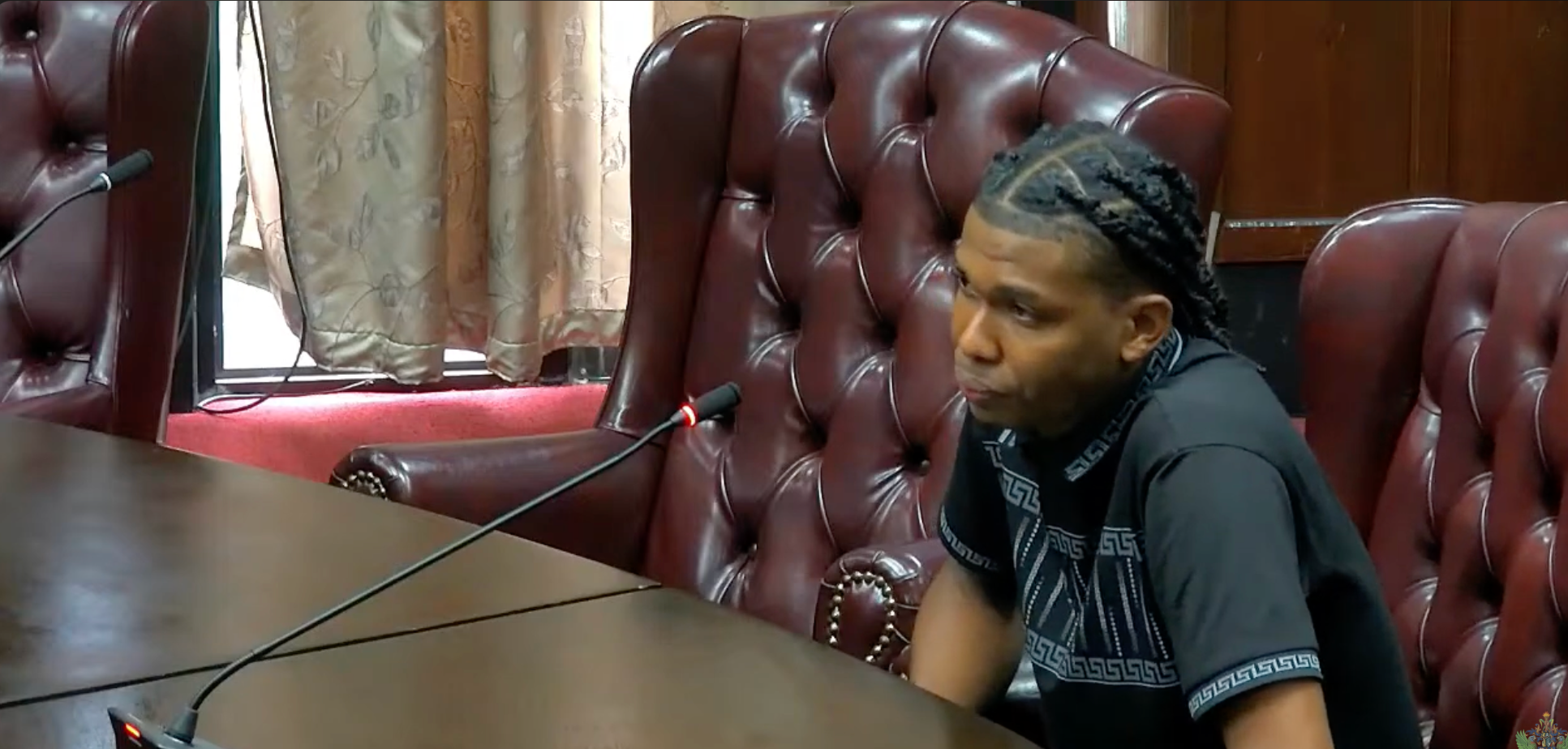
Public inquiry hearings into the deadly July 18 boat collision off Anse Cochon that left four people dead entered their second day Wednesday, as a new round of witnesses took the stand to share their firsthand accounts of the tragic night of the incident.
Among those testifying was Romean Williams, one of the lucky survivors of the crash, who told investigators he had only strapped on a life jacket mere minutes before the two vessels collided. He credited a spiritual prompting for what turned out to be a life-saving choice to ask for the safety equipment.
Williams’ testimony came on the heels of a contentious first day of hearings, which already saw damning admissions of overlooked safety protocols, raised serious questions about the operational compliance of both vessels involved, and exposed conflicting narratives about the chaotic moments leading up to the impact.
As a passenger on board the vessel Cazorla Jr, Williams faced questions from inquiry commissioners about why he chose to request a life jacket for the return leg of the trip, after opting to go without one for the earlier outbound journey.
The survivor explained that he cannot swim, has a long-standing fear of the open ocean, and that the trip to Pigeon Island marked his first time ever traveling by boat. He boarded the vessel at the Soufrière waterfront at approximately 4:30 p.m., choosing the boat outing to enjoy an evening out without having to drive himself.
Per Williams’ account, crew members never offered him a life jacket, nor did they provide any mandatory pre-departure safety briefing to passengers. When commissioners asked why he did not request a safety vest before the trip began, he said he placed his trust in the experience of the boat’s operators.
“The guys are not new to this, so I trusted them,” he told the panel.
The return trip to Soufrière got underway around 11 p.m., and Williams recalled that sea conditions had grown noticeably choppier by that time. He told investigators the captain initially traveled at “a really good speed” before another person on board, identified as Pascal, instructed the captain to slow down.
Roughly five minutes after that exchange, Williams made the decision to ask for a life jacket.
When commissioners pressed whether any specific event or visual cue had prompted that last-minute request, Williams responded simply: “I’m a child of God. He spoke to me.”
Fellow passenger Taylor submitted the request for the life jacket on Williams’ behalf. The boat paused its journey while he put on the vest, then resumed its course toward the mainland.
By Williams’ estimation, just two to five minutes after he finished putting on the jacket, the collision occurred and he found himself thrown into the dark ocean.
He had not spotted the other approaching vessel, he said, because his head was bowed in prayer at the time of impact. The collision, he recalled, sounded no different to him at first than a large wave hitting the hull.
“I realised my legs aren’t touching anything,” he told the hearing, describing the disorienting moment he realized he had been thrown overboard.
Williams said he quickly fell into a panic before he heard Taylor call out, alerting him that her leg had been broken in the crash.
“I called out for help,” he said.
Another survivor, Hippolyte, swam to the pair and helped them reach a large piece of floating wreckage from one of the boats, where other survivors had already gathered. Williams told commissioners that in the immediate chaos after the crash, he did not even realize the incident had been a collision between two separate vessels.
A rescue craft eventually picked up the stranded survivors and brought them to Canaries, where they waited for local emergency medical personnel to arrive. Williams confirmed to the inquiry that he walked away from the incident without any physical injuries.