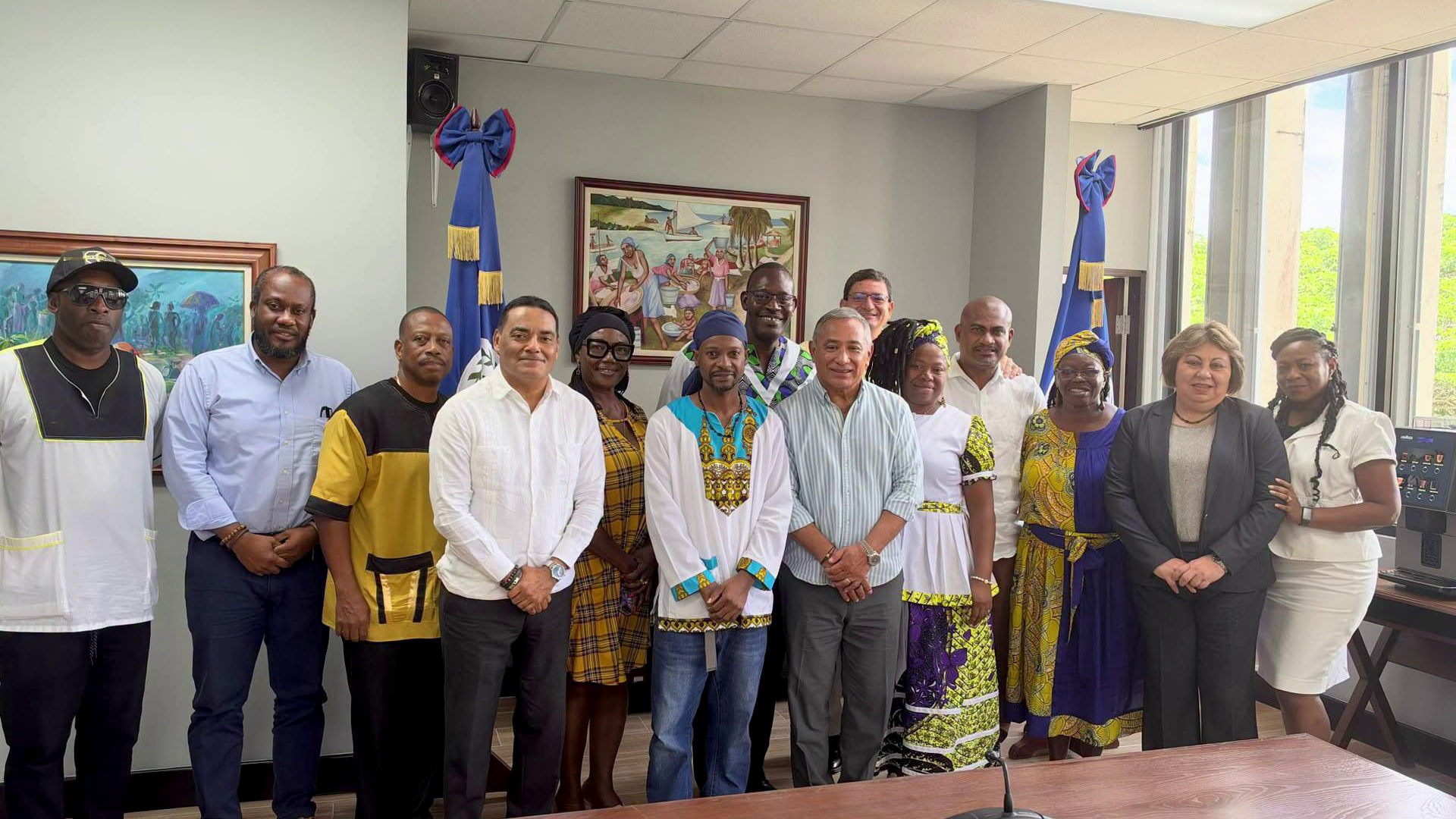
Nearly two weeks after contentious comments from Belizean Prime Minister John Briceño ignited nationwide discussion over Indigenous rights, government representatives and leaders of the National Garifuna Council (NGC) gathered in Belmopan this Monday to restart long-stalled negotiations over a landmark decades-old agreement between the state and the Garifuna Indigenous community.
The talks covered a broad range of priority issues for the Garifuna people, from protection of ancestral territorial lands and formal recognition of inherent Indigenous rights to investment in community-led education, cultural preservation initiatives, and cross-regional cooperation. At the heart of the negotiations is a revised memorandum of understanding (MOU) first submitted by the NGC to the Ministry of Indigenous Affairs back in August last year, crafted to address longstanding gaps in implementation and compliance that have left the original agreement largely unfulfilled, according to Garifuna leaders.
In comments following the meeting, NGC President Alex Nolberto explained that the amended MOU is designed to embed stronger protections for Garifuna rights aligned with both United Nations declarations on Indigenous peoples and Belize’s national constitution. It explicitly formalizes the community’s claim to traditional territorial spaces, outlines dedicated state funding for the NGC’s ongoing work of Garifuna language revitalization and cultural heritage protection, and establishes support for community-led education institutions such as the Gulisi Garifuna school and other grassroots Garifuna organizations.
While Nolberto welcomed the government’s new commitments to move the agreement forward, he emphasized that tangible, on-the-ground implementation will be the only measure of whether meaningful change for the Garifuna community is actually achieved. Under the newly agreed timeline, Prime Minister Briceño has pledged to sign the revised MOU by November 19, after it completes review by the national Cabinet. To maintain accountability going forward, the two sides also agreed to hold biannual technical working group meetings to track progress on the agreement’s terms.
This report is adapted from a televised evening news broadcast transcript, with original Kriol-language commentary rendered into standard English spelling for clarity.