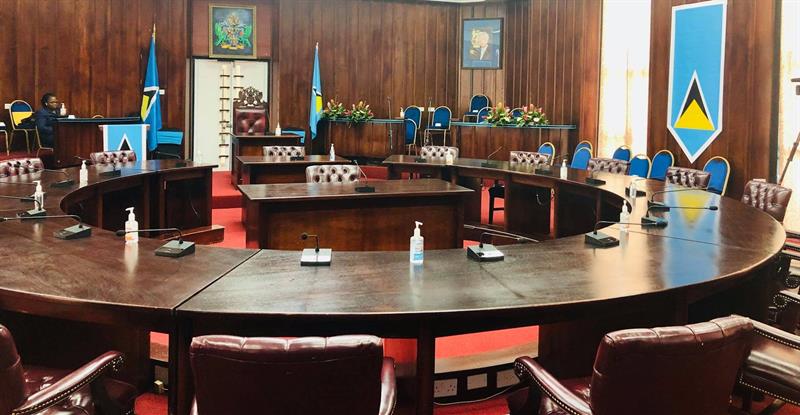
Saint Lucia’s national parliament has given final approval to a state guarantee backing a $20 million loan sourced by the Saint Lucia Development Bank (SLDB), a measure designed to expand housing access for the island nation’s low- and middle-income households. Under the terms of the agreement, the SLDB will take on the loan from the Export-Import Bank of the Republic of China, with the national government assuming full liability for repayment should the development bank fail to meet its debt obligations. All funds disbursed through the facility will be channeled into targeted housing financing for Saint Lucian residents, covering both new construction projects and a range of existing home upgrades.
During plenary debate in the country’s Lower House last Tuesday, Prime Minister Philip J. Pierre outlined the core objectives of the initiative, framing the new credit facility as a targeted intervention to ease Saint Lucia’s persistent national housing shortage by lowering barriers to mortgage access for first-time buyers. Pierre emphasized that the program’s scope extends far beyond ground-up new home construction, noting that it also supports current homeowners seeking financing for critical upgrades including structural repairs, property extensions, full-scale renovations, drainage improvements, retaining wall installations, and the adoption of climate-friendly residential upgrades such as renewable energy systems and rainwater harvesting infrastructure.
To qualify for support under the program, applicants must show a minimum of two consecutive years of steady employment with the same employer or within the same industry. Approved candidates will be eligible for 100 percent mortgage financing, with Pierre confirming that the facility will offer borrowers competitive, market-aligned interest rates designed to keep monthly payments manageable.
When the proposal moved to the Senate for review Thursday, opposition lawmakers raised pointed objections to the scope of the government’s plan, arguing that expanded access to credit alone does not address the fundamental structural issues driving Saint Lucia’s housing crisis. Senate Opposition Leader Dominic Fedee cited a 2014 analysis from the Ministry of Finance’s Research and Policy Unit, which first documented the island’s growing housing deficit and the increasing barriers working-class residents face when attempting to build or purchase personal property. Fedee argued that the core barrier to stable housing in Saint Lucia is overall affordability, rooted in stagnant household incomes. “The root of the problem is how much people make,” he stated. “Unless we drastically increase household income, unless our economic policy is robust and innovative enough, we are spinning top in mud.”
Opposition legislators stressed that even with the new low-barrier financing option in place, many ordinary Saint Lucians will still be unable to qualify for or afford monthly mortgage payments. They further called on the government to go beyond its current policy of removing Value Added Tax from building materials, urging the full elimination of all taxes on construction inputs to drive down overall building costs across the sector.
Government representatives pushed back against opposition claims, clarifying that the new credit facility was never presented as a standalone solution to all of the country’s housing challenges. Prime Minister Pierre made this framing clear during his initial address to the Lower House, noting that “today is not a one shot. It came from a programme of trying to improve the housing stock and decreasing the housing deficit in this country.” The new loan facility, he confirmed, is one component of a broader, multi-pronged national strategy to address housing needs, with a number of complementary housing projects already in progress across the island.