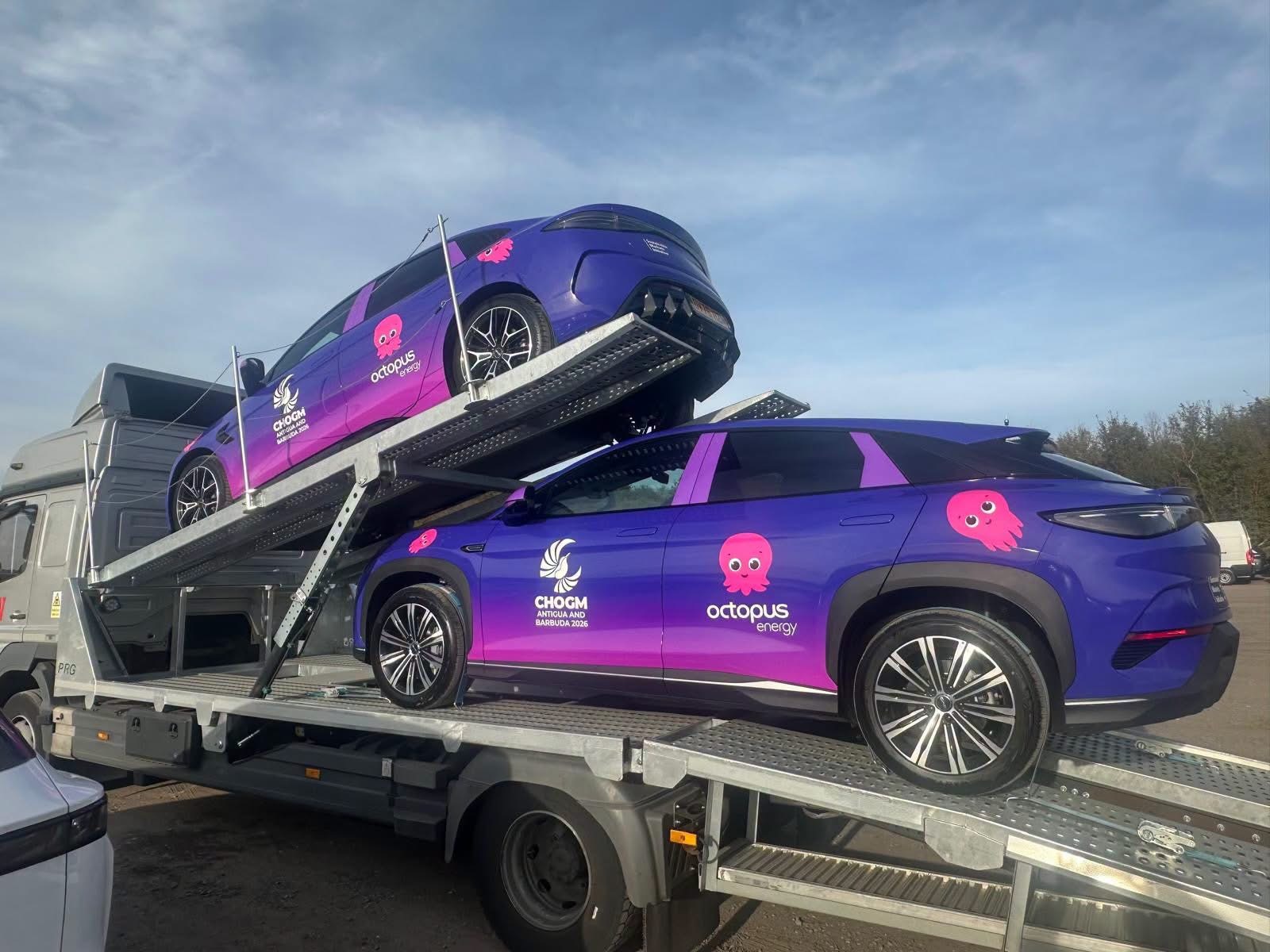
As the Caribbean nation of Antigua and Barbuda finalizes preparations to host the 2026 Commonwealth Heads of Government Meeting (CHOGM) this November, one landmark climate commitment has officially moved from agreement to action: a fleet of electric vehicles, sourced through a strategic partnership with global clean energy firm Octopus Energy, is now en route to the country to power official delegate transportation for the high-profile summit.
Scheduled to run from November 1 to 4, 2026, CHOGM will bring together heads of state, senior ministers, and official delegates from the bloc’s 56 member states under the overarching theme “Accelerating Partnerships and Investment for a Prosperous Commonwealth.” This electric vehicle deployment marks the first tangible, on-the-ground outcome of the Memorandum of Understanding signed earlier by Antigua and Barbuda Prime Minister Gaston Browne and Zoisa North-Bond, Chief Executive Officer of Octopus Energy Generation, during high-level climate talks in New York.
The electric fleet will serve as the core official transport for visiting leaders and delegates, replacing a portion of conventional gasoline and diesel-powered vehicles that would otherwise have been used for the summit. The switch is projected to cut the meeting’s overall transport-related carbon emissions significantly, aligning the event’s operations with Antigua and Barbuda’s longstanding climate advocacy as a frontline Small Island Developing State (SIDS) grappling with the earliest and most severe impacts of anthropogenic climate change.
For Antigua and Barbuda, the initiative does far more than solve a short-term logistics problem for CHOGM. It is a deliberate demonstration of the country’s commitment to match its global climate rhetoric with domestic action. As a SIDS, the nation has long pushed for global leaders to turn non-binding climate pledges into concrete, systemic action that builds climate resilience, strengthens energy security, and advances sustainable development. This deployment puts that principle into practice on the world stage ahead of the summit.
Prime Minister Browne emphasized the strategic and symbolic importance of the milestone in remarks on the progress of the partnership. “Antigua and Barbua has consistently argued that climate leadership must be demonstrated through action,” Browne said. “As we welcome Commonwealth leaders to our shores, we are equally conscious of our responsibility to host CHOGM in a manner that reflects the values and priorities we continue to champion internationally.”
Browne added that large-scale international gatherings have a responsibility to reduce their environmental footprint, and the electric vehicle fleet puts that responsibility into practice. “By incorporating electric vehicles into the official transportation programme for CHOGM, Antigua and Barbuda is leading by example and demonstrating that sustainability can be integrated into the delivery of major international events,” he noted.
For small island developing states like Antigua and Barbuda, the shift to electric mobility is not merely a substitution of vehicle types—it is a core component of broader economic and energy sovereignty. “It is part of reducing our dependence on imported fossil fuels, strengthening energy security, improving air quality and building a more resilient economy,” Browne explained. “This partnership with Octopus Energy demonstrates what can be achieved when international cooperation is translated into practical results that benefit our people.”
Beyond the summit, the electric vehicle rollout complements the Antigua and Barbuda government’s wider national efforts to decarbonize and modernize its transportation sector. The country has already begun integrating electric vehicles into public transit and core public services, while simultaneously building out the necessary charging infrastructure and developing the domestic technical expertise required to support widespread electric vehicle adoption across the nation.
North-Bond echoed Browne’s enthusiasm for the first phase of the partnership, highlighting the project’s model for linking short-term event sustainability to long-term national clean energy transition. “We are proud to support Antigua and Barbuda as it prepares to host Commonwealth leaders from around the world,” North-Bond said. “This initiative shows how clean technology can be incorporated into major international events while creating momentum for longer-term national transformation.”
She added that Antigua and Barbuda’s approach sets a powerful example for other nations navigating the energy transition. “Antigua and Barbuda is demonstrating real leadership by connecting electric mobility with renewable energy, resilience and greater energy independence. We look forward to continuing our work with the Government and helping turn this shared ambition into practical results.”
The broader partnership between Antigua and Barbuda and Octopus Energy extends far beyond CHOGM transportation, with the two parties set to collaborate on a range of clean energy priorities: expanding renewable energy generation, scaling grid battery storage, deploying smart energy technologies, and growing electric mobility infrastructure across the country. Following the conclusion of the 2026 summit, the government and Octopus Energy will launch new discussions to map out long-term uses for the electric fleet and advance additional cooperative projects outlined in the original memorandum.
The initiative itself was coordinated with support from Global Citizen, following initial connections between Prime Minister Browne, Octopus Energy representatives, and the organization during New York Climate Week and the United Nations General Assembly earlier this year. For the Antigua and Barbuda government, the project is a proof of concept for how hosting a major international event can be leveraged to accelerate national development goals, attract impact-driven international partnerships, and leave a lasting, positive green legacy for the host nation.
As Antigua and Barbuda counts down to welcoming the Commonwealth community in November, the arrival of the electric fleet sends an unambiguous message: the small island nation is not only calling for global action on climate change—it is already building the cleaner, more resilient future it advocates for, one tangible step at a time.