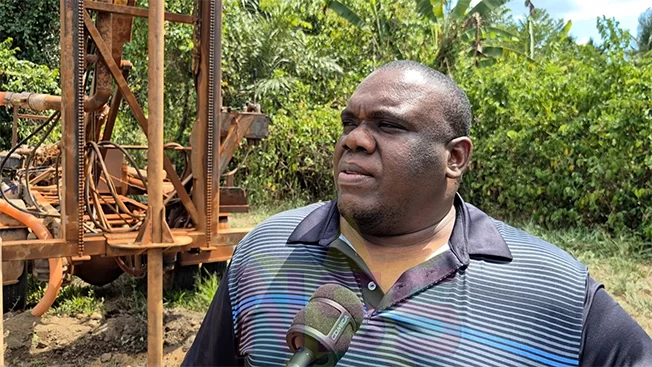
On October 6, Braganza Marketing Group, a Dutch Caribbean agribusiness firm, confirmed it is holding off on launching its planned large-scale corn and soybean cultivation initiative until it receives formal regulatory approval from national government authorities. The project, which centers on boosting domestic livestock feed production to cut the country’s reliance on imported agricultural inputs, has advanced in preliminary community-focused work even as it awaits official greenlight, according to company board member Lionel Blokland.
In an exclusive interview with local outlet Starnieuws during a visit to the project’s proposed base in Witagron, Blokland emphasized that the firm is committed to full compliance with existing national regulations and administrative procedures. “All regulatory frameworks and governing bodies are in place, and we have every intention of adhering fully to the law,” he stated. “All on-ground preparation work continues, but actual planting will not begin until we have secured all required government authorizations.”
The planned initiative covers an estimated 34,000 hectares of agricultural land, with an projected total investment of $78 million spread across a five-year development timeline, though Blokland did not specify a full breakdown of how the funding will be allocated across the project. The core output of the farm operations will be corn and soybeans, both targeted specifically to supply feed for the country’s growing poultry and broader livestock sectors. Blokland noted that multiple local agribusinesses have already expressed interest in sourcing the domestic feed, a shift that would allow them to lower their overall production costs by cutting expensive import expenses.
Parallel to waiting for regulatory approval, Braganza has moved forward with community partnership projects in the Witagron area, designed to demonstrate how the large-scale agricultural project can deliver tangible benefits to surrounding local populations. In collaboration with the Kwinti community of Witagron and Mennonite agricultural specialists brought in to contribute technical expertise to the initiative, the company has completed drilling for two new groundwater wells.
Blokland explained that local residents in the area had gone roughly a decade without access to piped, in-home clean water infrastructure, making the new wells a critical improvement for daily community life. He stressed that the project is structured around collaborative work with local populations, pushing back against earlier public speculation that the Mennonite specialists would operate as a closed, isolated community separate from existing Witagron residents. The well project, he said, serves as a clear example of how cross-community collaboration will work under the initiative’s framework.
In a further show of local support, members of the Witagron community have signed a petition that will be delivered to President Jennifer Simons, publicly voicing backing for both the large-scale agricultural project and Braganza’s collaborative implementation approach. According to Blokland, the petition confirms that local residents hold no objections to partnering or living alongside the Mennonite specialists brought in for the project.
Blokland also outlined commitments to local employment: once the project officially launches, priority for all entry-level and operational roles generated by the initiative – including planting work, transport logistics, and other on-farm jobs – will be given to members of the local Witagron community. A formal formal agreement codifying this employment priority will be finalized with community leadership before full operations begin, he added.
The involvement of Mennonite agricultural specialists in large-scale national agricultural development has sparked public debate and controversy across the country in recent months. Blokland confirmed the company is aware of the ongoing public discussion, and reaffirmed that no further development will proceed until government approval is secured. “We are simply waiting for the necessary authorizations from the government to move forward,” he said. “At the end of the day, our core goal is to expand domestic agricultural production that can supply reliable, local feed to the country’s poultry sector and support broader national food security.”