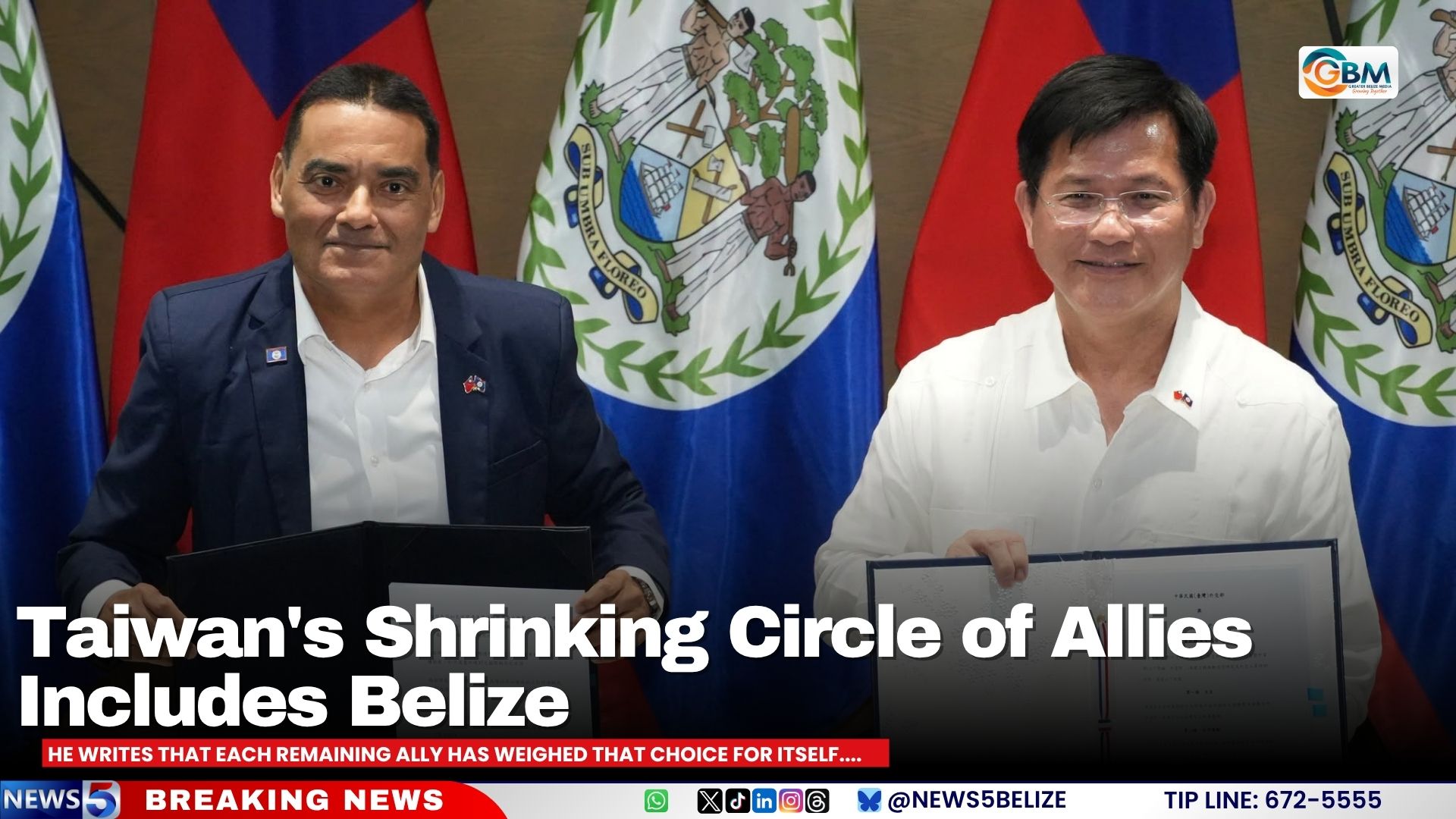
A new analysis from United Press International correspondent Thomas R. Field, published October 6, 2026, paints a clear picture of Taiwan’s shrinking network of formal diplomatic partners, with Belize standing as one of the handful of remaining nations that still maintain official ties with the self-governing island.
As of 2026, only 12 sovereign governments across the globe recognize Taiwan diplomatically, according to Field’s research. Seven of these allies are located across Latin America and the Caribbean, and this bloc has repeatedly pushed for Taiwan’s inclusion in United Nations frameworks in recent months. On September 18, top UN diplomats from Belize, Saint Lucia, Saint Vincent and the Grenadines, Palau, and the Marshall Islands co-signed a formal letter addressed to UN Secretary-General António Guterres, advocating for what they called Taiwan’s “meaningful participation” in global intergovernmental systems. Just one week later, during the annual general debate of the UN General Assembly, three additional allied leaders—Paraguayan President Santiago Peña, Palauan President Surangel Whipps Jr., and Eswatini’s King Mswati III—echoed this call in their plenary addresses to the assembly.
Beyond Belize, Taiwan’s active diplomatic partners in the Latin America and Caribbean region include Paraguay, Guatemala, Haiti, Saint Kitts and Nevis, Saint Lucia, and Saint Vincent and the Grenadines. This list has shrunk dramatically over the past decade: Taiwan lost formal ties with Panama in 2017, followed by the Dominican Republic and El Salvador in 2018, Nicaragua in 2021, and most recently Honduras in 2023, all of which switched their diplomatic recognition to Beijing in line with the One-China principle.
Field’s analysis notes that for Belize, the diplomatic relationship with Taiwan has yielded tangible economic benefits. After more than two years of coordinated technical and regulatory negotiations, Taiwan gave formal approval for Belizean shrimp exports to enter its market in July 2025. This access opens a major new opportunity for Belize’s seafood industry: between 2020 and 2024, Taiwan’s annual shrimp imports averaged more than $349 million, creating significant demand for foreign suppliers.
Across all its remaining regional allies, Taiwan has rolled out a suite of targeted economic and development cooperation projects, organized under a government initiative called the Diplomatic Allies Prosperity Project. Launched in 2024 by Taiwanese Foreign Minister Lin Chia-lung, the initiative spans a range of sectors: it includes semiconductor skills training programs in Guatemala, sustainable rice production projects in southern Haiti, infrastructure and medical support for hospitals and port facilities in Saint Vincent and the Grenadines, and the “Seven Crops Project” in Saint Lucia, which aims to boost local food production and cut the island nation’s reliance on imported food. To expand the initiative’s private sector reach, Taiwan’s foreign ministry launched a dedicated economic and trade office in July 2026, focused on connecting Taiwanese private businesses with investment and market opportunities in allied countries.
Despite these ongoing cooperation efforts, Field emphasizes that every remaining diplomatic ally of Taiwan faces unavoidable trade-offs. China holds the position of the world’s second-largest national economy, and it is a top trading partner for nearly every country across the Latin America and Caribbean region. Beijing has long enshrined the One-China principle—under which it asserts that there is only one China in the world, and Taiwan is an inalienable part of its territory—as a non-negotiable condition for establishing any formal diplomatic relationship with Beijing. In the end, Field concludes, each of the 12 remaining allies has made a sovereign calculation to continue its formal ties with Taiwan, weighing the benefits of that relationship against the geopolitical and economic trade-offs that come with rejecting Beijing’s One-China condition.