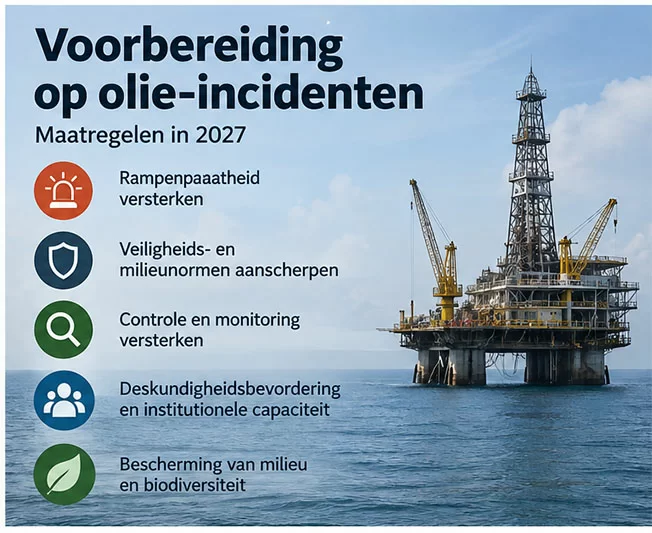
Suriname’s government has outlined a series of policy priorities for its growing offshore oil and gas sector, centered on upgrading disaster preparedness for potential oil spill incidents and tightening environmental safeguards in its 2027 national financial plan.
Released on October 5, the plan lays out the government’s broader agenda for the upcoming year, overseen by the country’s Ministry of Oil, Gas and Environment. This government body carries dual responsibilities: regulating and monitoring the nation’s oil and gas extraction activities, while also leading work on environmental protection, climate action and sustainable development.
A top priority flagged in the document is strengthening readiness to respond to unexpected oil-related incidents, as the country continues to expand its offshore oil development. To support this goal, the government plans to boost institutional capacity across the sector and upskill workers in both the oil and gas industry and environmental management agencies, building a more robust foundation to handle the rapid growth of offshore projects. Beyond disaster preparedness, the plan mandates tighter safety, environmental and quality standards for the sector, alongside more rigorous regulatory oversight to enforce these rules.
However, the fiscal plan does not include key details about the disaster preparedness initiative: it does not outline specific measures to be implemented, disclose the total budget allocated to the program, or clarify the division of response responsibilities across government agencies in the event of a major incident.
Alongside advancing oil sector development, the government is also pushing to speed up Suriname’s energy transition. The plan allocates resources to new research into renewable energy sources, and sets a goal of expanding international partnerships and attracting foreign investment to support both energy transition and sustainable resource development.
On the environmental front, the plan lays out core priorities including sustainable management of chemicals, water resources and industrial waste, climate change mitigation, and biodiversity conservation. It also includes provisions for the rehabilitation of ecosystems degraded by past industrial activity. Through clearer regulatory standards and stricter enforcement of environmental rules, the government says it aims to preserve and strengthen Suriname’s standing as a High Forest Low Deforestation nation, protecting its vast intact forest ecosystems while developing its natural resource reserves.