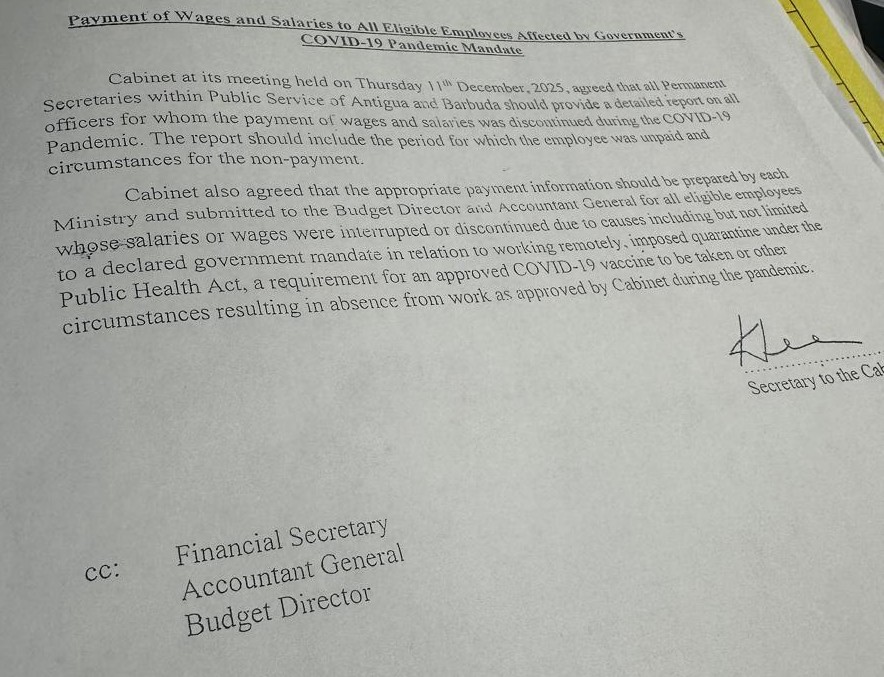
In December 2025, Antigua and Barbuda’s Cabinet made a formal move to address a long-unresolved issue for public sector workers: it ordered all permanent secretaries across the national public service to submit comprehensive reports detailing every public officer whose salaries were halted during the height of the COVID-19 pandemic. The mandate required these reports to clearly outline both the length of time each affected employee went without pay and the specific context that led to the missed wage disbursements.
The request for this critical documentation was framed as an urgent priority when it was first issued. In response, government departments across the country moved quickly to gather and compile the required data. Many team members even put in extra overtime hours to meet the mandated deadline, ensuring all completed paperwork was sent to the national Treasury on schedule. This push came in the wake of an explicit election promise from the current ruling administration, which campaigned on a pledge to deliver on all its commitments—including the payout of these backlogged wages to affected workers.
Now, 10 months after that Cabinet decision, with the calendar having turned to October 2026, pressing questions about the long-promised payments remain unanswered. Affected public officers and observers alike are asking for clarity: Where do the promised funds stand? Have all submitted reports been fully reviewed and verified by relevant authorities? Has a structured timeline for disbursement been finalized? Most importantly, when can the workers who are owed money expect to receive the wages they missed during the public health crisis?
For many of these public servants, the unpaid amounts represent multiple months of lost income from a period that was already economically devastating for working people across the globe. The sums are far from trivial, especially at a time when household costs continue to climb, leaving public workers struggling to keep up with daily living expenses and ongoing financial obligations.
Right now, the Commonwealth Heads of Government Meeting (CHOGM) is dominating public attention and national resources in Antigua and Barbuda—and that focus is understandable for a major international event hosted on the country’s soil. But advocates argue that even as the nation prioritizes this high-profile gathering, outstanding issues that directly impact the livelihoods of ordinary public workers should not be sidelined or pushed into obscurity.
Affected workers who already completed their part of the process by submitting the required information are long overdue for a public update. Even if full disbursement is not possible immediately, clear, transparent communication about how far the process has progressed, any outstanding barriers holding up payments, and a realistic expected timeline would go a long way to easing the uncertainty facing these households.
This issue extends beyond the overdue wages themselves. At its core, it is a test of government accountability, open communication with public servants, and the ruling party’s ability to deliver on the commitments it made to the workforce when seeking election. After the government requested the information, departments complied, and all required documentation was submitted months ago.
With CHOGM holding the national spotlight, there are growing calls to ensure the unresolved COVID-19 back pay does not get lost in the shuffle of high-profile event preparations. Thousands of affected public officers are still waiting for answers, and an official, public update from the government is long overdue.