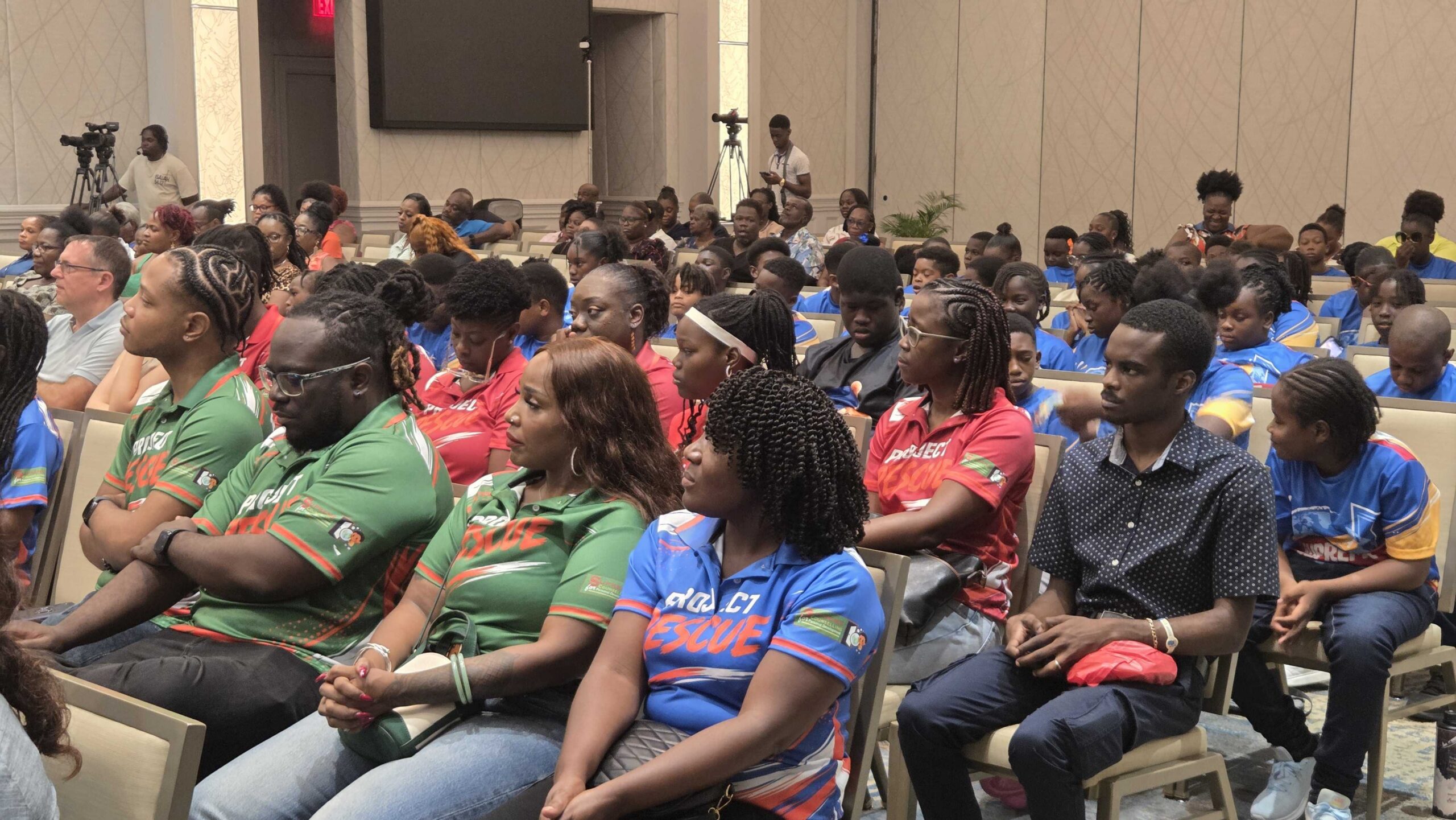
Nearly 80 first-year students from three Barbadian secondary schools have been selected for a transformative five-year initiative designed to build critical life skills that go beyond traditional academic learning. Picked from Grantley Adams Memorial, Princess Margaret, and St George Secondary Schools, these learners are the newest cohort of Project Rescue, an ongoing program run by local non-profit organisation Supreme Counselling for Personal Development.
The five-year intervention, which follows students from their first year of secondary school through to graduation, requires participants to complete eight weeks of structured in-school workshops annually focused on holistic personal growth. The 2026 intake was officially launched at a ceremony titled “The Doorway to Possibility” held at Hilton Barbados, where programme leaders welcomed the new group of students.
Speaking at the opening event, Supreme Counselling Deputy Director Kim Yearwood-Small delivered an inspirational address to attendees, urging young participants not to let current challenges, past missteps or external judgment limit their future potential. “Your present circumstances are not your final destination. Your mistakes are not your identity,” she emphasized, noting that Project Rescue differs from standard school discipline programs by focusing on unlocking young people’s inherent potential rather than just correcting behavior.
Workshops cover a wide range of pressing issues facing teenage students, including emotional regulation, conflict resolution, bullying prevention, coping with peer pressure, ethical decision-making, positive behavioral habits, self-esteem building, and social well-being. Yearwood-Small argued that academic achievement on its own fails to prepare young people for the everyday challenges of adult life, pointing out that even high-performing students can struggle with core life skills. “A child can know mathematics and still not know how to control anger. A child can pass English and still struggle to communicate what he or she is feeling, A child can know science and still be unable to solve conflict without violence,” she explained.
She added that traditional education systems often overlook holistic development, stressing: “We must educate the whole child. We must build character. We must build confidence. We must teach compatibility.” She also redefined strength for the young audience, explaining that true strength lies not in aggression, but in emotional control, accountability, empathy, and moral courage: “Strength is knowing when to walk away. Strength is being able to say, ‘I was wrong.’ Strength is controlling your emotions when everything else wants to explode. Strength is standing up for someone who is being bullied when someone else is laughing.”
Data collected from past program participants backs up Project Rescue’s impact: over 91 percent of alumni reported the program helped them make better life choices, 86 percent learned practical skills they use in daily life, 85 percent felt safe and respected during program sessions, and nearly 88 percent said they would recommend the initiative to other young people. Even with these strong results, Yearwood-Small noted that statistics cannot capture the full human impact of the work. “Behind every percentage is a person. A young man who decided not to fight. A young woman who discovered confidence. A child who never spoke about something that was hurting. A student who realised they can make a different choice. That is a possibility,” she said.
In an interview with local media outlet Barbados TODAY, Project Officer Latrishe Clarke outlined the program’s long-term goal: to help young people grow into well-rounded, responsible citizens who will shape Barbados’ future. “Hopefully, as they take in the information each year, it will have a lasting impact on their lives,” Clarke said. “We want them to build their character, express their emotions in a healthy way through effective communication, and we want them to build their characters so they can be better citizens, because they are the future citizens who will build our country. The world is in turmoil, and we are looking to them to be the beacon of hope to change the tide of the negative things happening.”