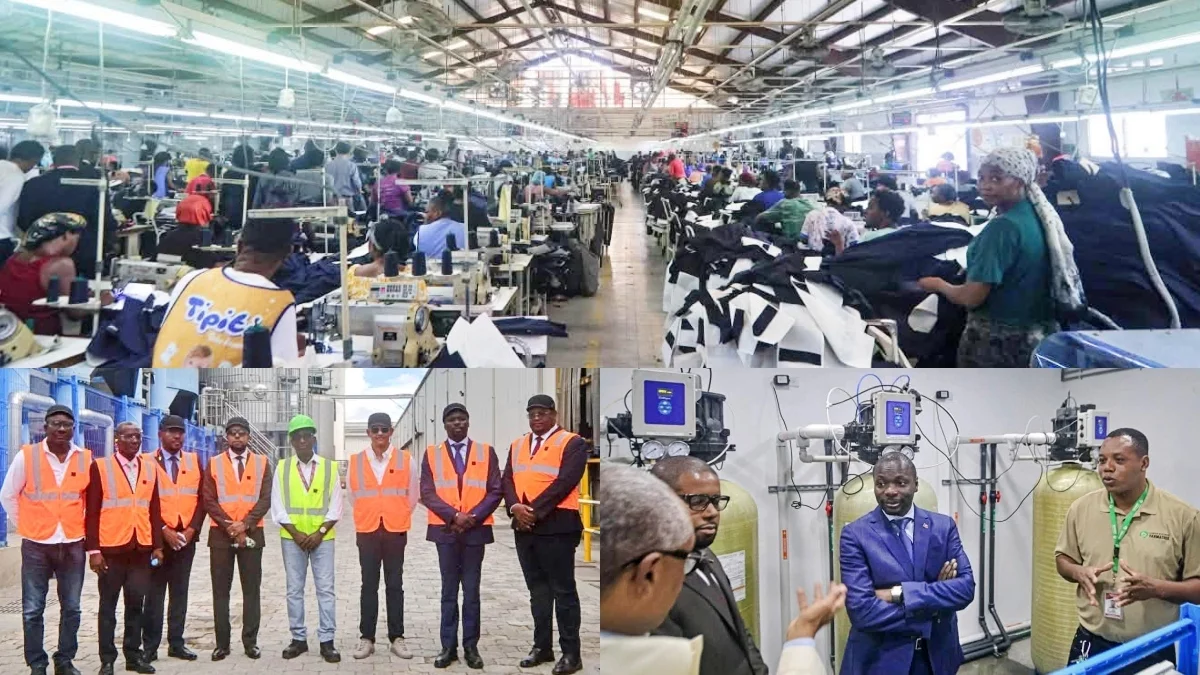
Against a backdrop of ongoing efforts to stabilize and grow Haiti’s struggling economy, the nation’s 2026 Industry Week kicked off with a high-profile site visit on Friday, October 2, where top government and industry leaders toured leading local manufacturing firms operating in the National Industrial Parks Company (SONAPI) zone and along Port-au-Prince’s Airport Road corridor. The delegation, led by Commerce and Industry Minister James Monazard, included Economy and Finance Minister Serge Gabriel Colin, SONAPI Director General Pétricks Justin, and Association of Industries of Haiti (ADIH) Board Chair David Coles, who walked through the facilities of five standout companies spanning multiple key sectors of Haiti’s industrial economy: pharmaceutical producer Farmatrix, uniform manufacturer Cintas, diversified plastic goods maker DMS S.A., beverage producer Brana, and confectionery manufacturer Caribbean Baking Company.
The guided tour was designed to give senior officials first-hand exposure to the daily operations, production scale, unmet needs, and long-term expansion plans of Haiti’s existing industrial base. Unlike remote policy discussions, the on-site visits allowed leaders to directly engage with company management and frontline workers, gaining a nuanced understanding of the infrastructure, policy adjustments, and support required to strengthen the country’s domestic industrial activity.
During stops at the facilities, Minister Monazard centered his remarks on the critical role of private investment in driving Haiti’s economic recovery and expanding access to formal employment. He specifically highlighted one firm that had injected more than $16 million into local operations, framing this large-scale commitment as a powerful marker of resilience amid national economic uncertainty and a vote of confidence in Haiti’s untapped economic potential. Monazard went on to reaffirm the Haitian government’s steadfast commitment to partnering with the private sector, pledging to continue working to build a regulatory and economic environment that attracts new investment, scales up domestic production, and creates much-needed formal jobs for Haitian workers.
The tour also showcased the remarkable diversity of Haiti’s modern industrial sector, debunking narrow assumptions about the scope of local production capabilities. Each company profiled during the visit demonstrates how domestic industrial firms meet both local demand and create opportunities for export growth:
– Farmatrix, a domestic pharmaceutical manufacturer, supports local healthcare access by producing essential medications. The firm currently supports more than 187 direct formal jobs and operates fully equipped storage facilities, research laboratories, and in-house microbiology testing units to ensure product quality and safety.
– Cintas fills a critical business-to-business need across Haiti’s formal economy, producing professional uniforms for workers across sectors ranging from hospitality to healthcare and manufacturing.
– DMS S.A. has built a diversified portfolio of plastic products that serve core domestic infrastructure and daily consumer needs, including insulated electrical wires, large-capacity water storage towers, and public waste bins. Its broad production line underscores how domestic manufacturing can cut reliance on costly imports and meet the varied needs of the national market.
– Brana, one of the larger employers on the tour, specializes in producing alcoholic beverages and carbonated soft drinks. With roughly 800 employees, multiple production units, in-house microbiology labs, and modern storage facilities, the company boasts a daily production capacity of more than 42,000 bottles, supplying consumers across the country.
– Caribbean Baking Company S.A., a member of the local HM Group, focuses on confectionery product manufacturing and employs between 600 and 700 full-time workers, making it another major source of formal employment in the region.
All five firms highlighted during the tour play a dual role in Haiti’s economy: they keep the domestic market supplied with affordable, high-quality goods and are actively building production capacity to enter regional and international export markets. Organized as a centerpiece event of Industry Week, the tour aligns with the Haitian government’s broader strategic goals: to elevate the profile of the country’s industrial sector, celebrate the contributions of existing domestic producers to job creation and economic activity, and identify actionable steps to remove barriers to further growth. At a moment when economic stagnation and high unemployment top the list of national priorities, Haitian officials are positioning the industrial sector as a cornerstone of the country’s national recovery strategy, with the potential to drive sustained long-term growth in domestic output, expand formal employment opportunities, and build a more resilient, self-sufficient national economy.