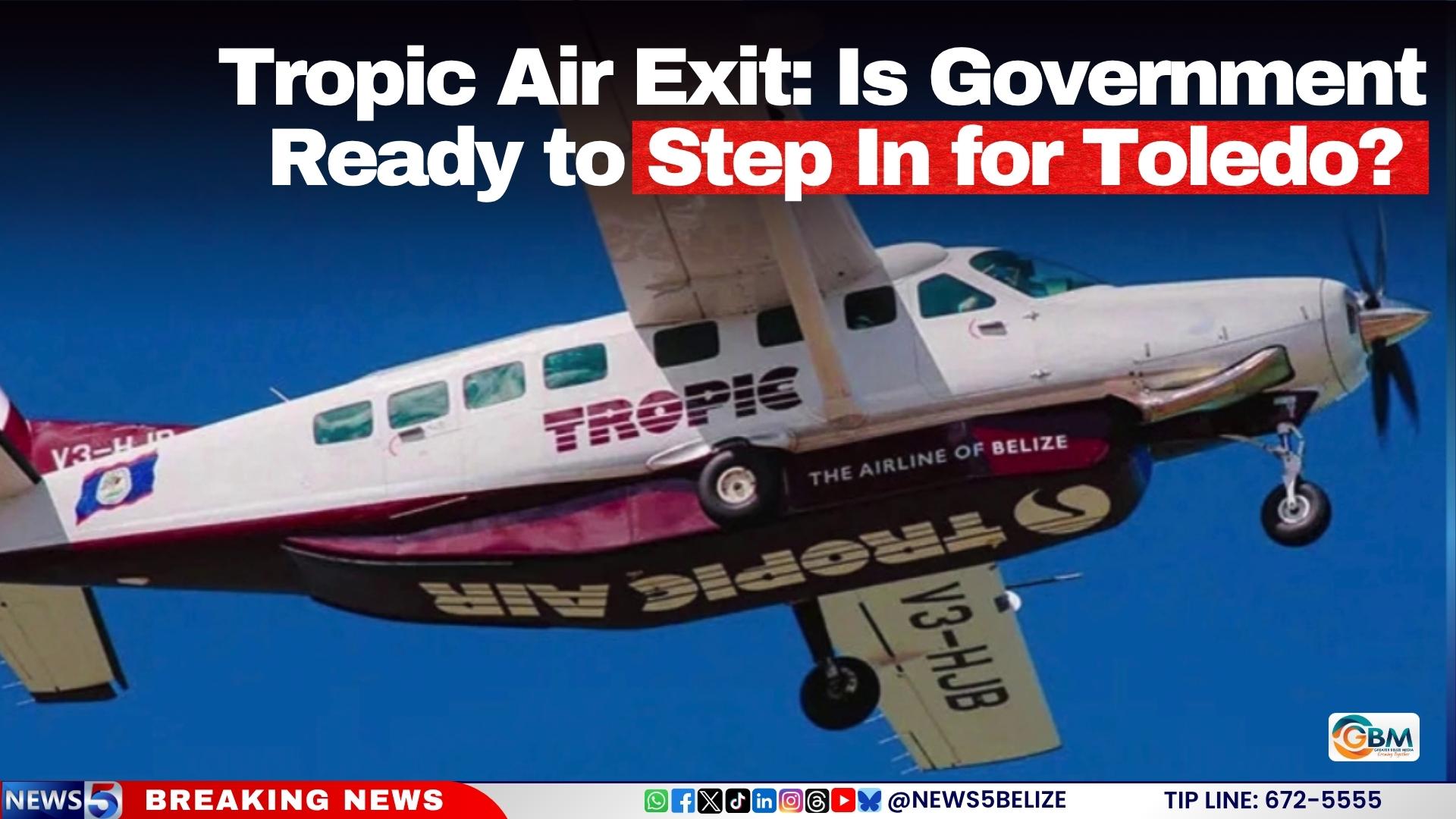
By October 1, 2026, the southern district of Toledo in Belize is facing an imminent disruption to its only air connection to the rest of the country, after regional airline Tropic Air announced plans to permanently shut down its Punta Gorda route service on November 1. The announcement has sparked urgent action from local leaders, industry stakeholders and residents, who are now pushing the national government to intervene with financial support to keep the critical air link operational.
The crisis unfolded this week, when Tropic Air broke the news Wednesday that it would wind down operations at its Punta Gorda station. The airline explained that the route has generated consistent financial losses for an extended period, and the company can no longer absorb these ongoing deficits. Within 24 hours, an emergency stakeholder meeting was convened in Punta Gorda to explore potential solutions, bringing together tourism operators, local business owners, community representatives and elected officials.
Robert Pennell, chair of the Toledo Chapter of the Belize Tourism Industry Association (BTIA), emphasized that it is unreasonable to expect Tropic Air to continue operating the route uncompensated. “It’s not a charity organisation, and I think we have to keep that in perspective,” Pennell noted. He also added another layer of uncertainty to the situation: long-planned repairs to the Punta Gorda runway have been discussed publicly, but neither Pennell nor Tropic Air have received formal confirmation that the upgrade work will move forward. That uncertainty has further discouraged the airline from maintaining its commitment to the route, he explained.
Local representative Dr. Osmond Martinez, who serves the Toledo East constituency, told meeting attendees that direct government financial support is now the leading option under consideration. Martinez clarified that he does not have the authority to unilaterally approve such a measure, but he plans to present a formal proposal to the Belizean Cabinet in the coming days. The framework being explored would see the government purchase a set number of seats on Tropic Air’s Punta Gorda flights on an ongoing basis — either monthly or annually — to offset the route’s financial shortfall and return it to profitability for the airline.
Martinez also pushed back against recent speculation that excessive government taxes on the route were the driving force behind Tropic Air’s decision to exit. “There are no taxes so it’s hard to remove taxes,” he said, dismissing that narrative entirely. He also contextualized the ask for new subsidies by noting that the Belizean government already provides extensive fuel subsidies to other sectors, including bus operators and cane farmers in northern Belize. With fuel revenue accounting for roughly 20% of total government income, and existing subsidies already costing the state millions of dollars each year, any new support for the air route will require careful negotiation, he added.
As the November 1 deadline fast approaches, a formal meeting between Martinez and Tropic Air’s chief executive officer has been scheduled to work out the details of a potential government support deal, with the future of Toledo’s only air connection hanging in the balance.