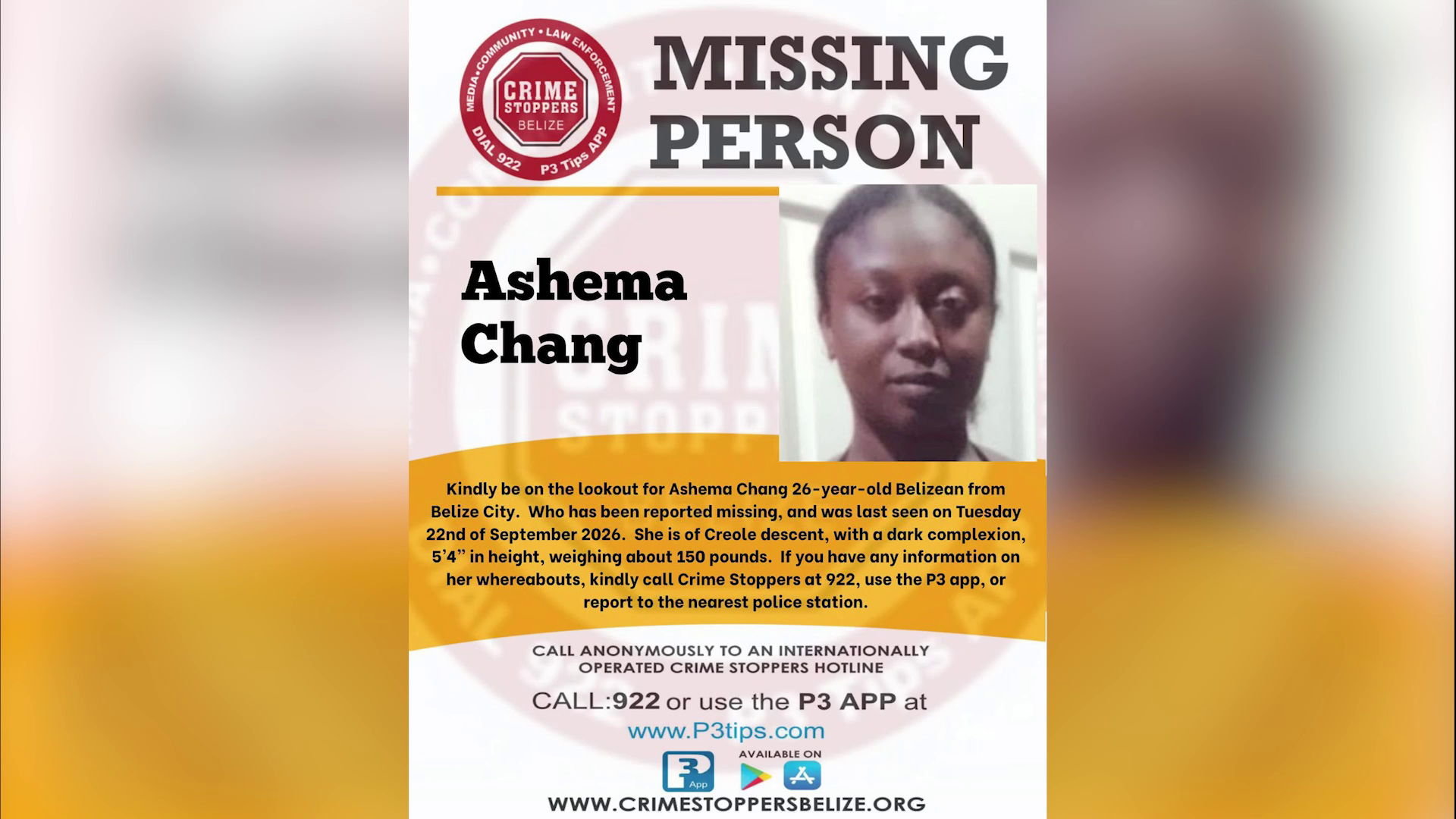
A criminal arson case in Belama Phase Five has taken an unexpected and troubling turn after the accused, 25-year-old Ashema Chang, disappeared just one week after the court ordered a psychiatric evaluation to determine her fitness to stand trial. Chang is accused of intentionally setting fire to the home of 45-year-old Eugene Thompson, the alleged victim in the case. The court suspended proceedings last week to allow for the mandatory mental health assessment, but Chang has not been seen since, leaving law enforcement searching for her and Thompson questioning the official narrative of her disappearance.
In an interview with News Five reporter Britney Gordon, Thompson stated that anonymous private callers have been harassing him nonstop since Chang was reported missing. He cast doubt on claims that she has actually disappeared, saying, “From the first time I hear that missing, a private number start call me from then. And private number start tell me a lot of things about, ask me pa she deh and they tell me, make I continue pan things. Check, last night, up to last night they called me, and the person call me for like twenty seconds and tell me continue and that’s it. They hang up. And da lone private number, I think, check. But in this case here, like, she not missing, no at all.”
The case has already had a complex procedural history, which has drawn increased public attention. Months ago, Chang was granted a protection order against Thompson that required him to leave the home he had lived in for six years, allowing her to remain there for 15 days. Local defense attorney Richard “Dickie” Bradley explained that the court’s ruling aligned with standard legal procedure for protection orders.
“A magistrate can try as best he or she can under the law to protect a person who has gone to the court for protection,” Bradley explained. “That protection usually is that the abuser is not to be near to the victim, the complainant, the female. Is not to be at the home, at the church, at the school, at the place of work. If they’re out on the street, he’s not to be closer than a hundred yards away. If you see the person, you better turn and go down another lane or so. The court is there to protect the person who is facing abuse and threats.”
Despite the court’s protective measures for Chang, Thompson claims he has received multiple threatening voice messages from her, which he turned over to authorities. Now, with Chang’s whereabouts unknown, Thompson says he lives in constant fear for his personal safety and has no clear path forward regarding his home and legal status. Thompson’s neighbors have joined him in calling on the government to intervene and provide urgent assistance to resolve the stalled case. One concerned neighbor appealed publicly for help from authorities, saying, “I just di ask fi help. Ask fi anybody weh could help ah you know please.”
Adding to the delays in the case, the court-ordered psychiatric assessment that was supposed to determine Chang’s fitness for trial is now expected to be pushed back for months. Belize currently faces a nationwide shortage of government-employed psychiatrists, and the Ministry of Health, which is tasked with completing the assessment, has confirmed that backlogs will extend the waiting period. As of September 29, 2026, Chang remains missing, and Thompson is currently exploring options to pursue further legal action to resolve his housing and safety concerns.