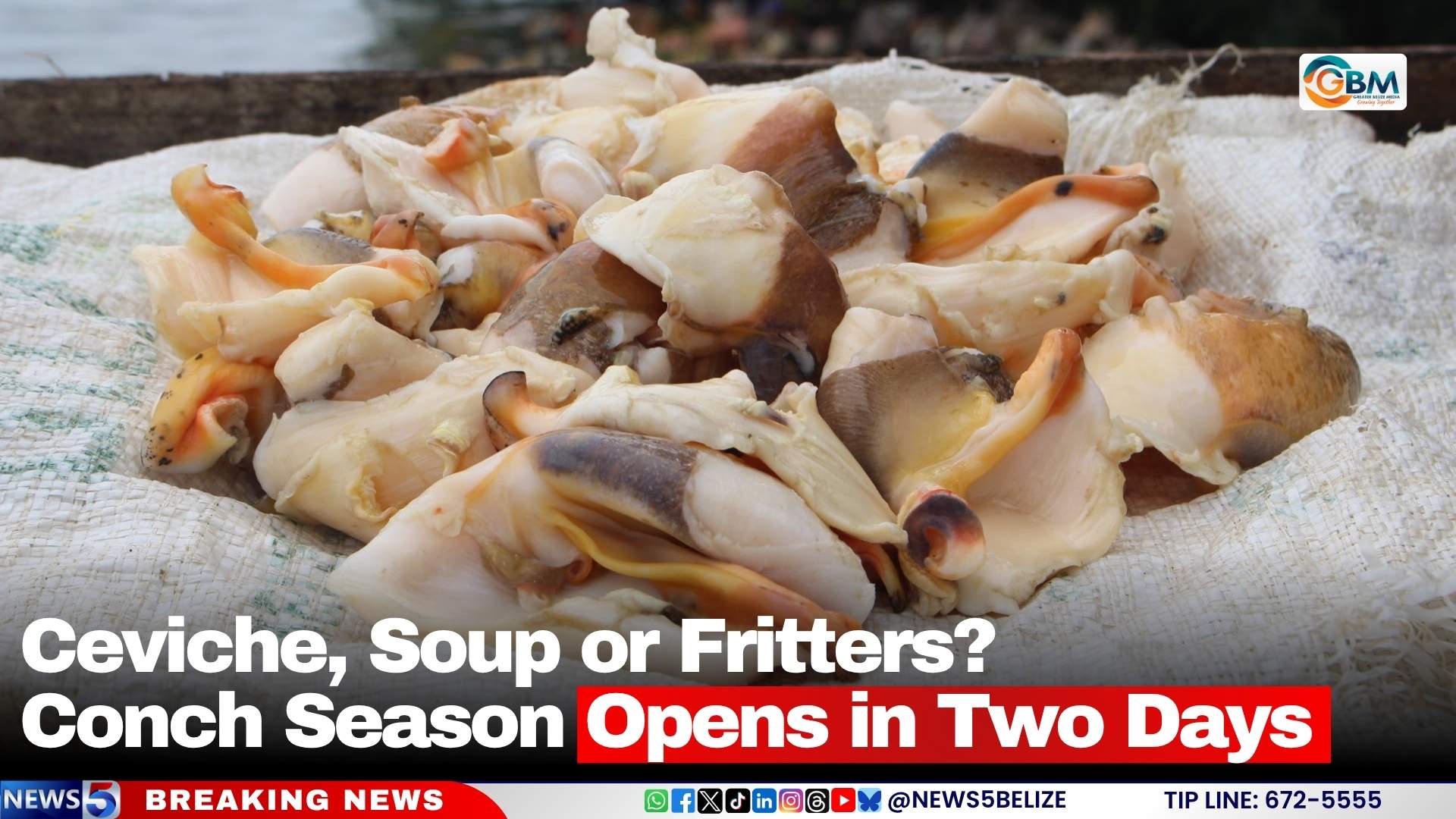
In just two days, one of Belize’s most anticipated culinary and commercial seasons will officially get underway: the 2026-2027 Queen Conch fishing season, launching October 1 and running through June 30, 2027. But regulators are clear that this timeline comes with a critical caveat – if the total national catch quota is reached before the scheduled end date, the Belize Fisheries Department will shut down the season early to protect wild conch populations.
Until the season kicks off on Wednesday, any activity related to conch remains against the law under Belize’s existing fisheries regulations. That includes harvesting, purchasing, selling, or even possessing Queen Conch throughout the country. For those looking to participate in the season legally once it opens, strict size and weight guidelines have been put in place to ensure that only mature conch are harvested, supporting the long-term sustainability of the species.
All harvested conch shells must measure greater than 7 inches (17.8 centimeters) in length, and meat must meet corresponding minimum weight requirements depending on how it is processed. Unprocessed whole conch must weigh in at more than 7.5 ounces (213 grams), while market-cleaned conch must exceed 3 ounces (85 grams), and conch fillet must weigh more than 2.75 ounces (78 grams). Any conch that does not meet these thresholds cannot be legally taken, traded, or held.
Additional regulations apply to processed diced conch: no individual or commercial entity, including restaurants and local vendors, may buy, sell, or store diced conch without a special permit issued directly by the Fisheries Administrator. Exporters are also bound by quota limits set under the Fisheries Resources Act, and are prohibited from shipping more conch than their allocated allowances.
As the season approaches, the Belize Fisheries Department is calling on the public to help enforce sustainable fishing practices by reporting any suspected illegal conch fishing activity to authorities, reinforcing the country’s commitment to balancing cultural culinary tradition with responsible marine conservation.