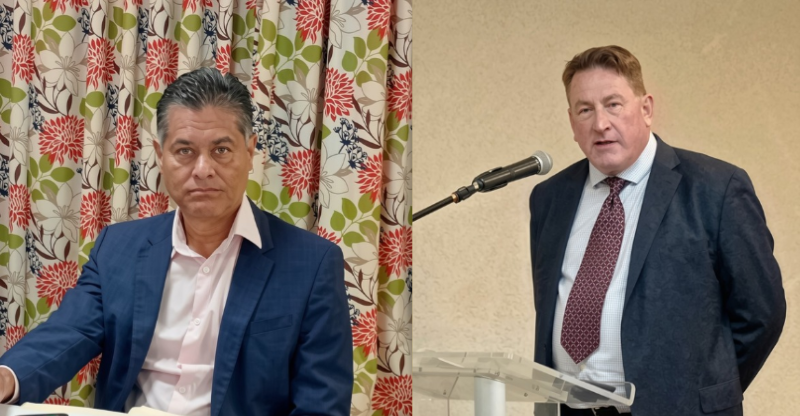
During the 178th board of directors meeting of the Sugar Association of the Caribbean (SAC) hosted at Barbados’ Radisson Aquatica Resort on Thursday, regional sugar sector leaders laid out a transformative new roadmap to unlock billions in untapped economic value across the bloc’s long-standing sugar industries. Top industry officials confirmed that Barbados is uniquely positioned to attract targeted foreign and local investment to build out refined white sugar production capacity, tapping into surging unmet demand across the CARICOM single market that has for decades relied on imported refined supplies after exporting raw brown sugar overseas for third-party processing. Historically renowned for its Demerara-style brown sugar, the Caribbean sugar sector is now pivoting to capture the high-margin added value that was long siphoned off by European and North American refineries that previously processed the region’s raw sugar exports. SAC Chairman Mac McLachlan emphasized that the regional trade framework established under the Treaty of Chaguaramas, paired with the Common External Tariff (CET) that shields local sugar producers from unfairly cheap imports, has created a highly favorable regulatory environment for new refinery investments. Belize has already paved the way for this shift, pouring US$500 million (BDS$1 billion) into its sugar production infrastructure over the past 10 years to launch its own operational refined white sugar facilities, which are already delivering strong, profitable returns for local stakeholders. Dan Gutierrez, a consultant with Belize’s Caribbean Sugar Refineries, confirmed that Belizean industry stakeholders including Belize Sugar Industries and Santander Sugar are extending a full, no-obligation offer of technical cooperation to Barbados, Guyana and Jamaica, covering expertise across every stage of the value chain: from on-farm sugarcane cultivation optimization, to milling efficiency upgrades, to the full operational know-how required to produce food-grade refined white sugar tailored for the regional bakery and beverage sectors. The SAC has already been providing targeted advisory support to Barbados’ state-linked Barbados Energy and Sugar Company (BESCO) to refine its long-term strategic plans, with backing from Barbados’ Prime Minister and Minister of Agriculture, who have publicly prioritized the revitalization of the domestic sugar sector. Beyond refined sugar itself, McLachlan highlighted that the modernized sugar industry delivers cascading cross-sector benefits: high-grade molasses, a critical feedstock for Barbados’ world-famous rum distilleries, represents a high-value by-product, while sugarcane biomass can be harnessed to generate renewable electricity, cut regional carbon emissions, and advance CARICOM’s collective food and energy security targets. A landmark market shift is set to take effect by the end of 2024, marking the first time in multiple generations that 100% of the Caribbean’s domestic sugar demand will be satisfied by regionally produced supplies, eliminating the decades-long pattern of exporting raw unprocessed sugar to external markets and losing out on associated profits and jobs. SAC is also actively collaborating with the CARICOM Council for Trade and Economic Development (COTED) to roll out a unified cross-border sugar flow monitoring system, which will track both imports entering the bloc and domestic production volumes to ensure supply and demand are perfectly aligned, de-risk future refinery investments, and prevent unfair market dumping. The four remaining English-speaking Caribbean sugar producing nations have formally pledged to prioritize boosting productivity and expanding high-value output, framing the ongoing transformation as a lifeline to sustain the livelihoods of hundreds of thousands of rural Caribbean households that depend on the sugar sector for income.