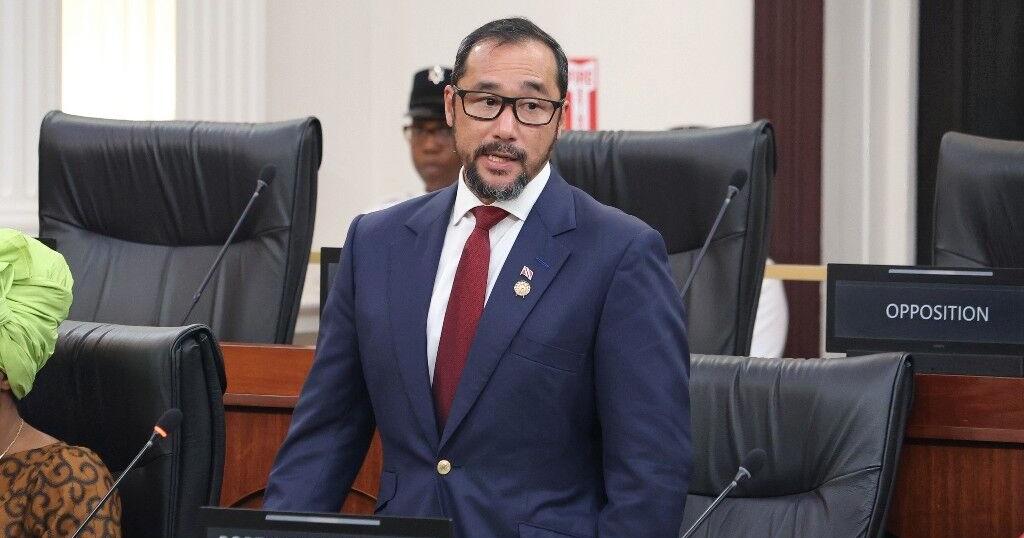
A bitter public political clash has broken out in Trinidad and Tobago over the history of bilateral relations with neighboring Venezuela, as the current national administration works to mend ties fractured by months of rising tensions tied to United States military operations in the Caribbean. Former prime minister and energy minister Stuart Young, a senior figure from the previous People’s National Movement (PNM) government, has publicly pushed back against claims from current officeholders, asserting that Prime Minister Kamla Persad-Bissessar and Energy Minister Dr. Roodal Moonilal will not be permitted to “rewrite history” on the Caribbean nation’s diplomatic track record.
The controversy began earlier this week, when Moonilal spoke at a public event in La Brea and praised current Foreign and Caricom Affairs Minister Sean Sobers for his work repairing what he described as damage to Trinidad and Tobago-Venezuela relations inflicted by the former PNM administration. Moonilal’s comments came after months of escalating diplomatic friction between the two countries, sparked by a large-scale United States military buildup in Caribbean waters and a series of maritime strike operations that preceded the ouster of longtime Venezuelan President Nicolas Maduro in early January.
Young, who made 13 trips to Caracas during the PNM’s tenure in office and negotiated the high-profile Dragon and Manakin-Cocuina natural gas deals with Venezuelan acting president Delcy Rodriguez, took to Facebook on Wednesday to challenge Moonilal’s narrative. He pointed out that it was Persad-Bissessar and Moonilal who spent years attacking Rodriguez and even called for sanctions against him and former PNM prime minister Keith Rowley as the previous administration carefully managed ties with Trinidad and Tobago’s closest northern neighbor.
“Under the past PNM administration, the bilateral relationship between Trinidad and Tobago and Venezuela was always strong, stable and respectful, with no declarations of any politician being labeled ‘Persona non Grata,’” Young wrote in his social media post. He added that despite his reluctance to publicly call out a sitting minister, he deemed it his public duty to correct the historical record and hold Moonilal accountable. “No one will be allowed to rewrite history, or pretend that the current prime minister and her government bear no responsibility for the deterioration of state-to-state relations between our two nations,” Young emphasized. In a sharp personal jab, he also suggested that Moonilal should undergo cognitive and mental health testing ahead of an expected cabinet reshuffle.
The roots of the current diplomatic rift stretch back to last September, when the United States launched its military buildup and maritime strike campaign targeting alleged drug trafficking networks operating in the region. From the start of the campaign, Persad-Bissessar has repeatedly voiced unwavering support for U.S. operations, even going so far as to suggest that all drug traffickers should be killed violently. She rejected longstanding regional calls for the Caribbean to remain a “Zone of Peace”, even as the U.S. carried out 69 lethal airstrikes and sea strikes against vessels it claims were linked to “narco-terrorist” groups transiting Caribbean and Eastern Pacific shipping lanes.
Earlier in the escalation of tensions, Persad-Bissessar also pledged unfiltered access to Trinidad and Tobago’s territory and infrastructure for U.S. forces in the event of a Venezuelan attack on neighboring Guyana, a move that drew sharp condemnation from the Maduro administration. In response, top Maduro regime loyalists including Rodriguez issued multiple public warnings and criticisms of the Persad-Bissessar government.
When two Trinidadian fishermen were reported killed by relatives during the fifth U.S. strike in October, Rodriguez labeled Persad-Bissessar’s pro-intervention statements a “self-fulfilling prophecy.” She also publicly pushed back against an outrageous claim from Trinidadian housing minister Phillip Edward Alexander, who claimed India would launch a nuclear strike on Venezuela to defend Trinidad and Tobago. “A nuclear bomb has already exploded in the brain of his government,” Rodriguez responded at the time. She added, “Trinidad and Tobago must think of its own people before it considers attacking Venezuela and renounce its vassalage to the U.S. government, which seeks to steal our vast energy resources. Our people are fully committed to defending our freedom and self-determination through our peaceful diplomacy, and they will never succeed in undermining our sovereignty.”
After Trinidad and Tobago hosted the U.S. Navy destroyer USS Gravely in Port of Spain last year, the Venezuelan National Assembly declared Persad-Bissessar persona non grata. Now, following Maduro’s ouster in January, the Persad-Bissessar government has launched new efforts to repair the fractured bilateral relationship, with Foreign Minister Sobers recently traveling to Caracas for talks with new Venezuelan interim government officials. It remains unclear whether the persona non grata designation for Persad-Bissessar is still in effect under the new administration. Just days ago, the Trinidadian prime minister publicly stated she holds “love” for Rodriguez and hopes to meet with her in the near future, though no meeting has yet been scheduled.