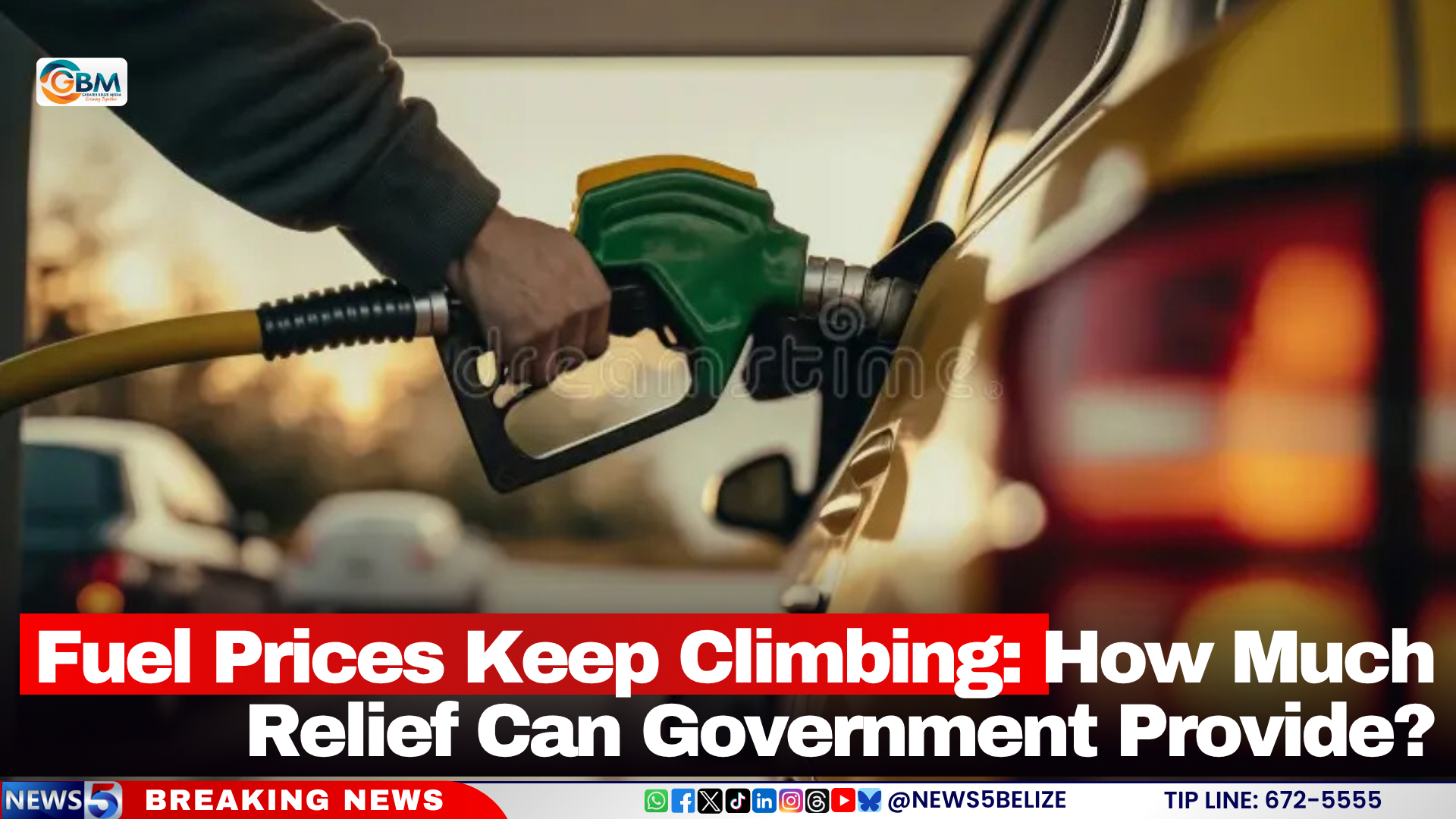
As of September 17, 2026, Belize is grappling with a persistent cost-of-living crisis driven by skyrocketing fuel prices, with diesel holding steadily above $15 per gallon. The mounting financial strain on ordinary households has pushed Prime Minister John Briceño’s administration to reevaluate what additional support measures the government can roll out to ease the burden.
In a candid public address, Briceño acknowledged a long-standing fiscal reality that has shaped fuel policy across successive Belizean administrations: the government has long relied on excise taxes levied on imported fuel as a stable, easily administered source of public revenue. This dependence, he noted, creates a difficult balancing act when global price shocks push costs out of reach for local consumers.
To date, the government has already cut fuel taxes to offset rising prices, a move that has cost the public purse more than $40 million in foregone revenue. Briceño estimated the revenue loss at approximately $40 million or more, cautioning that deeper cuts carry severe consequences for core public services. A full elimination of fuel excise taxes might deliver immediate relief to consumers, he explained, but it would starve funding for critical sectors including education, public health, and national infrastructure development.
“If we could eliminate the tax entirely while still sustaining all the social programs we deliver to the public — from education and health to infrastructure projects — I would eliminate it without hesitation,” Briceño stated.
The administration has already implemented targeted relief for key stakeholders: the country’s Cabinet recently approved a $2-per-gallon fuel subsidy for private bus operators, which will remain in effect through March 31, 2027, to prevent fare hikes that would further burden commuters. Beyond this sector-specific support, the government has rolled out a broader package of measures to protect household finances, including general sales tax exemptions and wage adjustments for public sector workers.
In his recent State of the Nation address, Briceño emphasized that the current wave of rising living costs is largely an imported crisis. As a net fuel importer, Belize is inherently exposed to global commodity price volatility that is outside the control of domestic policymakers, he explained. The ongoing review of additional relief comes as the government continues to balance supporting household budgets with maintaining the long-term stability of core public services.