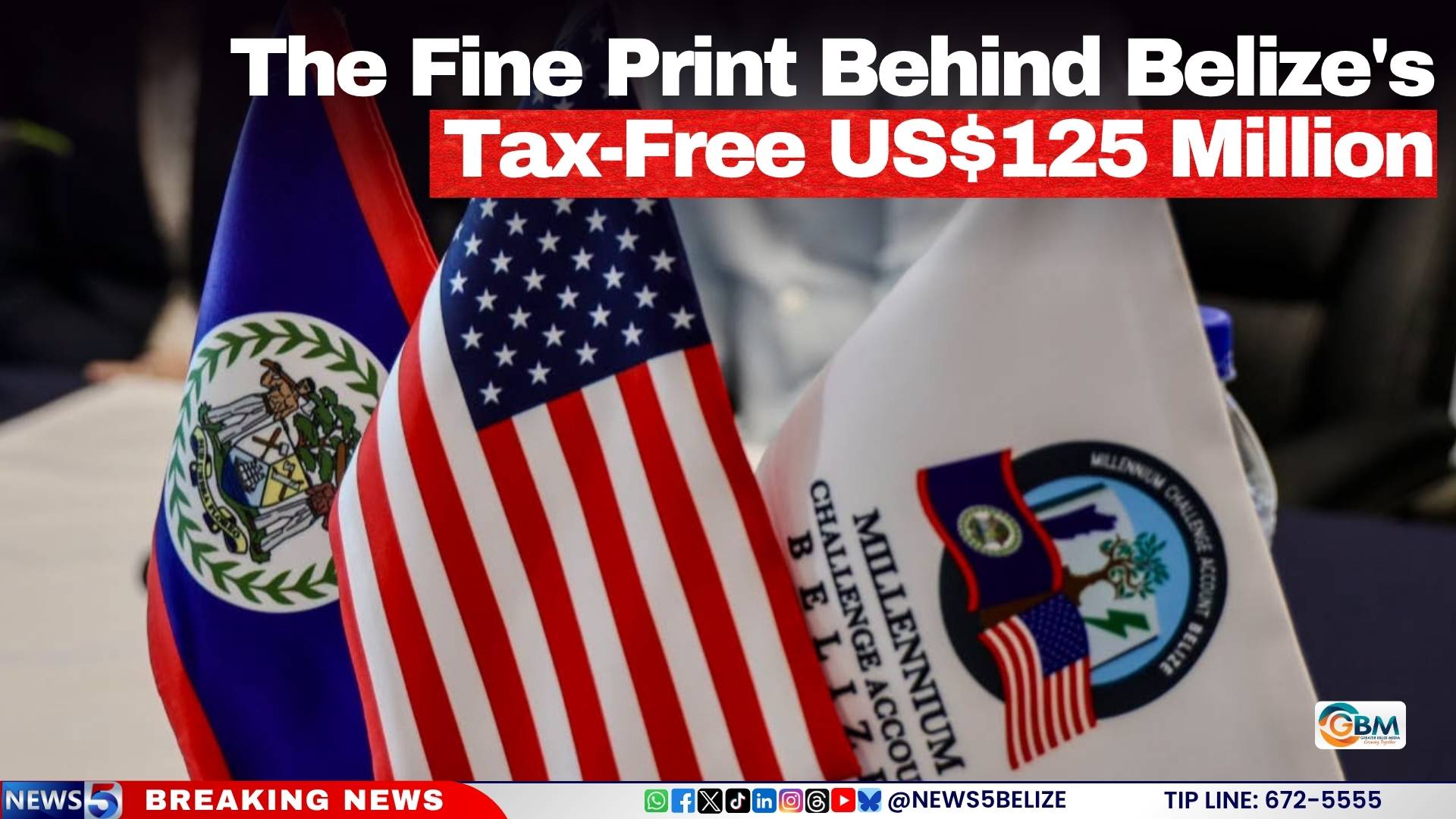
As Belize prepares to launch a landmark $125 million development compact backed by the U.S. Millennium Challenge Corporation (MCC) this week, questions have emerged over the sweeping tax, duty and fee exemptions written into the agreement. Officials are now clarifying the rationale behind the fine print, emphasizing that the exemptions are standard practice for international grant-funded programs and critical to delivering maximum impact for local development projects.
Joseph Waight, Belize’s Financial Secretary and chair of the board managing the Millennium Challenge Account-Belize program, explained that the tax waivers are not a special concession designed to benefit outside interests, but a necessary structure to preserve the full value of the U.S. grant for its intended purposes. Since the total amount of the grant is fixed at $125 million, any portion diverted to pay domestic taxes and government fees would directly reduce the capital available to implement planned projects.
“If the government were to charge taxes on services and on goods and services being funded by this grant, there’s less grant to spend,” Waight noted in his explanation of the policy.
Waight added that this exemption model is far from unique to the MCC program. It is a standard inclusion across nearly all bilateral and multilateral international grant initiatives, designed to ensure 100 percent of contributed funding goes toward the end development goals outlined in the funding agreement. “Any bilateral program and any multilateral program, there is a tax waiver in there because you want that money to fund the ultimate project. The government shouldn’t get any of that money for itself,” he stressed.
Contrary to speculation that the governing board holds broad discretion over allocation of the compact funds, Waight clarified that all project priorities and budget breakdowns are already finalized in the original agreement, which spans 125 pages including supporting annexes. The board’s primary mandate is not to reallocate funding or approve new projects, but to provide independent oversight as the five-year implementation process gets underway.
The compact is officially scheduled to enter into force on September 18, 2026, marking the official start of the half-decade implementation period that will deliver targeted development investments across Belize.