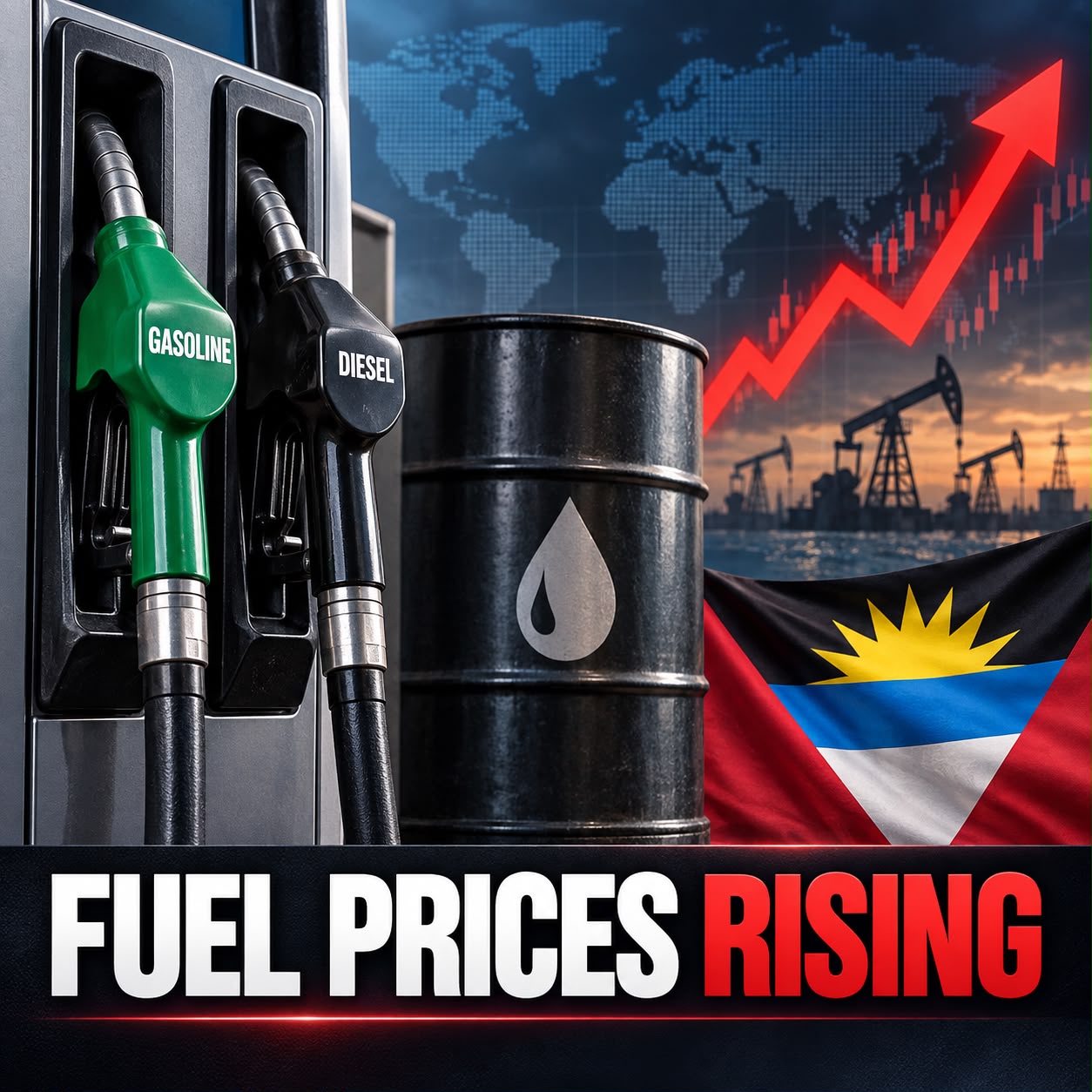
The twin-island Caribbean nation of Antigua and Barbuda is bracing for another round of increases to retail gasoline and diesel prices, Prime Minister Gaston Browne has confirmed, as sustained volatility in global oil markets keeps benchmark prices firmly above the $100 per barrel threshold. Browne made the announcement during an appearance on the local *Browne and Browne Show* this past Saturday, spelling out the unavoidable implications for consumers across the country.
The prime minister’s warning arrives on the heels of a dramatic weekly rally in global crude prices, driven by escalating geopolitical tensions in the Middle East and growing fears of widespread supply disruptions that have already stretched global energy inventories thin. Data from leading international newswire Reuters confirms that Brent crude, the global benchmark for oil pricing, closed at $104.61 per barrel this past Friday. Meanwhile, U.S. West Texas Intermediate crude settled just above the psychologically important $100 mark at $100.05 per barrel. Over the course of the week, both benchmarks recorded gains of more than 8% — a surge that aligns directly with Browne’s assessment that current trading prices hover around $105 per barrel.
The sharpest single-day jump came on Thursday, when Brent climbed as high as $107.63 per barrel. That intraday peak followed fresh attacks on commercial shipping routes in the Middle East, which amplified already heightened concerns over interruptions to global energy supplies that have remained tight for months amid ongoing production cuts and geopolitical constraints. Reuters data shows both crude benchmarks rose more than 6% during that single trading day alone.
In his address, Browne emphasized that the government of Antigua and Barbuda has no ability to influence or offset the movements of the global crude market. Beyond direct increases at fuel pumps, he warned, higher energy costs will send ripple effects through every corner of the domestic economy. As the prime minister noted, oil is a foundational input for nearly all manufacturing, transportation and industrial activity, meaning higher crude prices will quickly drive up costs for freight delivery, construction materials and a broad range of everyday consumer goods. “Everything that is manufactured is supported by oil. There’s a knock-on effect. Everything increases,” Browne explained.
At this stage, the prime minister has not released details on the size of the upcoming fuel price adjustment, nor has he confirmed a specific date when the revised pump prices will go into effect for motorists and businesses across Antigua and Barbuda.