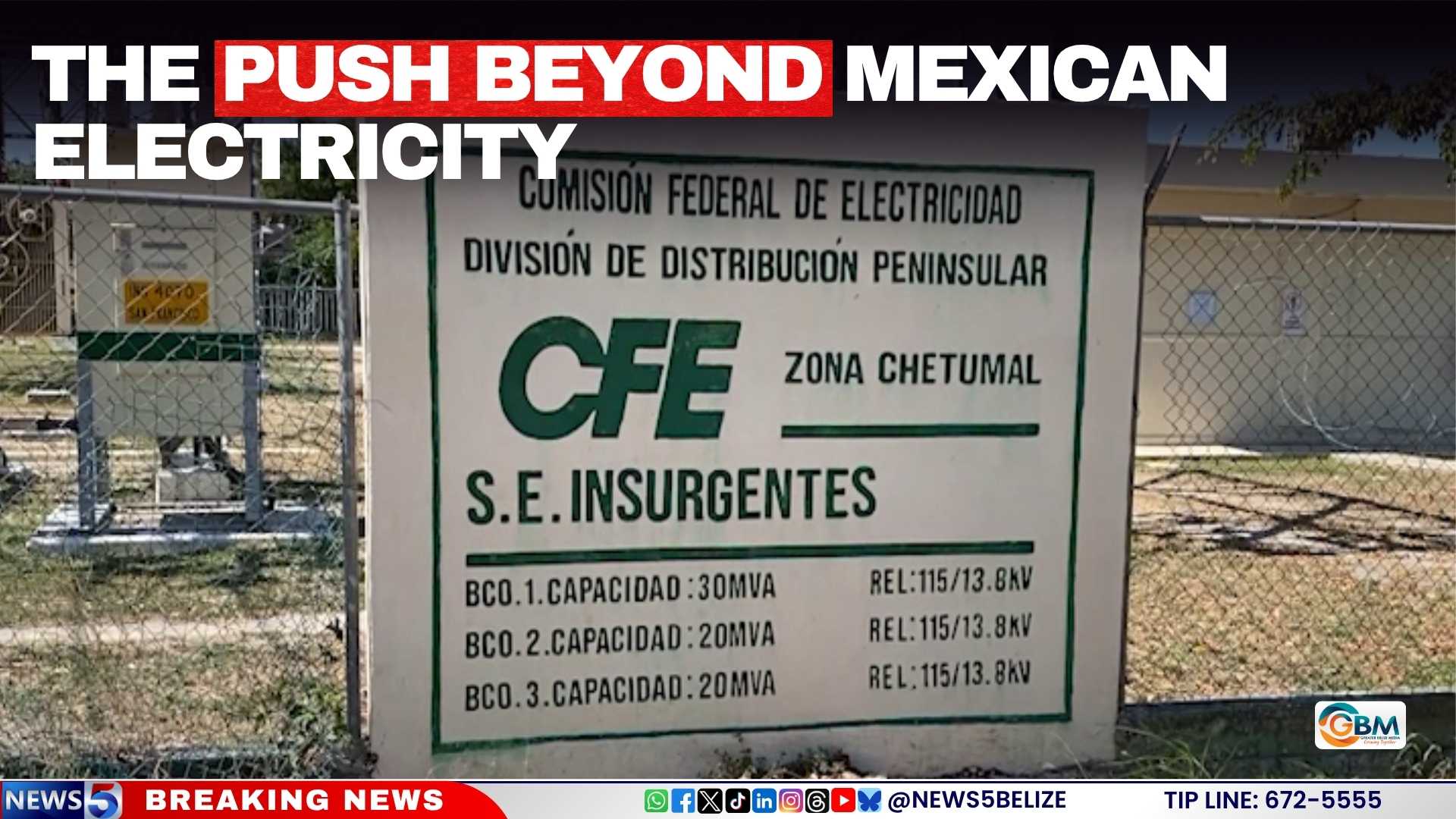
For nearly 30 years, Belize has relied on imported electricity from Mexico’s state-owned power utility Comisión Federal de Electricidad (CFE), a relationship that began as a supplementary power solution but has morphed into an unsustainable fiscal and energy challenge. Today, the small Central American nation carries a $30 million outstanding debt for imported power, driven by long-standing gaps between procurement costs and what consumers are actually charged for electricity.
Dr. Leroy Almendarez, Chief Executive Officer of Belize Public Utilities, explained that the core issue stems from a failure to implement the long-standing “cost pass-through” model that governs utility pricing. Under standard industry practice, the full cost of purchased power is passed directly from the utility to end consumers, with no markup or absorption by the provider. For years, this model was not enforced in Belize, creating a persistent variance between what the country’s main utility BEL pays its two primary power suppliers — CFE and domestic provider Hydro Belize — and the revenue it collects from customer billing.
Over time, that small annual gap has compounded, ballooning into the nine-figure debt Belize now confronts. “If you buy power for ten dollars per unit but consumers only pay a lower rate, you never recover the full cost of the energy you’ve procured,” Almendarez noted. “That unpaid amount just builds up year after year, but you still have an obligation to pay your supplier for the power you purchased.”
Compounding the debt crisis is a growing energy security challenge: domestic demand for electricity continues to climb, and imported power from Mexico is increasingly unable to meet Belize’s peak energy needs at critical times. In response, Belize’s government has issued an emergency declaration over the country’s projected near-term electricity shortfall, opening the door for a sweeping shift in national energy strategy that prioritizes expanding domestic power generation.
At the center of the country’s new approach is a push for distributed generation, a model centered on small-scale, local production including solar photovoltaic panels paired with grid-scale battery energy storage. Unlike large centralized power plants, distributed generation spreads production across multiple sites, feeding power directly into the national grid to reduce reliance on cross-border imports. The strategy is designed to both cut the growth of import debt and shore up the country’s energy independence.
Almendarez emphasized that battery storage is a non-negotiable component of this expansion, as variable renewable energy sources like solar only generate power during daylight hours. Without adequate storage capacity to capture excess solar production for later dispatch during peak evening demand, the new domestic generation capacity will fail to resolve Belize’s supply gaps. As the country moves forward with procurement for new generation projects, the transition to local distributed energy is poised to reshape Belize’s energy landscape for decades to come.