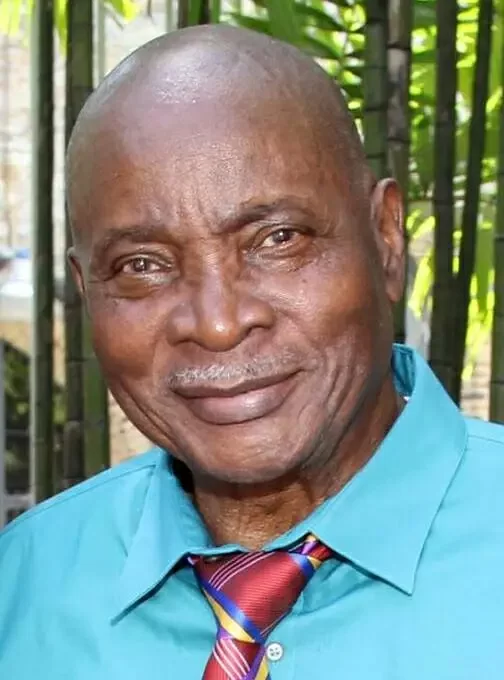
The global Caribbean music community is mourning the loss of one of its most influential figures: Slinger Francisco, better known to audiences worldwide as The Mighty Sparrow, who passed away at the age of 91. Born in Grand Roy, Grenada on July 9, 1935, Francisco moved with his family as a child to Trinidad, where he grew up in the working-class neighborhood of Laventille just outside Port of Spain. His family confirmed in a statement that he died on Sunday at a New York medical facility after a short illness, surrounded by his closest loved ones.
Francisco’s career stretched across more than 70 years, cementing his status as the defining voice of calypso music. From his teenage years, when he first performed with a local steelband during Trinidad’s annual Carnival celebrations, he captivated crowds with his distinct rich vocal tone, high-energy live sets, and sharp, witty lyricism. His songs blended playful humor, incisive satire, and incisive social commentary, tackling topics ranging from regional politics and shifting social norms to romantic relationships, cultural identity, and the everyday realities of Caribbean life.
His breakthrough came in 1956 with the hit track *Jean and Dinah*, which earned him both the coveted Calypso Monarch and Road March titles at Carnival. The song offered a thoughtful reflection on the social and economic shifts that followed the withdrawal of United States military bases from Trinidad, setting the template for his career-long focus on tying music to current events and community experience.
Over the decades that followed, Sparrow built an international career, touring frequently across Trinidad and Tobago, the United States, and countries across the globe, and releasing dozens of charting and critically acclaimed albums. New York eventually became his primary base for creating and performing music. He also shared a uniquely special connection with the South American nation of Suriname, where he performed multiple times and released the 1998 track *Paramaribo* on his album *The Supreme Serenader*. The track served as a warm musical tribute to Suriname’s capital city, celebrating the country’s natural beauty and the diversity of its regional districts. For generations of Surinamese listeners, *Paramaribo* became one of Sparrow’s most beloved works, and he was embraced not just as a visiting Trinidadian artist, but as a familiar, cherished voice across the broader Caribbean cultural landscape.
Throughout his legendary career, Sparrow claimed an unmatched collection of top calypso honors: he won the Calypso Monarch (also called Calypso King) title eight times, took home the Carnival Road March prize eight times, and claimed the Calypso King of Kings title twice. Beyond his commercial and competitive success, his enduring legacy lies in how his discography mirrored the evolution of Caribbean society. He consistently used calypso as a platform to spotlight pressing political and social change, building a fanbase that extended far beyond the Caribbean to reach listeners across the world.
In recognition of his transformative contributions to Caribbean culture, Sparrow received dozens of high-profile honors, including Trinidad and Tobago’s Chaconia Gold Medal, an honorary doctorate from The University of the West Indies, and the Order of the Caribbean Community. In 2015, he was appointed an Officer of the Order of the British Empire (OBE). CARICOM has hailed him as both a sharp social commentator and a dedicated cultural ambassador, whose work captured the political culture, history, people, and social progress of the entire Caribbean region.
Beyond his iconic public persona, his family emphasized that Sparrow was also a devoted husband, father, grandfather, great-grandfather, partner, and friend. In his final days, the statement noted, he reconnected with his Christian faith and was baptized into the Seventh-day Adventist Church. Following news of his passing, Jamaican Prime Minister Andrew Holness offered his condolences, calling Sparrow a foundational figure in Caribbean music, noting that the artist’s music, humor, and social commentary have been a core part of Caribbean cultural life for multiple generations.
With his passing, the Caribbean region has lost an artist who shaped the development and global spread of calypso music over decades of groundbreaking work. For Suriname in particular, his legacy lives on in the beloved track that celebrates the nation’s capital, leaving a lasting musical bond between the artist and the country he immortalized in song.