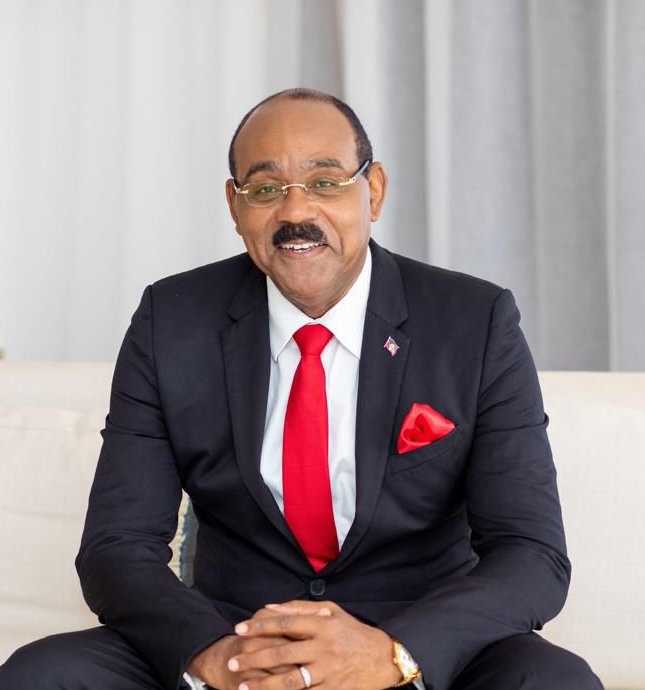
On September 7, 2026, Antigua and Barbuda Prime Minister Gaston Browne delivered an official message marking the annual celebration of Africa-CARICOM Day, calling for renewed collective action to build a transformative, people-centered strategic partnership between the two transatlantic regions.
Africa-CARICOM Day was established to honor the 2021 inaugural CARICOM-Africa Summit, where regional leaders gathered to open a new chapter in cross-Atlantic cooperation. As one of the key advocates for formalizing the September 7 observance, Browne emphasized that the commemoration is far more than a ceremonial gesture—it is a public declaration of shared ancestral roots, common global interests, and intergenerational responsibility to advance collective progress.
Separated by geography but bound together by centuries of shared history, both regions have carried the enduring harms of chattel slavery, colonial extraction, and systemic exclusion from the global institutions that shape international economic and political order. Out of this painful legacy, Browne noted, has emerged a shared legacy of extraordinary resilience, cultural creativity, and unyielding determination to claim a more equitable place in the world. Today, he argued, regional leaders have both a unique opportunity and a moral obligation to convert this shared historical experience into tangible shared prosperity for all citizens.
Browne reaffirmed Antigua and Barbuda’s unwavering commitment to deepening institutional and practical cooperation between CARICOM and African nations, stressing that solidarity must move beyond symbolic declarations to deliver concrete progress across seven key pillars: trade, investment, technology exchange, education cooperation, tourism development, transport connectivity, cultural exchange, and people-to-people ties.
He highlighted the growing partnership between Nigeria’s Air Peace and regional Caribbean carrier LIAT as a successful model of actionable cooperation, noting that improved air connectivity breaks down the geographic barrier that has long limited engagement between the two regions. Expanded air links will make it far easier for citizens to travel, conduct cross-border business, exchange ideas, and invest in each other’s economies, Browne explained. He also pointed to Antigua and Barbuda’s deep ongoing engagement with the African Export-Import Bank (Afreximbank) as further proof of the country’s commitment to building tangible economic partnerships.
Beyond economic and infrastructure cooperation, Browne emphasized that the Africa-CARICOM relationship is rooted in family, not just market access. “Africa is not simply a market for the Caribbean, and the Caribbean is not simply a market for Africa. We are family,” he said. The partnership is also about reconnecting communities torn apart by the transatlantic slave trade, helping younger generations trace their ancestral roots, celebrating shared cultural traditions across art, music, food, language, and spirituality, and restoring pride in a shared African-Caribbean identity that survived centuries of systemic erasure.
To institutionalize this cooperation, Browne noted Antigua and Barbuda has prioritized deepening diplomatic engagement with African nations and the African Union for more than a decade, including formal diplomatic ties with the Federal Democratic Republic of Ethiopia established in 2014. He called for the planned CARICOM-Africa Joint Commission to be activated as a permanent institutional framework to advance shared priorities, and for expanded cooperation in media collaboration, information sharing, and public diplomacy to help citizens on both sides of the Atlantic build greater familiarity and mutual understanding.
Looking ahead to 2026 as a year of accelerated action, Browne outlined four core priorities for the partnership. First, he called for intensified collective collaboration in the global movement for Reparatory Justice, clarifying that the movement does not seek to reverse history but to address the enduring systemic inequalities created by slavery and colonialism. He noted that the upcoming Third CARICOM Regional Conference on Reparations, scheduled for September 17-19 in Bridgetown, Barbados, will build on progress from the 2013 conference in St. Vincent and the Grenadines and the 2014 conference hosted by Antigua and Barbuda, advancing the work of the CARICOM Reparations Commission and its revised Ten-Point Plan for Reparatory Justice, framed as “A Manifesto for the Coming of Enlightenment.” Browne stressed that reparatory justice must remain tightly linked to equitable development, economic empowerment, expanded educational access, technology sharing, public health advancement, cultural restoration, and the fundamental right of self-determination for all peoples.
Second, Browne called for aggressive expansion of two-way trade and investment between African and CARICOM economies. Third, he prioritized expanding all forms of connectivity—including air, maritime, digital, and people mobility—as a central pillar of the modern partnership, arguing that geographic distance should no longer limit the strength of the relationship. Fourth, he urged leaders to place cultural and educational exchange at the center of cooperation, calling on schools, universities, cultural institutions, media outlets, and community organizations to serve as active bridges between the two regions.
Browne emphasized that Africa-CARICOM Day should not be reduced to a single day of speeches and ceremonies, but should serve as a yearly reminder of the work ahead to ensure young people inherit both an accurate memory of the past and the confidence to shape a shared future together.
Against a backdrop of rapid global change, the emergence of new economic power centers, and shifting global alliances, Browne noted that developing nations are increasingly demanding a greater voice in international decision-making. “Africa and the Caribbean cannot afford to remain on the margins of these transformations,” he said. Together, the two regions hold enormous human potential, abundant natural resources, dynamic creative industries, global cultural influence, and critical strategic importance. The core barrier to deeper cooperation is not a lack of capacity, Browne argued, but a need for sustained political will to act collectively—and he expressed confidence that this political will exists.
He reaffirmed that Antigua and Barbuda will continue to provide leadership to turn this shared vision into actionable progress, calling on all stakeholders to use 2026 Africa-CARICOM Day to renew their commitment to unity over division, partnership over isolation, development over dependency, and justice over historical harm. “Let us build bridges across the Atlantic. Let us strengthen the bonds between our peoples. Let us turn our shared history into shared opportunity,” Browne said. He closed by calling for a renewed commitment to building a partnership for the next generation that is stronger, more prosperous, more connected, and more influential on the global stage, extending his wishes for a meaningful Africa-CARICOM Day 2026 and long-lasting solidarity between the peoples of Africa and the Caribbean.