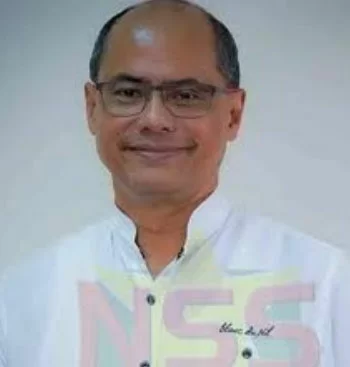
A debate over proposed changes to Suriname’s Surinamese Nationality and Residency Act is taking a new turn, as the National Party of Suriname (NPS) is pushing back against a narrow, athlete-focused framework for the planned legislation. NPS parliamentary faction leader Jerrel Pawiroredjo has made it clear that the law should not exclusively target elite footballers and other athletes of Surinamese descent, arguing that high-skilled professionals from the global Surinamese diaspora who can drive national development must also be eligible for citizenship under the new regulation.
Speaking in an interview with local outlet Starnieuws, Pawiroredjo outlined his party’s position: “We are cooperating on advancing this legislation, but we will not allow it to be narrowed down to only cover footballers and other athletes. That is not what we want.” The NPS leader emphasized that the amendment should prioritize diaspora members whose specialized expertise can directly support Suriname’s growth, naming engineers, agronomists, tax specialists and medical professionals as key groups the party wants to include in the final regulation. “These are the people we want to bring into this law,” he added.
Beyond pushing for a broader scope, Pawiroredjo also raised fundamental concerns about the current draft of the amendment currently under discussion. If the regulation is crafted solely to resolve a specific eligibility issue for Surinamese-origin athletes, he argues, it will amount to arbitrary, ad-hoc legislation that creates unfair exclusions. While he acknowledges that eligibility boundaries must be set somewhere, he warns that arbitrarily locking out other diaspora members who could make significant contributions to the country without just cause carries tangible risks.
“We have to recognize that this approach would exclude people who will rightfully feel discriminated against. That is the core risk of this current legislative approach,” Pawiroredjo explained.
The NPS leader acknowledged that public demand for a solution to the citizenship issue for Surinamese-origin athletes runs deep across Surinamese society. He credited the recent strong performances of Suriname’s national football team – the Natio – with uniting the country and fostering a widespread sense of national solidarity, adding that ignoring this broad public desire would be unwise. The NPS remains committed to finding a workable compromise, Pawiroredjo said, but insists that policymakers must account for the far-reaching consequences of the amendment.
Pawiroredjo stressed that granting citizenship to diaspora members, many of whom are third- or fourth-generation descendants of Surinamese emigrants living abroad, is a fundamental policy decision that requires careful deliberation. “This is not something you can do hastily. You have to think through this decision thoroughly, you cannot just rush it through,” he said, noting that he personally grapples with the complexity of the issue. “You cannot lightly grant citizenship to citizens of another country for this kind of specific purpose.”
He also cast doubt on claims that resolving dual nationality legal questions will be straightforward. Many proponents of the narrow draft argue that no legal conflicts will arise if Surinamese citizenship is granted outside of a formal voluntary application process, but Pawiroredjo says he remains unconvinced. “I am not yet convinced that this will be as simple as some claim,” he stated, adding that lawmakers must also respect the nationality laws and regulations of the countries where prospective citizens currently hold legal citizenship.
The parliamentary debate on the amendment in Suriname’s National Assembly was adjourned last Thursday. The proposal’s original sponsors will first release an amended version of the bill, giving all parliamentary factions time to review the revised text before discussion resumes. The National Assembly has scheduled a special recess session for 9:30 a.m. next Monday to take up the revised legislation.