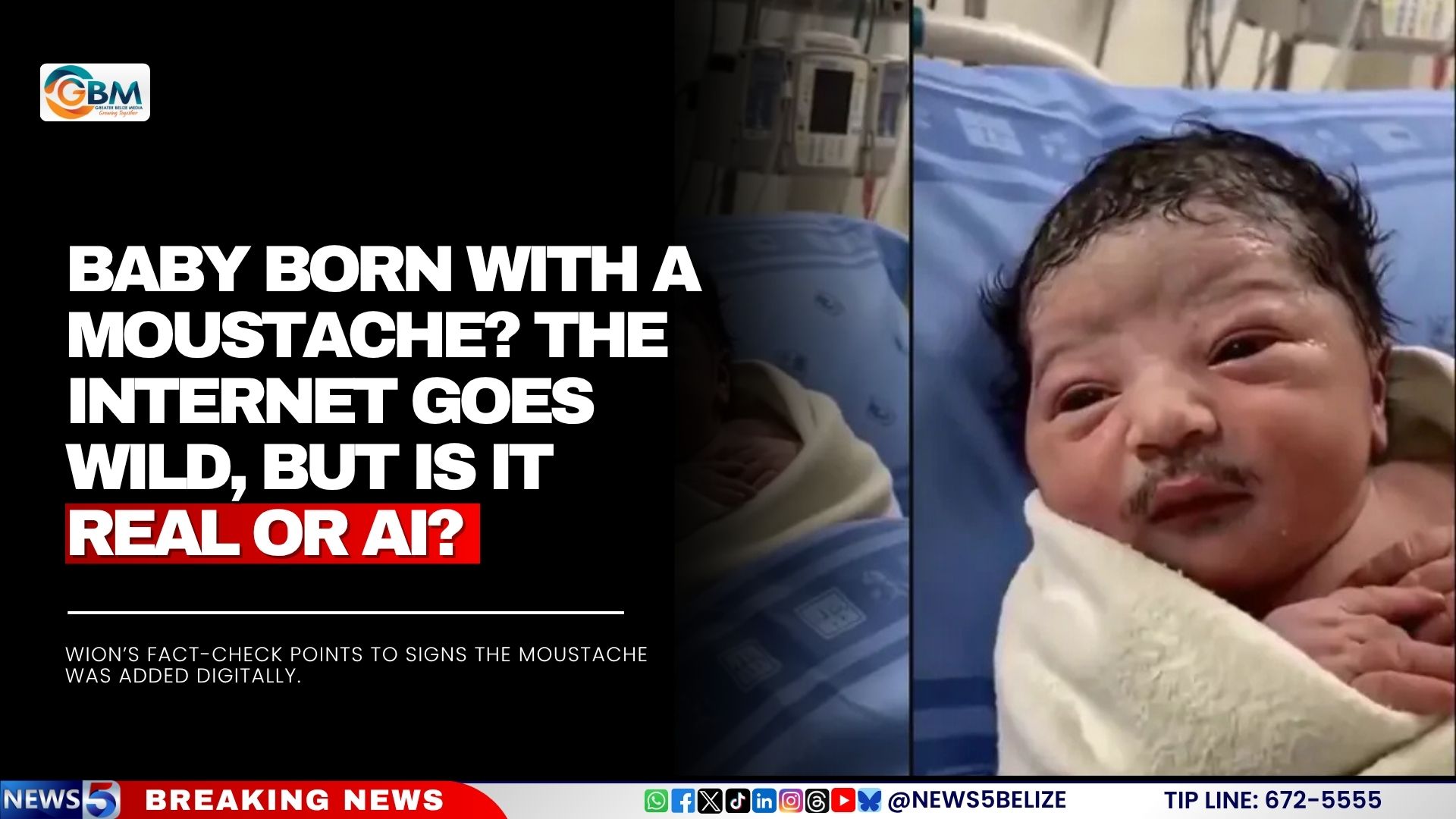
A bizarre clip purporting to show a newborn from Ecuador sporting a full, thick dark moustache has exploded across global social media platforms in late October 2026, racking up millions of views in just days and spawning a tidal wave of playful memes, satirical edits, and widespread debate over the footage’s authenticity. The short clip captures an infant with prominent dark hair concentrated across the upper lip and scattered sections of the cheeks, a visual that immediately struck viewers as deeply unusual, prompting a flood of humorous reactions from online audiences. Thousands of users took to comment sections to joke that the infant had seemingly skipped early childhood milestones entirely, with one viral quip noting the baby had “bypassed kindergarten and landed straight in his midlife crisis,” while other posters joked the child was effectively “born retired, already saddled with two mortgages and three kids.” The lighthearted banter quickly spilled over into creative image edits, where netizens reimagined the mustachioed infant in wildly absurd scenarios: seated behind an official desk in full military regalia under a plaque labelling him “Supreme Leader,” dressed in Mario’s iconic red plumber costume, suited up in a formal business blazer clutching a cigar, and clad in traditional Han dynasty warrior armour and helmet. As the viral momentum grew, independent fact-checks from outlets including WION and VICE stepped in to verify the footage’s legitimacy, addressing the underlying medical question of whether a newborn could naturally develop such distinct facial hair. Medical experts note that many infants are born with lanugo, a fine, unpigmented layer of soft fetal hair that typically sheds within weeks of birth, and occasionally lingers on the back, shoulders, ears, or face. But lanugo is never thick, dark, or neatly shaped enough to resemble an adult-style moustache, and no verified medical case records document a newborn born with the distinct facial hair seen in the clip. WION’s formal fact-check further identified clear digital editing markers: the moustache fails to shift naturally in tandem with the baby’s facial movements, flickers unnaturally every time the infant turns their head, and has flat, uniform lighting that completely mismatches the soft, directional lighting of the hospital room where the footage was purportedly shot. Investigators also confirmed no associated hospital, attending physician, medical record, or family connected to the supposed viral newborn has ever been identified, leading the outlet to conclude the infant in the original unedited footage is very likely real, but the distinct moustache was digitally overlaid using a modern AI face-mapping filter or comparable post-production editing tool. VICE’s accompanying reporting also outlined rare medical conditions that can cause excessive hair growth in infants, such as congenital hypertrichosis that may cover localized sections of the body or the entire frame, as well as isolated cases where babies developed temporary excess hair after prolonged skin contact with parents using topical minoxidil, a common hair loss treatment, a side effect that fully resolved once the parents discontinued use of the product.