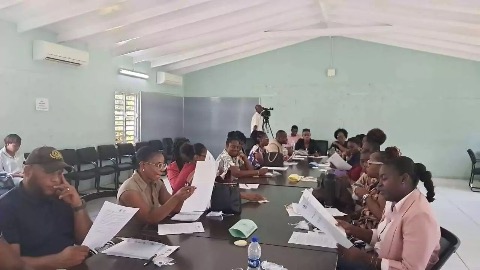
On September 2, more than 40 agricultural science teaching professionals from across the region converged for the annual national seminar and workshop hosted by the Ministry of Education. Centered on the forward-thinking theme “Growing Greatness,” the three-day event was specifically designed to equip participating educators with updated skills, knowledge and frameworks ahead of the 2026–2027 academic year, focusing on three critical, timely pillars for modern agricultural education: advancing domestic food production, integrating cutting-edge artificial intelligence tools into classroom learning, and addressing persistent systemic challenges facing the agricultural education sector.
Throughout the interactive workshop sessions, educators collaborated in working groups to develop actionable, context-specific strategies for converting locally grown staple crops into high-value, value-added consumer goods. This approach not only supports small-scale local farmers but also creates real-world, community-connected learning opportunities for secondary and post-secondary agricultural students. Leading agricultural education specialist Dr. Andrew Hunte used a keynote address and hands-on breakout session to encourage attendees to embrace generative AI tools such as ChatGPT as complementary teaching aids, demonstrating how these technologies can streamline lesson planning, create customized learning materials for students with diverse skill levels, and help learners explore complex agricultural data sets more efficiently.
In addition to teaching strategy discussions, senior education and agricultural officials updated attendees on ongoing infrastructural developments and institutional expansion plans. They detailed progress on several new school-based irrigation projects designed to give students hands-on experience with sustainable water management for crop cultivation, and shared early-stage plans to introduce formal accredited agricultural science degree programs at The University of the West Indies Five Islands Campus, a move that would expand access to advanced agricultural training for local students and reduce the need to study the discipline abroad. To close the event, organizers celebrated the contributions of long-serving educators, with several participants receiving formal awards and public recognition for their decades of outstanding service to advancing agricultural education across the country.