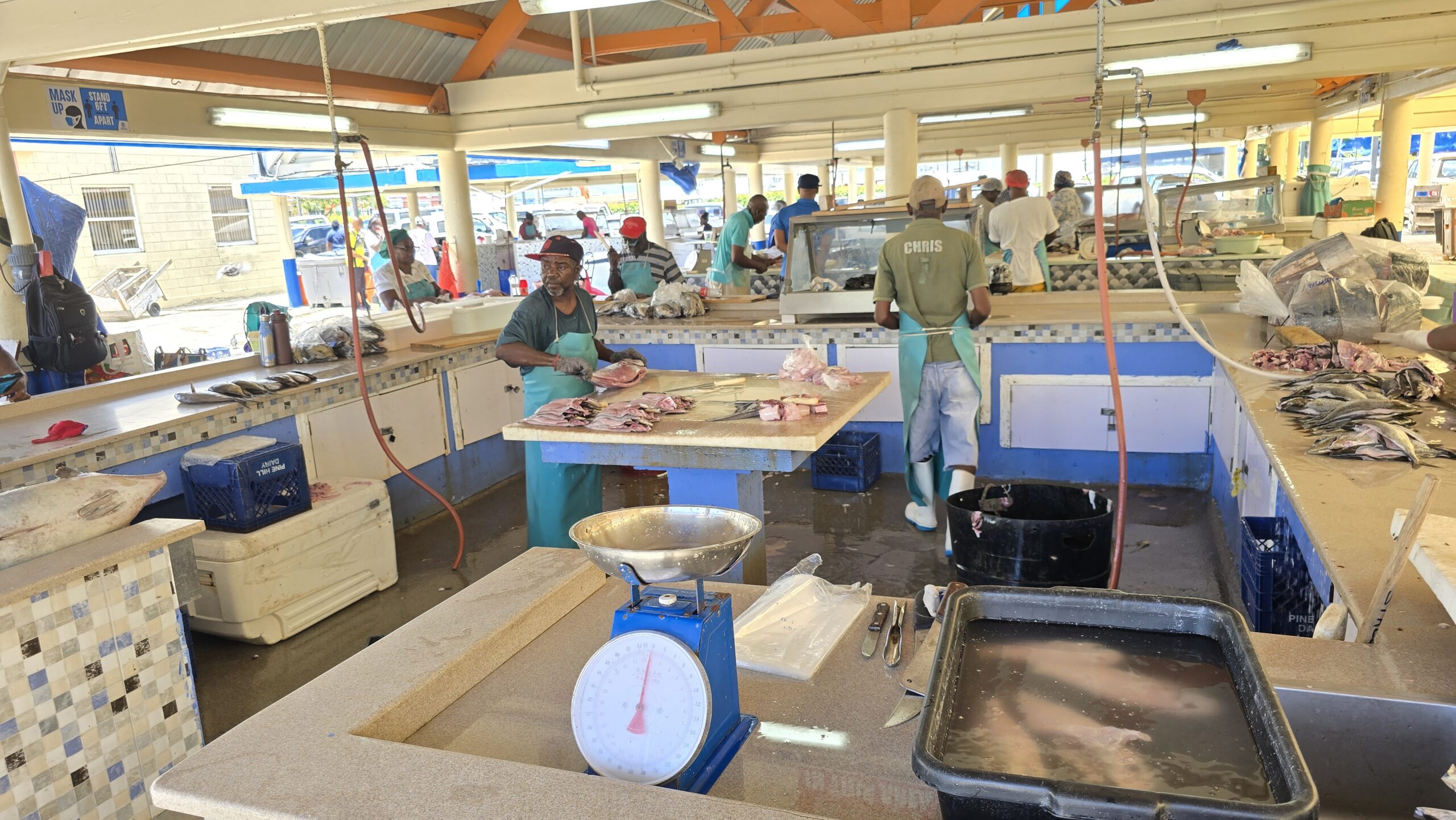
A sudden and massive surplus of fresh wild-caught fish has sent wholesale and retail prices tumbling at Barbados’ Bridgetown Fisheries Complex, forcing vessel owners and local fisherfolk to issue an urgent public call for residents to step forward and purchase the overflowing stock.
The appeal was publicly made Wednesday by experienced boat owner Donna Nobel during an on-site interview with Barbados TODAY, when she confirmed that thousands of pounds of freshly caught fish remain unsold and stored on ice across the facility, with popular species including amberfish, snapper, and tuna all facing excess supply.
Nobel explained that the current market dynamic has flipped the usual pricing logic entirely. Where limited catches in previous periods pushed retail prices higher, the sudden flood of new catches has forced sellers to slash margins to move inventory. She highlighted the exceptional value currently on offer: whole amberfish is available from fishing vessels at just $6 per pound, a price point that undercuts even affordable poultry products in Barbados.
Minor additional service fees apply for post-purchase processing, she clarified. Fisherfolk charge an extra $1 per pound to clean, debone, and fillet catches, bringing the retail price of processed amberfish to $7 per pound. For context, she outlined common pricing structures for bulk and small purchases: two one-pound packs of processed amberfish total $16, a far lower cost than many comparable protein sources on local grocery shelves. Other species also carry steep discounts: fresh snapper retails at $14 per pound (plus $1 per pound for processing), while tuna is priced at $11 per pound for smaller orders, dropping to $10 per pound for bulk purchases of 10 pounds or more.
The amberfish surplus has also created an unexpected shift in the local fishing market that explains recent price increases for flying fish, a regional staple. Nobel noted that flying fish require long, expensive offshore trips to catch, with vessels traveling up to 500 miles from shore. A single excursion can cost as much as $7 000 in fuel alone, before accounting for additional costs for crew provisions and ice. With high volumes of easily accessible amberfish already available close to shore (which swim in areas with dense seaweed populations, unlike flying fish that inhabit clearer offshore waters), most fishing boats have opted to remain closer to home instead of making the costly trek for flying fish. This reduction in supply has naturally pushed flying fish prices higher in recent weeks.
In terms of infrastructure support, Nobel confirmed that the Ministry of Environment, National Beautification and Fisheries has an existing agreement in place to supply fisherfolk with daily ice on demand, which allows operators to store and freeze excess catch to prevent spoilage. The Bridgetown Fisheries Complex itself features a centralized blast freezer that serves the entire facility, and additional cold storage capacity is available at nearby BICO facilities, so short-term storage is not a critical issue.
Even with that support, however, the extreme supply surplus has created operational challenges. The complex’s existing receiving infrastructure has reached full overcapacity, so when new vessels return to port with additional catches, operators are forced to absorb extra unplanned costs to manage the overflow.
Veteran fisherman William Mosley echoed the urgency of the appeal, explaining that he has been forced to travel off-site to sell his catch just to clear inventory. “Right now I done selling, I sell my fish at Oistins, I sell my fish all over the place just to get it done,” Mosley said.
The steep discounts have created an unexpected opportunity for Barbadian consumers to access high-quality fresh seafood at record low prices, as producers work to clear the current glut.