A quiet but transformative shift toward electric transportation is unfolding across Belize, where long-standing preferences for traditional gasoline-powered vehicles are slowly giving way to accessible, cost-competitive electric mobility options for residents across all income brackets. What was once seen as a niche luxury limited to wealthy consumers is now expanding into private passenger vehicles, commercial taxi fleets, and public transit networks, marking a milestone in the country’s sustainable transport transition.
On Friday, global automotive manufacturer BYD launched its latest plug-in hybrid electric SUV model, the Ti 7, in Belize’s market. The model, which packs premium comfort and convenience features typically reserved for high-end luxury SUVs from brands like Range Rover, carries a retail price of approximately $130,000. Unlike fully electric models that require consistent access to charging infrastructure, the Ti 7 offers dual flexibility: owners can charge its battery at home or public stations, or refill a gasoline tank for longer trips, removing a key barrier to adoption for consumers nervous about the transition to electric drive.
Ryan Marin, managing director of BYD’s Belize operations, emphasized that the vehicle delivers exceptional value for its price point, far outstripping what competitors offer in the same segment. “The transition for a lot of people is a lot easier with a vehicle like this,” Marin explained. “Apart from that, you get a lot of luxury features, and a lot of space for the whole family. It might look like a very expensive SUV at first glance, but compared to other offerings on the market at this price point, it’s a strong deal. You can’t find another brand-new vehicle with a full warranty and robust after-sales support matching what we offer here, which is why we’re so excited to bring this model to Belize.”
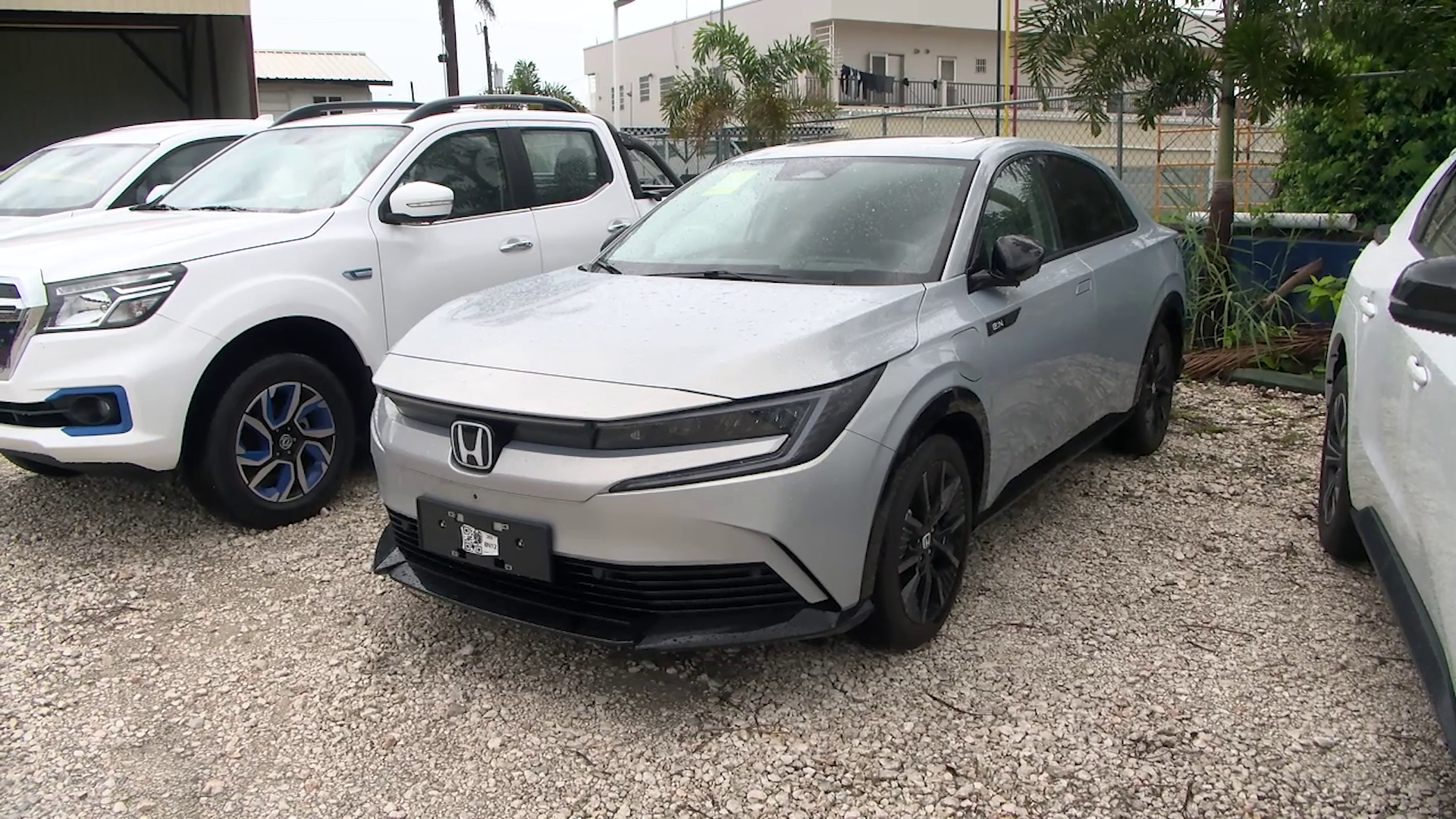
BYD’s launch is just one part of the growing electric ecosystem being built by Belize’s private sector. Local electric mobility firm E-Volution already operates a fleet of roughly 60 electric vehicles across the country, including all-electric SUVs priced starting at $60,000 – a price point that brings electric mobility within reach of middle-income consumers. The company’s current flagship offering is the Honda eNP1, which delivers 320 miles of range on a single full charge.
Isani Napata, program director at E-Volution, pointed to the long-term cost savings that make even the upfront purchase price of electric vehicles competitive with traditional gas-powered models. “When you buy a newer gas or diesel vehicle for around $30,000, you’re still on the hook for ongoing fuel costs that add up to the equivalent of a much more expensive purchase,” Napata explained. “Compare that to a $60,000 electric SUV that only costs $20 in electricity to drive all the way from Belize City to Punta Gorda. That’s around the same price as a bus ticket for that route, but you’re traveling in the comfort of your own private vehicle. You can’t beat that value.”
E-Volution is also working to expand electric access to public and commercial transport providers. Over the next 12 months, the company plans to invest $1 million in a rent-to-own program that will put 25 new electric taxis on Belize’s roads, alongside adding 7-seater and 11-seater electric vans to the program. The initiative will expand options for driver-owners and lower operating costs for small transportation entrepreneurs.
While private companies are broadening options for private and commercial drivers, Belize’s public sector is leading the large-scale transition to electric mobility. The country’s National Bus Company (NBC) has already completed a pilot testing program for electric buses, funded by a grant from the European Union, and is now on track to convert its entire 75-bus fleet to fully electric models by 2027.
Speaking in late August 2026, Minister of Transport Dr. Louis Zabaneh outlined that the first wave of 25 new electric buses, roughly one-third of the total fleet, was originally scheduled for September delivery but will now arrive in January 2027. “The economic case for this transition is clear,” Dr. Zabaneh noted. “The government is providing input to support the first phase of the project, and once the company becomes more profitable with lower operating costs, it will be able to secure financing for the remaining 50 buses independently.”
Local municipal governments are also joining the movement. Belize City, the country’s largest urban center, is moving forward with plans to expand its municipal electric transit network, adding new electric buses and e-taxis to serve growing public demand. A recent analysis conducted by UNDP e-mobility expert Dr. Curtis Voodoo found that electric transport reduces operating costs by as much as 41% compared to traditional internal combustion engine vehicles, building a clear case for expanded investment.
Belize City Mayor Bernard Wagner explained that the city is targeting underserved residential areas with the expansion, including Central American Boulevard, Jane Usher Boulevard, Yabra, Pen Road, Fabers Road, and the recently developed Belama Phase 4 and 5 neighborhoods. The city is already in the process of acquiring three additional electric buses to meet unmet demand for public transit in these areas.
With private sector firms rolling out a range of affordable new models and accessible financing options, and all levels of government investing in electric public transit infrastructure, the transition to widespread e-mobility is no longer a distant future for Belize – it is a current reality that is opening up sustainable, lower-cost transportation across the country. This report from Shane Williams was produced for News Five.