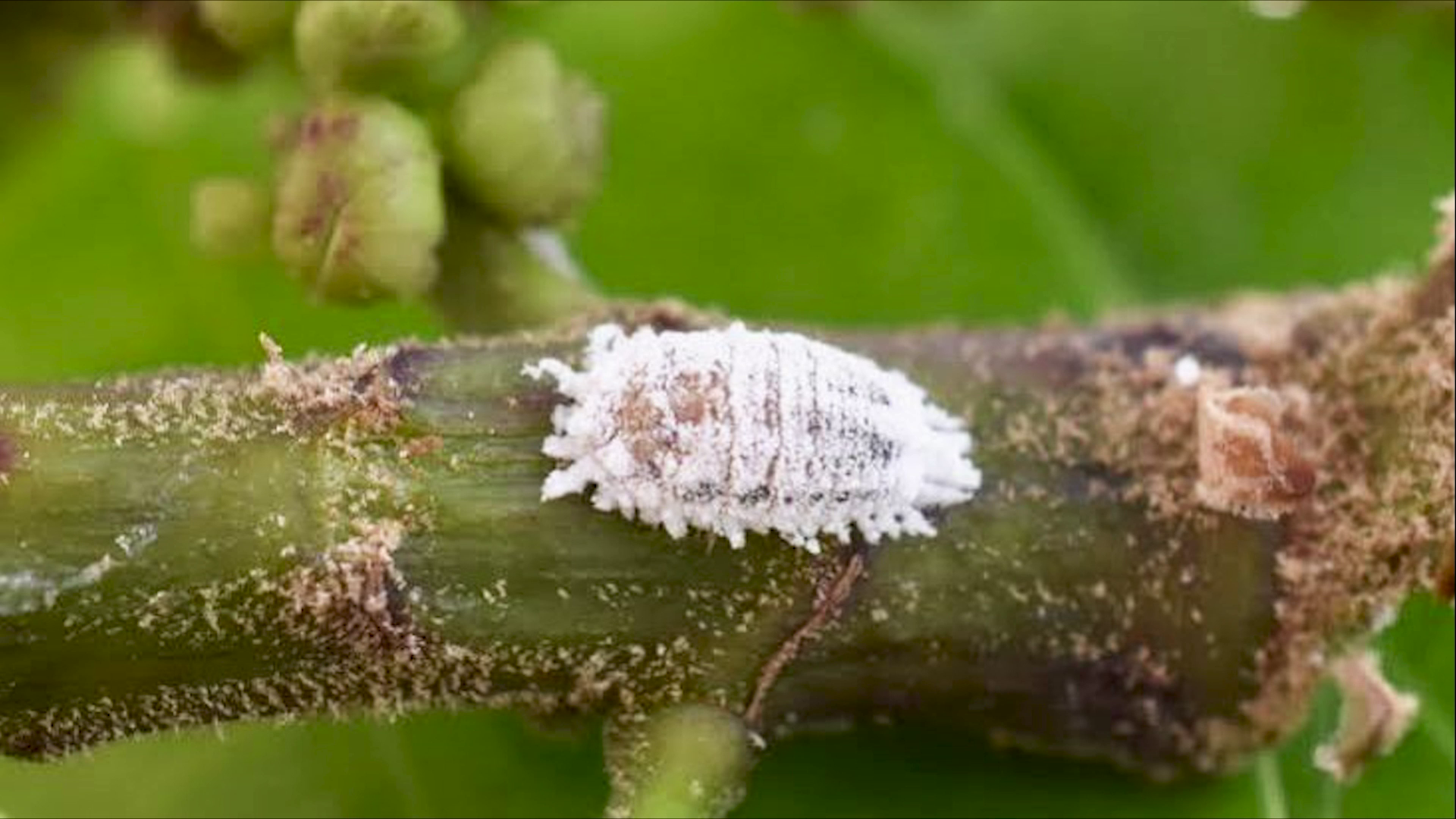
Scheduled for publication on September 1, 2026, this report reveals that a rapidly spreading tiny insect pest has emerged as a critical threat to Belize’s iconic sugar industry, compounding preexisting challenges that have already pushed the sector to a breaking point.
Mealybugs, a tiny sap-sucking pest, have been expanding their reach across sugarcane fields in northern Belize, sapping nutrients from growing cane stalks, weakening plant health and accelerating an already steady decline in annual harvest yields. To draw public attention to the escalating crisis and highlight ongoing containment efforts, industry stakeholders led media tours through affected farmlands this week, giving journalists a first-hand look at the damage inflicted across the region. Compounding the pest-related stress, widespread labor shortages across the agricultural sector have added further strain, with industry officials issuing urgent warnings that rapid coordinated action is required to avert catastrophic financial and production losses that could reshape Belize’s agricultural economy for years to come.
Olivia Carballo-Avilez, Cane Farmer Relations Manager at Belize Sugar Industries (BSI), broke down the scope of the production gap the industry is already grappling with before the mealybug outbreak worsened. BSI’s main processing mill is engineered to process up to 1.25 million tons of sugarcane annually, translating to a finished sugar output of between 123,000 and 125,000 tons per growing cycle. But this year, the total harvest delivered to the mill has fallen to just 823,000 long tons of cane. That sharp decline follows a 10 to 20 percent production loss recorded in 2025, which was caused by an outbreak of fusarium, another widespread crop pathogen.
Carballo-Avilez explained that the mealybug outbreak itself is linked to shifting climate patterns across the Central American region, noting that higher average temperatures and more extreme fluctuations between temperature and moisture levels have created ideal growing conditions for the pest. What makes the threat even more serious is that the infestation is not confined to Belize; sugar producers across the entire Central American isthmus, including major growing regions in Nicaragua, El Salvador and Guatemala, are all currently fighting the spread of what industry leaders now classify as an economically critical invasive pest. Before recent years, mealybugs were not considered a major threat to regional sugar production, making their sudden spread all the more alarming for producers.
Beyond the immediate damage to crop yields, the production shortfall creates cascading financial pressures for both mill operators and independent cane farmers. Processing mills carry substantial fixed operating costs that do not change based on the volume of cane processed: whether the facility runs at full capacity of 1.25 million tons or reduces operations to process just 700,000 tons, these fixed costs remain the same. This dynamic pushes per-unit operating costs sharply higher when harvest volumes drop, creating significant financial stress for the mill. For farmers, the impact is equally severe: lower total cane and sugar output means reduced revenue, at the same time that cost increases are passed down the supply chain.
*This report is adapted from a transcript of an evening television news broadcast, with original Kriol language text transcribed using a standardized spelling system.*