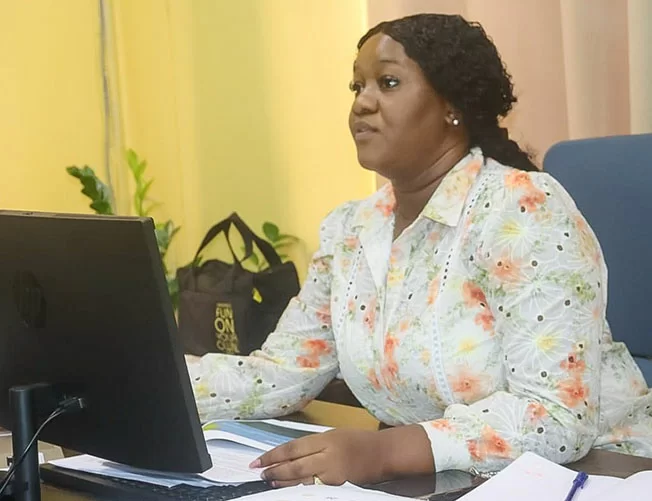
Suriname’s top official for regional development has announced a major policy shift to bring local governance closer to remote interior communities, calling for Sipaliwini district commissioners to end their current operation out of the capital Paramaribo and return to full-time work within their own administrative jurisdictions. Minister Miquella Huur of the Ministry of Regional Development (RO) is advancing plans to invest in upgraded housing and infrastructure for the seven administrative departments located across the vast interior district, covering the regions of Boven-Coppename, Boven-Saramacca, Boven-Suriname, Coeroenie, Kabalebo, Paramacca and Tapanahony.
Huur brought the proposal to the table during a strategic policy meeting held Monday with representatives from the Inter-American Development Bank (IDB), where she and her senior leadership team laid out the ministry’s core priorities for the coming term. As the largest district in Suriname by land area, Sipaliwini faces unique governance challenges rooted in its enormous size and rugged tropical geography, which have long strained efforts to deliver consistent public services to scattered local populations. The district is currently divided into the seven aforementioned administrative resorts, each overseen by a dedicated district commissioner.
Under Huur’s plan, each commissioner will resume full operational duties directly within the region they are tasked to govern – a departure from the current arrangement that sees all Sipaliwini commissioners based permanently in Paramaribo, hundreds of kilometers from many of the communities they serve. Before the transition can move forward, however, critical upgrades to commissioner housing and on-site facilities across the interior districts must be completed. Ministry officials note that functional, reliable infrastructure is a non-negotiable prerequisite to enable commissioners to carry out their work efficiently from inside the district, rather than managing affairs remotely from the capital.
The overarching goal of the relocation is to bring public administration and services closer to the rural and indigenous communities that call Sipaliwini home, reducing residents’ reliance on travel to Paramaribo to access basic government services. The housing and infrastructure upgrade project forms one key part of a broader portfolio of governance priorities Huur and her team discussed with IDB representatives, as the ministry explores potential development bank support for initiatives designed to strengthen administrative and institutional capacity across Suriname’s interior districts.
Adriana La Valley, IDB’s Country Representative for Suriname, clarified that any formal request for development bank support must first be submitted through Suriname’s Ministry of Finance and Planning, which had a representative in attendance at Monday’s meeting. To date, no formal funding commitment from IDB for the infrastructure upgrade has been secured. All proposed projects must first undergo further detailed design and planning before being submitted through official institutional channels for review and approval.