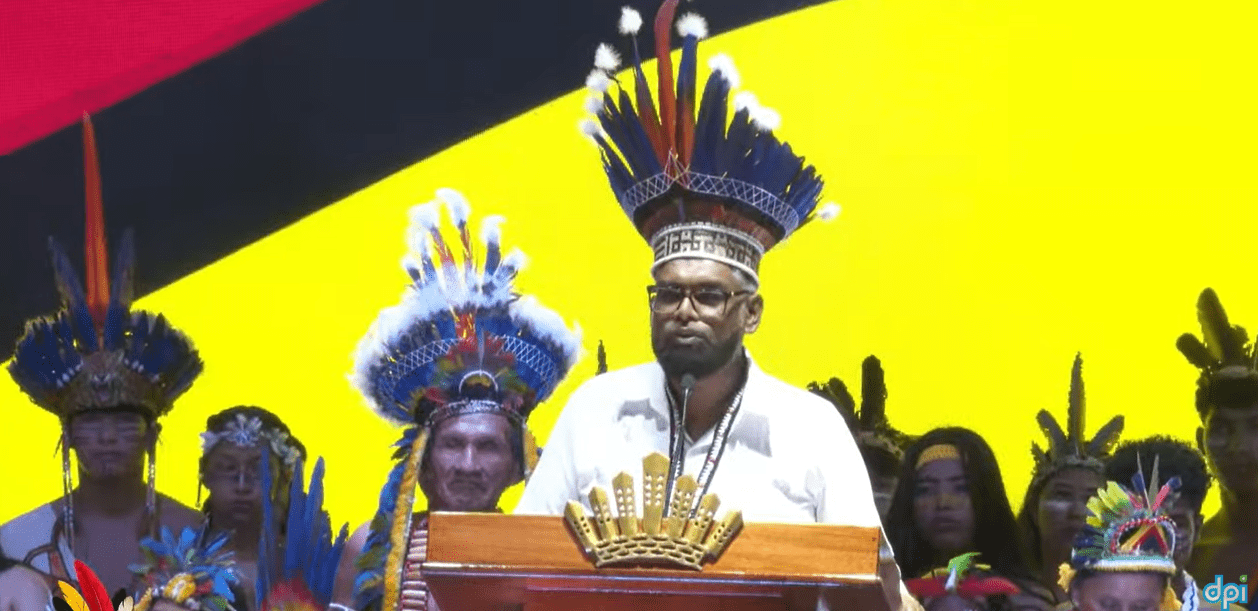
On 1 September 2026, Guyanese President Irfaan Ali publicly criticized the country’s three major telecommunications providers during the opening ceremony of the annual Amerindian Heritage Month cultural celebration, calling out their failure to expand reliable connectivity to the nation’s remote hinterland Indigenous communities. The head of state made clear that his administration is dissatisfied with the poor service performance from One Communications (formerly GT&T), Digicel, and E-Networks in these underserved areas, urging the firms to allocate more capital to bridge the country’s growing digital communication divide.
Ali further confirmed that Prime Minister Mark Phillips has already held preliminary discussions with the providers about prioritizing new telecommunications tower construction along the high-traffic Linden-Soesdyke highway, a key infrastructure corridor connecting coastal population centers to interior regions.
The opposition party We Invest in Nationhood (WIN) quickly pushed back against the government’s criticism, arguing that the administration itself bears responsibility for the persistent lack of connectivity in far-flung interior communities. WIN General Secretary Odessa Primus took to Facebook to question how private telecom providers can be expected to deploy and maintain infrastructure when the government has failed to deliver two core enabling resources: reliable electrical power and passable road networks.
Primus pointed out the absurdity of demanding broadband service without the basic infrastructure to support it, asking, “What exactly are they supposed to connect to? Internet without reliable electricity? Are people supposed to charge their phones with sunlight and power their routers with good intentions? Did the PPP Government put roads in place for internet infrastructure to be set up?”
The digital gap in Guyana’s interior is already stark: even in border communities like Imbotero, a northern Guyanese village located near the Venezuelan border, residents only have access to limited connectivity through satellite services such as Starlink that support basic messaging platforms like WhatsApp. None of the three major national mobile providers offer consistent, sustained cellular service to the village, leaving residents cut off from most digital services that coastal Guyanese take for granted.