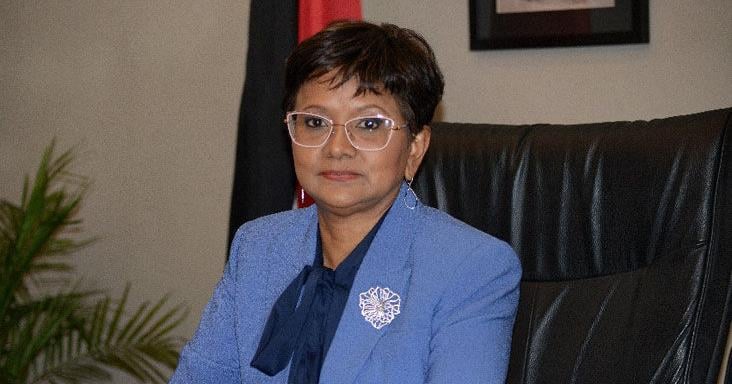
As Trinidad and Tobago marks its 64th year of national independence, President Christine Kangaloo has delivered a sober yet forward-looking national address that confronts the country’s most pressing challenges while calling on all citizens to embrace collective responsibility for the nation’s future.
Opening her address, Kangaloo did not shy away from the harsh realities facing the Caribbean nation, highlighting the widespread grief that has torn through communities due to persistent violence. “Too many families across our country have known the pain of losing loved ones to senseless violence, and every grieving household carries a sorrow that resonates across the entire nation,” she said. She emphasized that achieving independence does not require citizens to ignore deep-seated problems; instead, self-governance grants the freedom and imposes a non-negotiable duty to confront these challenges head-on.
Reflecting on the country’s constitutional journey, Kangaloo framed national sovereignty as a collective stewardship rather than a symbolic milestone. “Independence gave us the authority to chart our own national path, and transitioning to republican status placed full responsibility for our constitutional future in our own hands,” she explained. “Sovereignty, in the end, is stewardship: it is our shared duty to nurture the nation entrusted to us, and leave it stronger than we inherited it.”
The President stressed that the fundamental freedoms the nation celebrates must include the right to live without fear of violence. Every life cut short by violent crime weakens the entire country, she argued, making the demand for public safety and the rule of law not just a policy goal, but a fundamental citizen right. She pushed back against the false framing that personal liberty, public security, and the sanctity of life are competing priorities, noting that a mature democracy works thoughtfully to protect all three values simultaneously.
Building a peaceful, inclusive nation is a shared responsibility that extends far beyond government institutions, Kangaloo argued. Meaningful change begins at the community level: when adults teach children to value human life, when families, teachers, faith leaders and coaches help young people find a sense of purpose, and when every citizen chooses active engagement over indifference and collective service over personal gain.
A core pillar of that inclusive nation-building, she added, is a commitment to genuine equity for all citizens. While independence made all Trinidadians and Tobagonians equal under the law, true nationhood requires putting that equality into practice. This means celebrating the cultural differences that enrich national life without letting those differences determine who belongs, whose contributions matter, or whose dignity deserves protection. “The Republic belongs equally to every single citizen,” Kangaloo said. “Our national institutions are held in trust for all people, not the property of those who hold office, and their strength depends on the integrity of public servants and the vigilance of the communities they serve.”
Looking ahead to the future that will be led by the next generation, the President outlined key priorities to equip young people for success. The nation must leave behind institutions that earn young people’s trust, build an economy that rewards entrepreneurship, creativity and honest work, and expand opportunity so it is not limited by birth or background. She also highlighted the importance of passing down the nation’s rich cultural inheritance, noting that preserving the country’s faiths, traditions, music and shared stories is how generations have built unity from diversity.
Kangaloo also positioned environmental stewardship as a core part of national independence. The islands’ land and coastal ecosystems are a central part of the national inheritance, she said, so protecting these natural resources, planning for climate change, and strengthening domestic food production are core acts of national stewardship. She added that national sovereignty does not mean isolation; instead, Trinidad and Tobago’s independence is strengthened when it contributes to the Caribbean community and the global order through a commitment to mutual respect, cooperation and peace.
Noting the return of the traditional Independence Day parade after disruptions, Kangaloo said the event is not just a celebration of nationhood, but a reaffirmation of collective responsibility for the future. “The true measure of our independence is not simply that we have the freedom to make our own choices,” she said. “It is whether we choose wisely, whether we treat one another justly, and whether we leave the next generation a country that is more peaceful, more prosperous and more united than the one we received.”
Closing her address, the President recalled that 64 years ago, the nation took control of its own destiny, and 50 years ago, it reaffirmed that responsibility as a republic. “Today, that responsibility belongs to every single one of us,” she said. “Let us meet it with honesty about where we have fallen short, confidence in what we can still achieve, and faith in one another.”