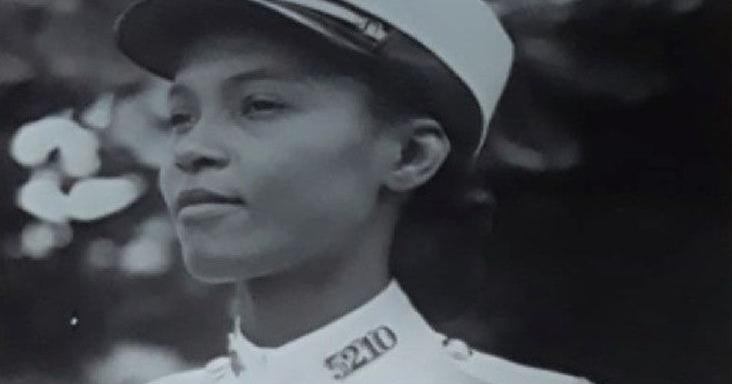
At 91 years old, Merle Bertrand, a trailblazing former Assistant Superintendent of Police (ASP) in Trinidad and Tobago, has witnessed the remarkable evolution of the Trinidad and Tobago Police Service (TTPS). From its early days as a heavily male-dominated institution where women had to fight hard to earn legitimacy, to a modern force where women now hold key senior leadership positions, Bertrand’s personal journey tracks every step of that change.
Bertrand is one of the last surviving members of the pioneering group of women police recruits known as Batch 5,000. In 1955, she made history as one of the first 12 women formally recruited into what was then called the Trinidad and Tobago Police Force. That year marked the official introduction of women officers to the service, with the initial mandate of handling cases involving juveniles and female victims. Today, the TTPS Museum honors these barrier-breaking pioneers with a dedicated Women in Policing exhibition.
In a recent telephone interview with local outlet *Express*, Bertrand opened up about the high stakes the first cohort of women faced back in 1955. Leadership made it clear that if the group failed to prove women could perform police work at the required standard, there would be no future recruitment of female officers. “The Executive Committee said that if we didn’t prove ourselves, that was it. So we had to fight, fight, fight. For two years we did, and they took the second batch,” Bertrand recalled.
Though the first women were hired primarily to work on women and children-related cases, their scope of responsibility expanded far beyond those initial limits far faster than expected. The 12 recruits were split across four stations in the former North Western Division: Woodbrook, Belmont, Besson Street, and Central Police Stations. At Central Station, Bertrand took on patrol duties and charge room work, even pulling overnight and weekend shifts with the Anti-Vice Squad, where she monitored vice establishments, made arrests, and participated in raids. After a transfer to Belmont Police Station, she began leading general criminal investigations, and later joined the Flying Squad for high-profile raids.
Slow but steady progress followed. Two fellow early female officers, Jessica St Rose and Merle Carter, traveled to the United Kingdom for advanced training; upon their return, they established the formal Women Police Branch and set official standing orders for female officers, creating a structured framework for women in the service. Bertrand added that the public quickly embraced female officers, saying “The public respected women police. People looked up to us, and we would get any information.”
Bertrand retired from the TTPS in 1985, but she has continued to closely follow shifts in crime and policing across the nation. Today, she says the level of violent crime plaguing Trinidad and Tobago would have been unthinkable during her active career. “We had crime, of course we had crime. But not like now. The guns, the guns, the guns and the drugs. I mean, it was there, but it was not like it is now. There are now so many gruesome killings. Women are being killed a lot more now and children weren’t being murdered (back then),” she said.
Beyond rising violence, Bertrand points to two other growing issues within the TTPS: a culture of impunity for corrupt officers, and a gap in practical on-the-job expertise left by retiring veteran investigators. “You have untouchables in Trinidad now, where you cannot touch the policemen. Whatever they are doing wrong they cannot be touched. If you don’t get rid of the head, you can’t get rid of the tail,” she argued. She also noted that when the generation of top veteran investigators retired, few new officers have been able to fill their roles. In her era, officers were not granted leave until high-priority cases – such as a string of repeat break-ins – were solved, a standard she says no longer holds. Today, she argues, many new recruits hold university degrees and high academic credentials, but lack the street smarts and hands-on investigative training that defined past cohorts: “Some of them never went and slept under houses and go in bush and wait for suspects to arrest them and stuff like that. They don’t know anything about that.”
When asked what she would do to reform the service if she were back in uniform today, Bertrand pointed directly to the foundation of the force: recruitment and training. She called for a return to mandatory regular refresher training for serving officers, a requirement she says has been phased out. For recruitment, she argues that academic qualifications should not be the primary hiring metric, saying “You can’t just have anybody who come up with degrees and say, ‘Right, I want to be a police officer,’ and say, ‘Right, the more degrees you have, the more passes you have, we going to pick you.’ No. You can’t do so. Something has to be done about the recruiting because, you can’t have all these passes and you don’t have any street sense.”
Bertrand’s legacy as a trailblazer and mentor endures among current and retired senior female officers. Retired Assistant Police Commissioner Joanne Archie, who also served as acting Deputy Commissioner of Police Operations and is also being honored by the TTPS Museum, called Bertrand a foundational influence for women in the service. “Women measured themselves against her. She stood tall, in bearing, in strength, and in the way she carried the responsibility of senior rank,” Archie said. “For many women in the Police Service, she was the mentor we needed. I was one of them. Her work ethic set the standard, and the way she conducted herself taught us what a senior officer should look like. Her voice was always her greatest strength — used to hold the line and to lift others up. I count it a privilege to have served alongside her.” Archie added that Bertrand remains active in police community WhatsApp groups, where she still shares insights on current policing issues, 69 years after first joining the force.