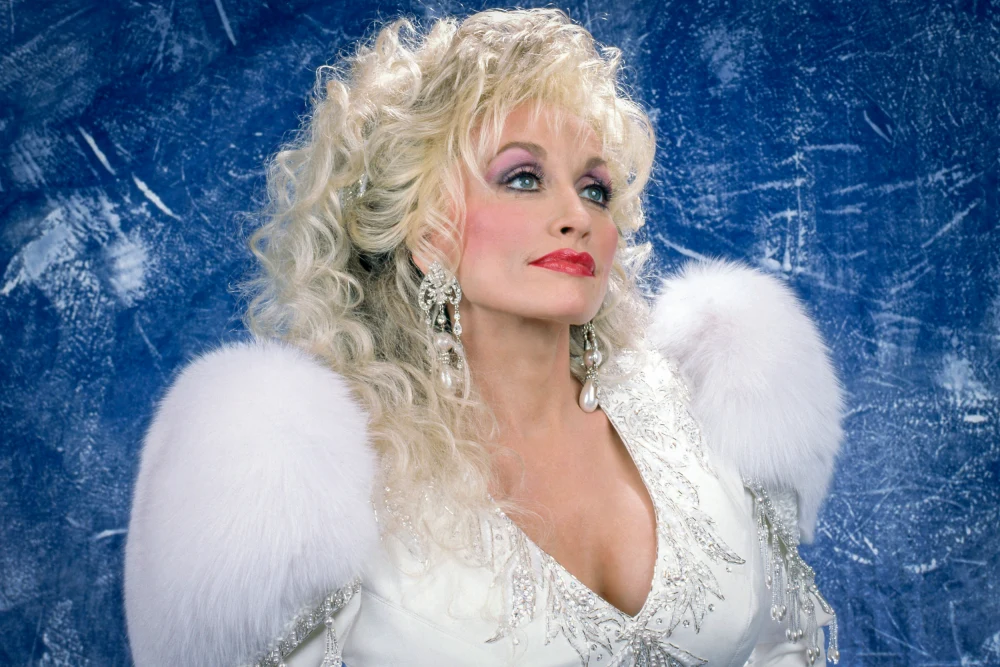
Beloved American cultural icon Dolly Parton, who transformed from a poverty-stricken childhood in the Appalachian mountains of East Tennessee into the universally acclaimed “Queen of Country Music” and a global Hollywood star, has passed away at the age of 80, her family confirmed in a video statement Tuesday.
The announcement was delivered by Brian Seaver, Parton’s nephew and long-time head of security, who noted the entertainment legend had requested he share the news years in advance. “This video announcement is something Dolly asked of me years ago, before I fully absorbed it as a future reality,” Seaver said. “As her head of security for more than two decades — a role my father Larry held before me — I have imagined the heaviness of this moment but haven’t truly felt it til now.” Seaver added that Parton, a devout Christian, “lived in the light and is in the arms of Jesus, surely met by Carl, her parents, and countless others” — a reference to her husband Carl Thomas Dean, who died in March 2025 at 82.
Parton’s death comes 10 months after she unexpectedly canceled a planned Las Vegas residency in May 2026, revealing she had battled recurring kidney stones for several years. In a characteristic quip at the time, she joked, “Lord, they dig more stones out of me a year than the rock quarry in Rockwood, Tennessee.” She added, “But seriously, my immune system and my digestive system got all out of whack over the past couple three years, and they’re working real hard on rebuilding and strengthening those and hopefully I’ll be up to snuff again soon.”
Across a 60-plus-year career, Parton built an unparalleled legacy that stretched far beyond music. She sold more than 100 million records worldwide, earned 11 Grammy Awards, and stands as one of the best-selling recording artists of all time. Music industry experts have long praised her one-of-a-kind vocal style: “Dolly Parton has one of the most distinctive voices in American pop music,” Katherine Dacey, a professor at the Berklee College of Music, noted ahead of Parton’s death announcement. “Her high soprano voice gets its distinctive character from her fast vibrato and vocal twang.”
Beyond her musical success, Parton conquered Hollywood, winning critical acclaim and new mainstream audiences for roles in iconic films including 1980’s *9 to 5* (for which she wrote and performed the chart-topping, culturally resonant title track), *Steel Magnolias*, and *The Best Little Whorehouse in Texas*. Known globally for her signature blonde bouffant, bold style, and sharp, self-deprecating humor, she famously joked, “It costs a lot of money to look this cheap” when asked about her iconic hourglass figure.
A shrewd businesswoman in an industry long dominated by men, Parton retained full creative control over her work and built a $650 million entertainment empire that includes the popular Dollywood theme park in her native East Tennessee. What many consider her most enduring legacy, however, lies in her extensive philanthropic work. Through the Dollywood Foundation, she has delivered poverty relief and funded educational programs across rural Appalachia for decades. Her Imagination Library, launched to honor her illiterate father, mails free books to children around the world, having distributed more than 300 million books across five countries since its founding.
Parton also made global headlines in 2020 when her $1 million donation to Vanderbilt University accelerated research that led to the development of Moderna’s COVID-19 vaccine. “Without a doubt in my mind, her funding made the research toward the vaccine go 10 times faster than it would be without it,” Dr. Naji Abumrad, the lead researcher who became Parton’s friend after treating her for a 2013 car accident, told the *Washington Post* that year.
Born in January 1946 in a one-room log cabin on the banks of Tennessee’s Little Pigeon River, Parton was the fourth of 12 children born to a illiterate sharecropper father and a mother who nurtured her early love of music through traditional Appalachian ballads. She wrote her first song at age 6, made her first public performance at her local church, and by 13 was appearing on regional radio and television, making her debut at the iconic Grand Ole Opry where she met Johnny Cash. Just one day after graduating high school in 1964, she moved to Nashville to pursue music, cutting her teeth writing hit songs for other artists before releasing her debut solo album *Hello, I’m Dolly* in 1967.
Her solo breakthrough came in 1974, when her self-penned track *Jolene* claimed the top spot on the U.S. country charts, followed by four consecutive number-one singles. One of those tracks, *I Will Always Love You*, would go on to become a global mega-hit for Whitney Houston in 1992. By 1977, Parton made history again as the first female country artist to sell more than one million copies of an album with her self-produced *New Harvest…First Harvest*, which also earned her first Grammy Award.
Throughout her life, Parton balanced open professions of Christian faith with unwavering advocacy for marginalized groups, including public support for marriage equality and transgender rights. In a 2017 interview, she asked, “I keep saying: If you’re the fine Christian that you think you are, why are you judging people? That’s God’s job.” While she largely avoided partisan politics, she became a fan favorite for her dry wit around elections, once writing after commenting on Hillary Clinton’s qualifications in 2016, “I try not to get political but if I am, I might as well just run myself ‘cause I’ve got the hair for it, it’s huge, and they could always use more boobs in the race.”
Parton credited her decades-long success to the quiet support of her husband Dean, who stepped out of the spotlight entirely from their 1966 wedding until his death. She once noted that the couple’s choice not to have children gave her the freedom to build her career: “Since I had no kids, and my husband was pretty independent, I had freedom,” she told Oprah Winfrey in 2020. “So I think a big part of my whole success is the fact that I was free to work.” Always rooted in her Appalachian upbringing, she famously advised fans, “Never ignore your roots — your home or your hair.”