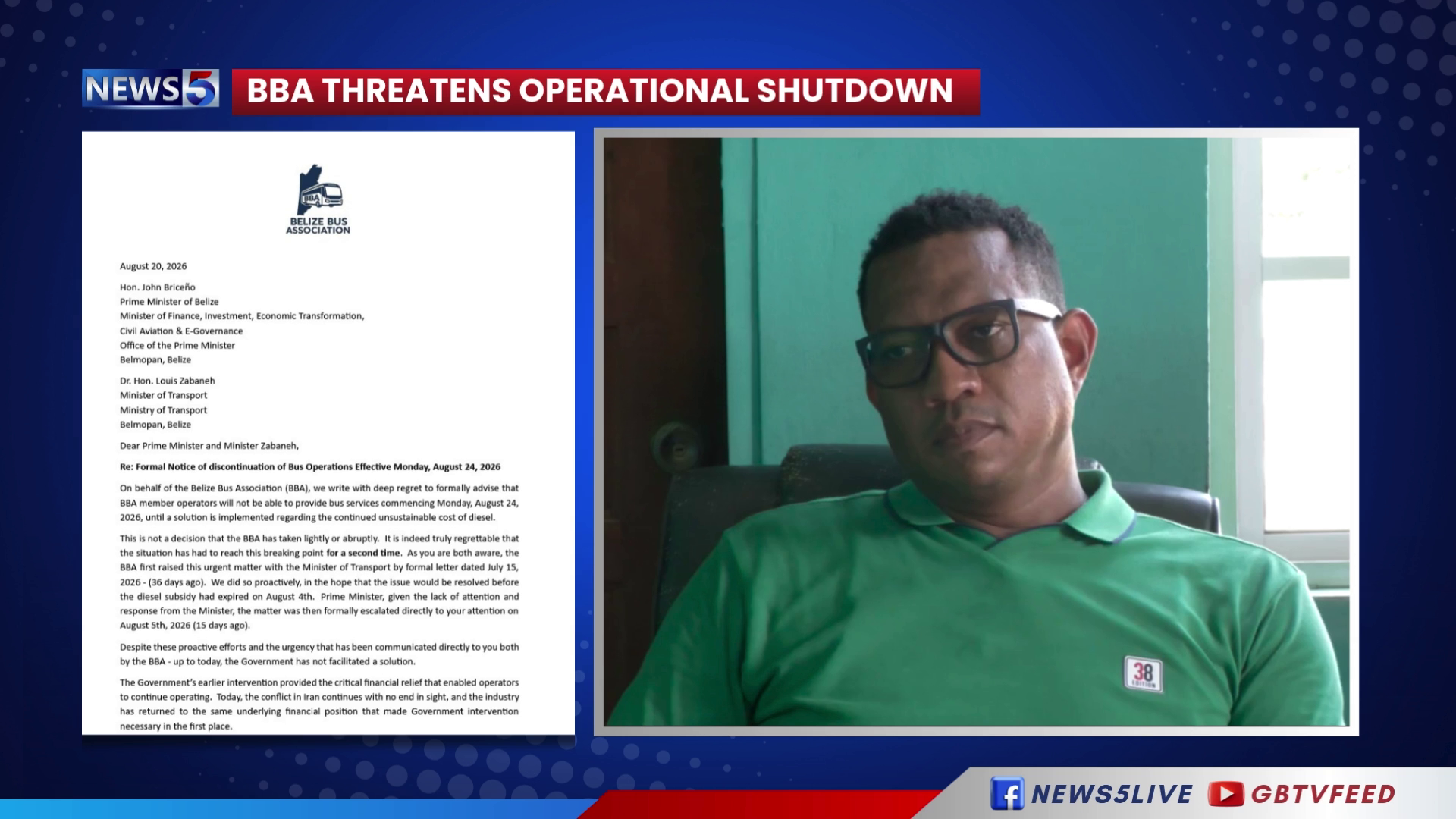
As the weekend of August 22-23, 2026 approaches, Belize is bracing for a major disruption to its public transportation network, after the Belize Bus Association (BBA) issued a formal ultimatum to the government: unless a resolution is reached over rising diesel costs by Monday, August 24, all member services will cease operations nationwide.
The current standoff traces back to August 4, when the government’s existing fuel subsidy for bus operators expired. BBA President Philip Jones emphasized that operators have absorbed steadily climbing costs for fuel, tires, vehicle parts and other operational expenses for more than two weeks, keeping routes running in good faith in hopes of reaching a new agreement. Now, however, Jones says the private bus industry can no longer sustain the financial burden of inflated operating costs without government support.
The association’s core demand is the immediate restoration of the fuel subsidy, applied retroactively to the expiration date of the previous program. BBA has reiterated that it is prepared to sit down for emergency negotiations with government officials at any time to avoid the shutdown, but no formal talks have been scheduled as of the latest update. If no last-minute compromise is found, an estimated 32% of Belize’s bus market – concentrated primarily along the heavily traveled northern transport corridor – will halt service, leaving thousands of daily commuters scrambling to find alternative transportation for work, school, and essential trips.
The announcement of the impending shutdown caught Transport Minister Dr. Louis Zabaneh off guard, he told reporters in a press briefing. Dr. Zabaneh explained that he held a conversation with Jones earlier this week, and came away from the discussion under the impression that the association would wait for Cabinet to complete its deliberations on the subsidy request before taking any action. He called the BBA’s premature shutdown threat “out of place” given the ongoing policy process.
Per Dr. Zabaneh, the BBA first submitted its subsidy request roughly a month ago. He advised the association that fuel subsidy decisions are fiscal matters falling under the portfolio of the Prime Minister, who also serves as Belize’s finance minister, rather than the Ministry of Transport. Following protocol, the request was forwarded to the Prime Minister’s office, and the issue was added to the agenda for a recent Cabinet meeting. During that discussion, Dr. Zabaneh reported, the Prime Minister directed the Ministry of Transport to conduct a full cost analysis and prepare a formal policy proposal for the subsequent Cabinet meeting – a timeline the minister says he shared with Jones yesterday.
“To my surprise, this shutdown notice arrived the very next day,” Dr. Zabaneh said, adding that the BBA deviated from the collaborative process the two sides have followed in previous disputes over subsidy programs.
When pressed on whether he can guarantee bus service will continue for commuters on Monday, Dr. Zabaneh placed full control of the outcome in the BBA’s hands. “That is not in our power. That is in the power of those members of the BBA who are not part of the state-owned National Bus Company,” he explained, noting that these independent operators make up the share of the market that plans to suspend service. He added that commuters are now caught in the middle of the policy standoff, with no clear outcome guaranteed ahead of Monday’s deadline.
The BBA has reaffirmed its position that it remains open to immediate negotiations to reach a resolution that restores the subsidy and averts the service shutdown.