When preliminary 2026 Caribbean Secondary Education Certificate (CSEC) results were released for Antigua and Barbuda, education stakeholders confirmed a modest but noticeable dip in the nation’s overall pass rate this testing cycle. Official data compiled by CXC Local Registrar Maritza West shows that 1,391 candidates completed 8,560 individual subject examinations across the country this year, resulting in an overall pass rate of 75.3 percent. This marks a 2.1 percentage point decline from the 2025 overall pass rate of 77.4 percent, and sits below the 76.6 percent pass rate recorded in 2024.
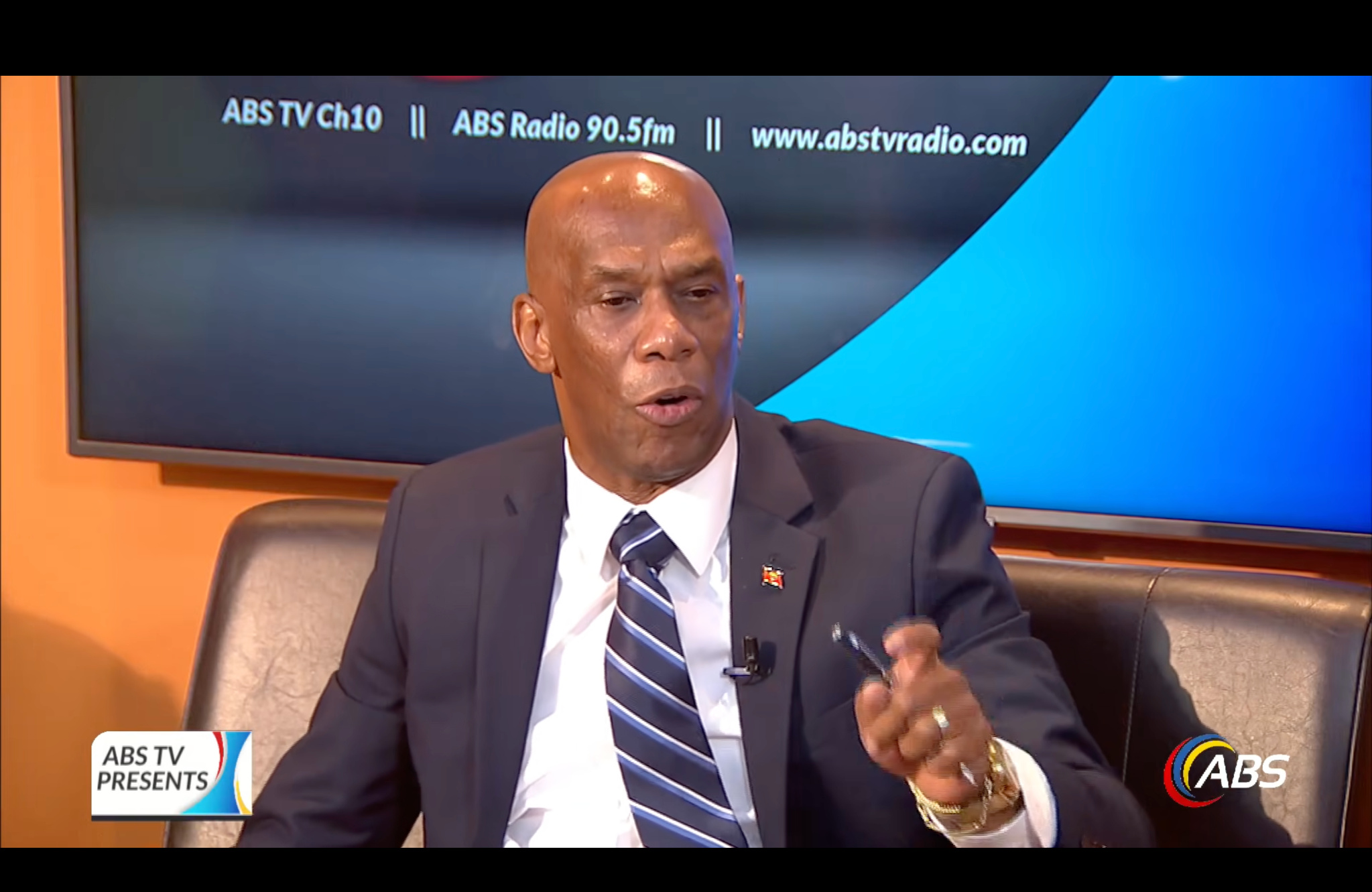
During a public discussion of the results hosted by ABS Presents, West framed the 2026 outcome as largely stable despite the small downward shift, noting that performance has stayed within a consistent range across the past three testing cycles. Clare Browne, Director of Education for Antigua and Barbuda, echoed this framing while offering transparent commentary on the results, acknowledging that any decline in academic performance carries disappointment that cannot be downplayed for the public.
“Any decline at all in any kind of academic result for me is a little disappointing,” Browne stated, emphasizing that the outcome creates a clear roadmap for targeted improvements in the education system. “I think the results present a narrative of success, of challenges, and certainly index where we need to go, index that we have work to do.”
Despite the slip in overall national pass rates, 2026 results delivered multiple strong performances that outpaced Caribbean regional benchmarks. Out of the 32 CSEC subject areas offered, Antigua and Barbuda posted pass rates above the regional average in 21 subjects, and matched the regional average exactly in Physical Education and Sport.
Top-performing subjects delivered exceptionally strong pass rates, led by Additional Mathematics which achieved a perfect 100 percent pass rate this cycle. Industrial Technology (Building Technology) followed closely at 99.4 percent, with Physical Education and Sport posting a 99.1 percent pass rate. Other high-achieving areas included Theatre Arts at 96 percent, Food, Nutrition and Health at 95.9 percent, Technical Drawing at 95.1 percent, Family and Resource Management at 94.5 percent, Biology at 94 percent, Visual Arts at 91.2 percent, and Office Administration at 90.3 percent.
Core academic subjects also posted solid pass rates above 70 percent, including English A at 80.6 percent, Information Technology at 86.7 percent, Principles of Business at 86.9 percent, and Human and Social Biology at 87.4 percent. English B recorded a 71.5 percent pass rate, while Chemistry hit 70.2 percent, Social Studies 70.4 percent, Physics 74.2 percent, Economics 74.1 percent, and Principles of Accounts 73.4 percent.
However, the results also highlighted persistent gaps that education leaders have flagged for urgent intervention. Mathematics remains the nation’s most critical academic challenge, posting a pass rate of just 30.3 percent in 2026. Other subjects with below-average performance included French at 45 percent, Caribbean History at 55.6 percent, Music at 61.7 percent, Geography at 62.7 percent, and Spanish at 69.1 percent. Browne specifically called out mathematics’ low pass rate as a clear signal that targeted curricular and instructional support is needed for the subject.
In closing, Browne extended formal congratulations to all students, teachers, and schools that delivered strong 2026 results, reaffirming that the education ministry will not overlook the overall decline as it plans future improvements. “This year, in the overall percentage pass, we have slipped maybe two percentage points in the wrong direction, and that, for me, holds a little bit of disappointment,” he said. “But nonetheless, we celebrate the successes.”