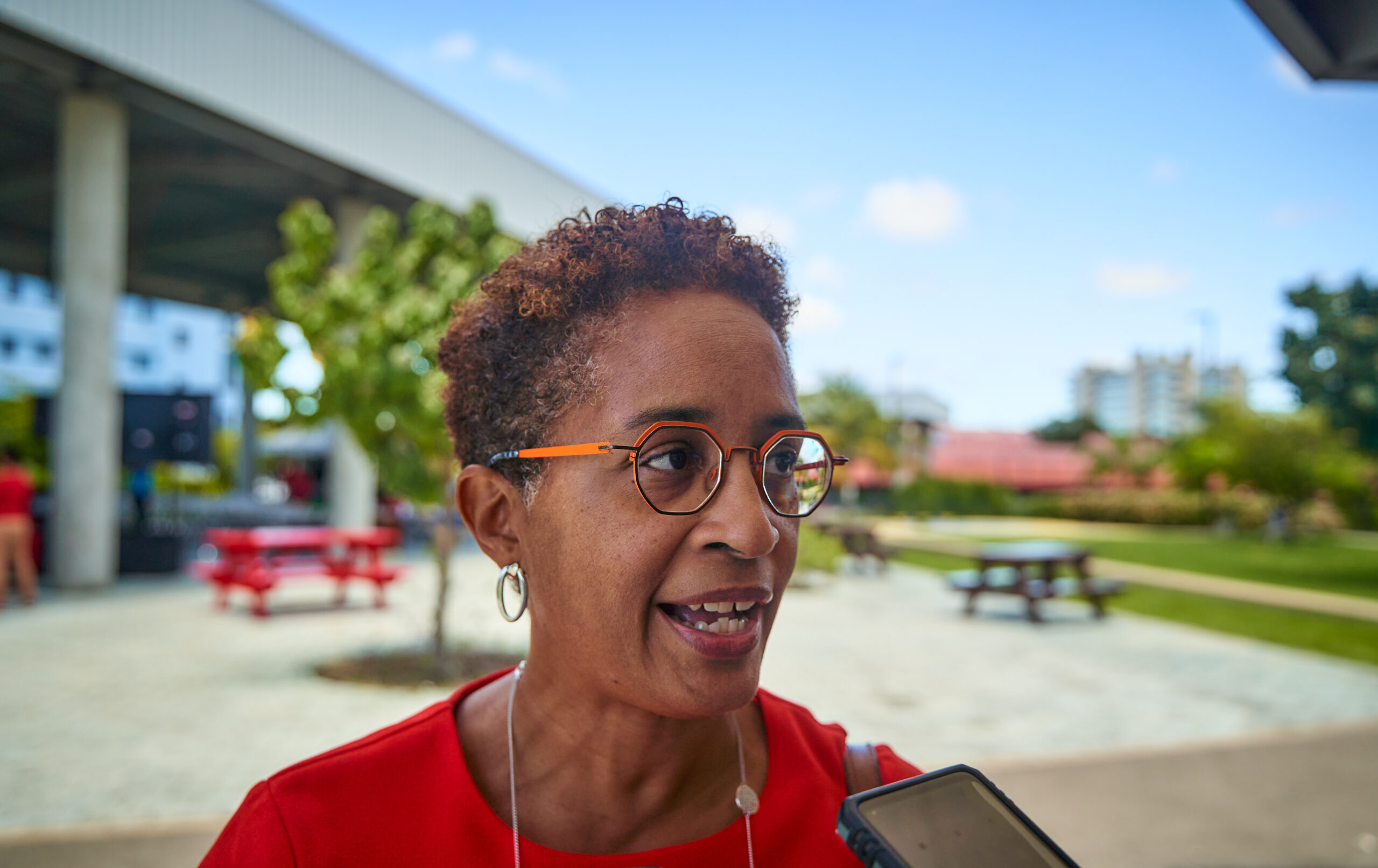
On Thursday, leading medical professionals in Barbados issued an urgent warning: a steady annual increase in parental requests for childhood vaccination exemptions risks eroding the Caribbean nation’s decades-long success in suppressing vaccine-preventable diseases, as harmful anti-vaccine misinformation from abroad increasingly sways local decision-making.
The Barbados Association of Medical Practitioners (BAMP) confirmed the upward trend, reporting that opt-out applications to the country’s national immunization schedule have grown consistently each year for the past five years. BAMP president Dr. Lynda Williams voiced profound alarm over the shift, which medical experts trace directly to a global surge of anti-vaccine sentiment spread primarily through social media platforms and foreign media coverage.
“The number has increased every year for the last five years,” Dr. Williams told local outlet Barbados TODAY. “This is, of course, concerning because, obviously, if more people are asking for exemptions, that means more and more parents are choosing not to vaccinate their children. That is our core concern.”
While official exemption data is held and managed by the Ministry of Health, Barbados TODAY has confirmed that a growing share of parents are directly approaching primary care clinics to withdraw their children from standard inoculation schedules. Under current Barbadian public health rules, families seeking exemptions are required to complete a targeted educational program aimed at addressing vaccine hesitancy and reaffirming the life-saving impact of routine childhood vaccinations, though legal exceptions are still granted for well-documented religious objections.
In an official press statement, BAMP reaffirmed its full professional support for the Barbados Childhood Immunisation Schedule, aligning the organization completely with the island’s community of pediatric health specialists. The medical group also issued a specific warning about the resurgence of long-discredited anti-vaccine conspiracy theories — most notably the false, repeatedly debunked claim of a link between the measles-mumps-rubella (MMR) vaccine and autism, a claim that originated in a retracted 1998 study and has recently re-gained traction primarily in the United States.
This imported misinformation has already led to devastating public health outcomes abroad. In 2025, a large measles outbreak originating in west Texas spread to neighboring New Mexico and Oklahoma, with additional cases confirmed in Kansas. The outbreak was concentrated in tight-knit communities with chronically low vaccination rates, where large shares of both children and adults remained unimmunized. By the end of the outbreak, there were 2,298 confirmed infections, hundreds of hospitalizations, and three recorded deaths: two unvaccinated children in Texas and one unvaccinated adult in New Mexico. So far in 2025, the U.S. Centers for Disease Control and Prevention has tracked 38 separate measles outbreaks across 45 states (including Washington D.C. and New York City), totaling 2,566 confirmed cases as of last week.
BAMP leaders emphasize that the growing vaccine skepticism in Barbados is not an isolated local trend, but a ripple effect of global anti-vaccine movements driven heavily by developments in the United States, where current Health Secretary Robert F. Kennedy Jr. is a long-standing high-profile anti-vaccination advocate. Dr. Williams noted that while Barbados retains full sovereign control over its domestic healthcare policies, American social media trends and shifts to U.S. immunization guidelines exert a powerful influence on local public perception.
“Strangely enough, we think we’re independent from the U.S., but a lot of what happens there shapes outcomes here,” Dr. Williams explained. “There’s a lot of vaccine skepticism coming out of the U.S. right now… and when the U.S. releases an updated vaccination schedule or debates policies like separating the MMR vaccine into individual doses, there is a clear trickle-down effect here in our region.”
She stressed that Barbadians must prioritize critical thinking and peer-reviewed medical evidence over importing public health trends from other nations. BAMP points out that Barbados’ national immunization program has a proven, generations-long track record of success: within just 30 to 40 years of its launch, the program virtually eliminated childhood mortality from all major vaccine-preventable diseases on the island.
“We just wanted to reaffirm that as a country, we think for ourselves, and this framework is what we have determined is best for the children of Barbados,” Dr. Williams said. “We have the evidence; we have seen first-hand what vaccines do and how they have protected our population. If other countries choose to go a different direction, that is their choice, but we do not have to follow.”
Addressing the root causes of the recent surge in vaccine hesitancy, BAMP identified the COVID-19 pandemic as a critical catalyst that created a parallel crisis of widespread digital misinformation alongside the viral outbreak itself. Dr. Williams described the pandemic period as a “double epidemic,” where the rapid evolution of scientific understanding of the new virus coincided with the unprecedented global reach of modern social media platforms.
“COVID was two epidemics in one. You had the virus, but you also had viral misinformation that spread at roughly the same time,” Dr. Williams said. She added that much of the current public anxiety around vaccines stems from a fundamental misunderstanding of complex, life-saving scientific innovations, such as mRNA and DNA vaccine technology — platforms that had actually been in development for 30 years before the COVID-19 pandemic accelerated their deployment.
“Because of the internet and social media, a lot of misinformation was spread, and continues to be spread, by people who now have a large public platform to share it,” Dr. Williams noted. “This was the first time the world faced a pandemic with social media having the global reach it does today.”
To push back against the growing wave of vaccine skepticism, BAMP announced plans to expand and intensify public education initiatives across the island. Local medical practitioners will engage directly with hesitant parents to provide transparent, one-on-one evidence-based guidance, working to rebuild community trust outside of standard clinical appointments.
“The only way to counteract misinformation is with correct, accessible information,” Dr. Williams said, reaffirming that individual physicians will continue to promote evidence-based vaccination during routine patient care. “Apart from supporting the work the Ministry of Health is already doing, providing direct one-on-one education to parents is the most impactful step we can take to protect our community.”