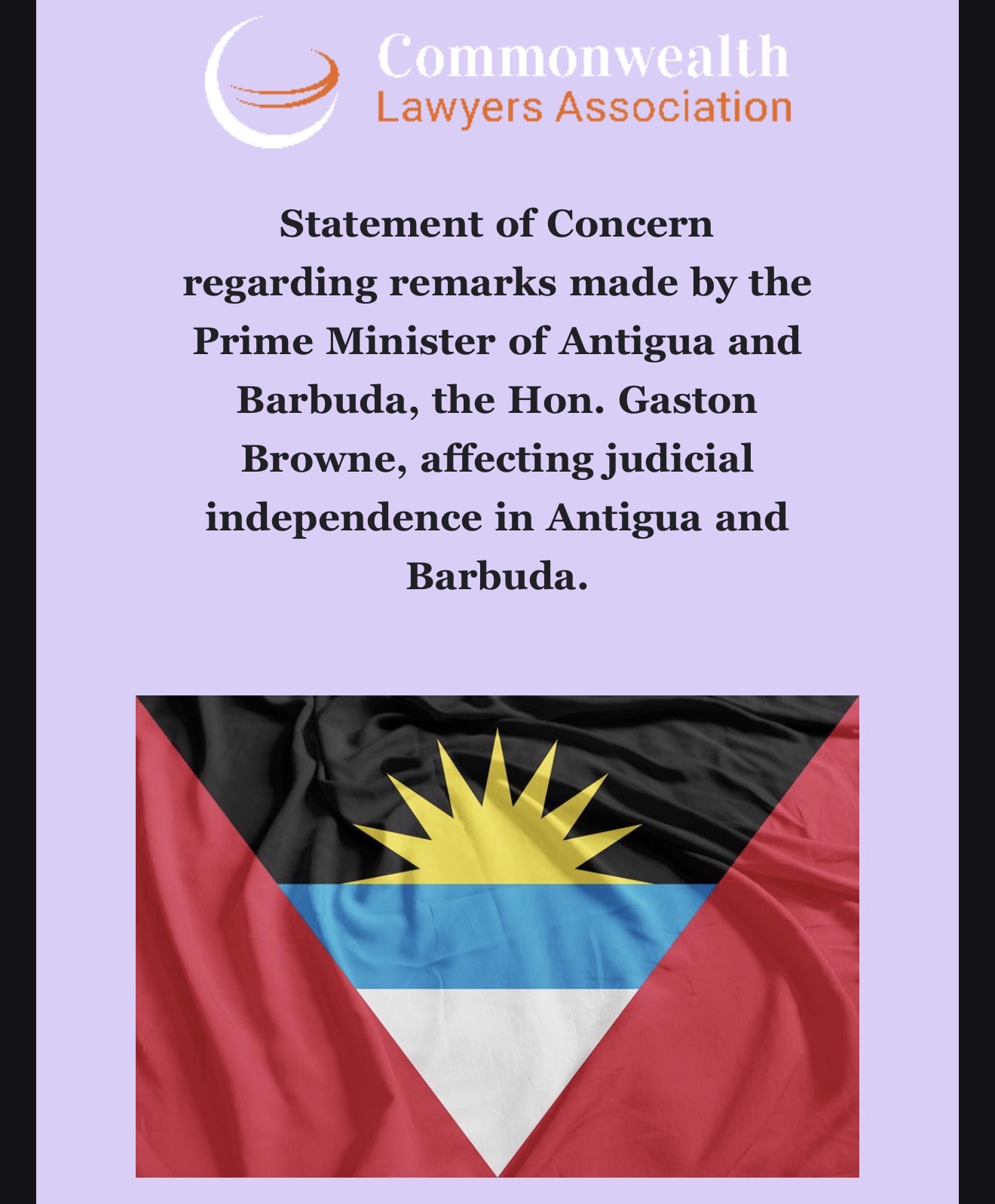
Tensions over democratic governance and judicial autonomy have escalated in Antigua and Barbuda after Prime Minister Gaston Browne made inflammatory public remarks targeting members of the national judiciary, drawing widespread condemnation from regional and international legal bodies, including the Commonwealth Lawyers Association (CLA).
In an official statement of concern released August 18, 2026, the CLA — an organization whose core mandate is upholding the rule of law and aligned with the Commonwealth (Latimer House) Principles on inter-branch governance — says it is deeply alarmed by comments Browne delivered during an August 10 National Security Meeting focused on rising gun crime and violent offenses in the country.
During the meeting, Browne publicly criticized the judiciary for issuing what he framed as excessively lenient short prison sentences, singling out an unnamed judge for what he called a “propensity to give criminals a break.” He went on to issue an extraordinary public threat: if the judge refused to “follow the lead of parliament to give longer sentences,” he ordered the judge to leave the country voluntarily, threatening deportation and formal designation as persona non grata.
The Prime Minister’s comments immediately sparked cross-regional condemnation from legal institutions. The Antigua and Barbuda Bar Association (ABBA) issued an immediate rebuke, calling the statement a direct, public threat to an identifiable judge intended to manipulate judicial decision-making. The ABBA emphasized that Browne’s demand for judges to align with parliamentary policy on sentencing is a clear case of executive overreach that violates the constitutional separation of powers designed to protect judicial autonomy. In response to the ABBA’s criticism, Browne dismissed the organization as “defunct” and told the group to “Piss off” — a dismissive retort the CLA says amplifies the original threat and demonstrates blatant disregard for legitimate institutional pushback against executive overreach.
Other regional legal and judicial bodies have echoed the ABBA’s concerns. The Organisation of Eastern Caribbean States Bar Association warned that Browne’s threats create a hostile working environment that could leave Antigua and Barbuda unable to attract qualified judges willing to serve under the risk of deportation. Caribbean Heads of the Judiciary labeled the comments dangerous, noting they undermine the core doctrine of separation of powers — the foundation of democratic governance — and erode public trust in the justice system. On August 14, the Commonwealth Magistrates and Judges Association (CMJA) added its voice, affirming that courts are the cornerstone of rule-of-law democracy, and judicial officers must be free to rule on cases based on law and evidence without external intimidation.
The CLA has expressed full support for these statements, acknowledging the critical role independent bar and judicial associations play across the Commonwealth in safeguarding democratic norms. The organization emphasizes that advancing effective criminal justice reform and protecting judicial independence are not competing goals: both are essential to a democratic, rule-of-law state. While governments have a legitimate mandate to pursue public safety and crime reduction policies, judges must retain full autonomy to decide individual cases based on law, evidence, and established sentencing guidelines. The CLA notes that legitimate concerns about public safety do not justify bypassing constitutional frameworks to intimidate judicial officers.
These principles are deeply embedded in both Commonwealth and international law, the organization points out. The 2003 Commonwealth (Latimer House) Principles enshrine the requirement for mutual respect between the executive, legislative, and judicial branches, and hold that an independent, impartial judiciary is essential to upholding the rule of law and public confidence in justice. The United Nations’ 1985 Basic Principles on the Independence of the Judiciary require all state institutions to guarantee judicial independence, and protect judicial officers from improper interference or intimidation of any kind. The 2023 Commonwealth Bar Leaders’ Goa Declaration, endorsed by 42 bar leaders from across the Commonwealth, similarly reaffirms that governments must uphold and protect judicial impartiality and independence.
The CLA clarifies that legitimate, reasoned criticism of judicial conduct that does not threaten the rule of law is permissible in open societies. But it stresses that threats of deportation go far beyond acceptable criticism, causing tangible harm to public confidence in the judiciary. The organization says it is disappointed that Browne has not yet retracted his remarks, and calls for all concerns about sentencing, public safety, and criminal justice effectiveness to be addressed through constitutional, institutional, and appellate processes, rather than public intimidation.
Notably, the CLA acknowledges one positive step from Browne: his proposal for an independent review of firearm sentencing, repeat offending, and broader criminal justice coordination. The organization calls this a constructive, appropriate step, and recognizes the qualifications of the proposed review committee members.
With Antigua and Barbuda set to host this year’s Commonwealth Heads of Government Meeting (CHOGM), the CLA urges Browne to issue a full retraction of his damaging remarks to reaffirm the country’s commitment to the Commonwealth’s core democratic principles. The organization has outlined eight clear demands for Browne and the Antigua and Barbuda government: uphold and protect judicial independence; publicly confirm that no executive powers including immigration authority will be used to intimidate or punish judges for lawful judicial decisions; respect the constitutional jurisdiction and functions of the judiciary; commit to addressing sentencing and criminal justice reform through constitutional processes that respect separation of powers; formally withdraw the August 10 remarks in writing to the Eastern Caribbean Supreme Court and refrain from future comments that violate judicial independence principles; guarantee the proposed independent review commission can operate autonomously; foster respectful, constructive dialogue on criminal justice reform; and ensure all government actions align with the national constitution, Antigua and Barbuda’s international obligations, and the rule of law.
The CLA closes by reaffirming its commitment to the Commonwealth’s shared values of democracy, the rule of law, judicial independence, and constitutional governance, and stands ready to support collaborative efforts to strengthen public confidence in criminal justice institutions.