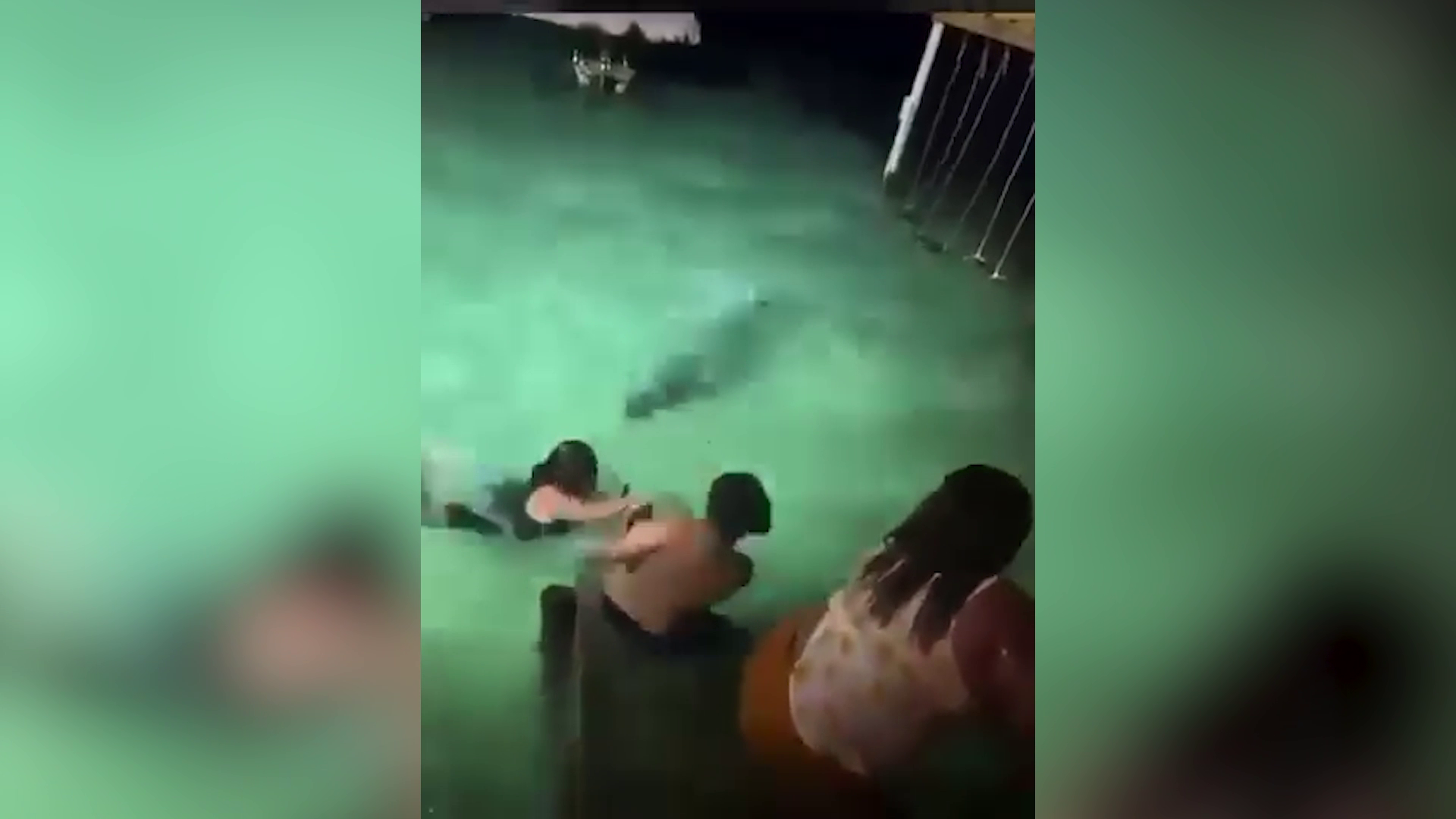
Following a recent near-miss between a crocodile and a group of socializing visitors in the popular coastal destination of Caye Caulker, Belize’s Forest Department alongside leading conservation groups have issued a urgent public warning, calling on both residents and tourists to avoid unsupervised interactions with the region’s native American crocodile population. The incident, which was captured on video and shared among wildlife experts globally, has renewed longstanding concerns about the growing risks of human-wildlife conflict driven by harmful feeding practices.
Dr. Marisa Tellez, Executive Director of the Crocodile Research Coalition, noted a stark shift in crocodile behavior in Caye Caulker compared to a decade ago. Back in 2016, the region was held up as an international model for peaceful human-crocodile coexistence: crocodiles were abundant across the area’s coastal waters, but dangerous encounters remained extremely rare. Today, however, that balance has been upended by the rising trend of people intentionally feeding crocodiles, a practice reported by multiple local residents and visiting tourists to Tellez’s organization.
Analysis of the video from the recent incident confirms that the approaching crocodile had become habituated to human presence through regular feeding, Tellez explained. After consulting with crocodile behavior specialists across the globe, experts agree that the animal’s bold approach to the group of people was not natural for wild American crocodiles. Intentional feeding rewires the reptiles’ natural instincts: instead of avoiding humans, they begin to associate human activity, from the sound of splashing water to human voices, with access to food. This conditioning draws crocodiles far closer to populated shorelines and recreational areas than they would naturally venture, greatly increasing the risk of aggressive encounters.
For people who find themselves approached by a crocodile, Tellez shared critical safety guidance that counteracts common intuitive reactions. Many people’s first instinct is to splash and panic in the water, but this noise and movement actually signals to a crocodile that the target is injured or vulnerable, encouraging the animal to move closer. Instead, Tellez advises people to remain calm, move slowly toward the shore while keeping the crocodile in full view, and never turn your back to the reptile. Turning away can signal fear to a predator, increasing the likelihood of an attack.
The Belize Forest Department is echoing this advisory, urging anyone who observes people feeding crocodiles or notices abnormally bold crocodile behavior near populated areas to report the activity immediately to authorities. Conservation groups emphasize that responsible coexistence, rooted in letting crocodiles retain their natural hunting instincts and fear of humans, remains the only sustainable way to protect both people and this protected crocodile population in Belize’s coastal ecosystems.