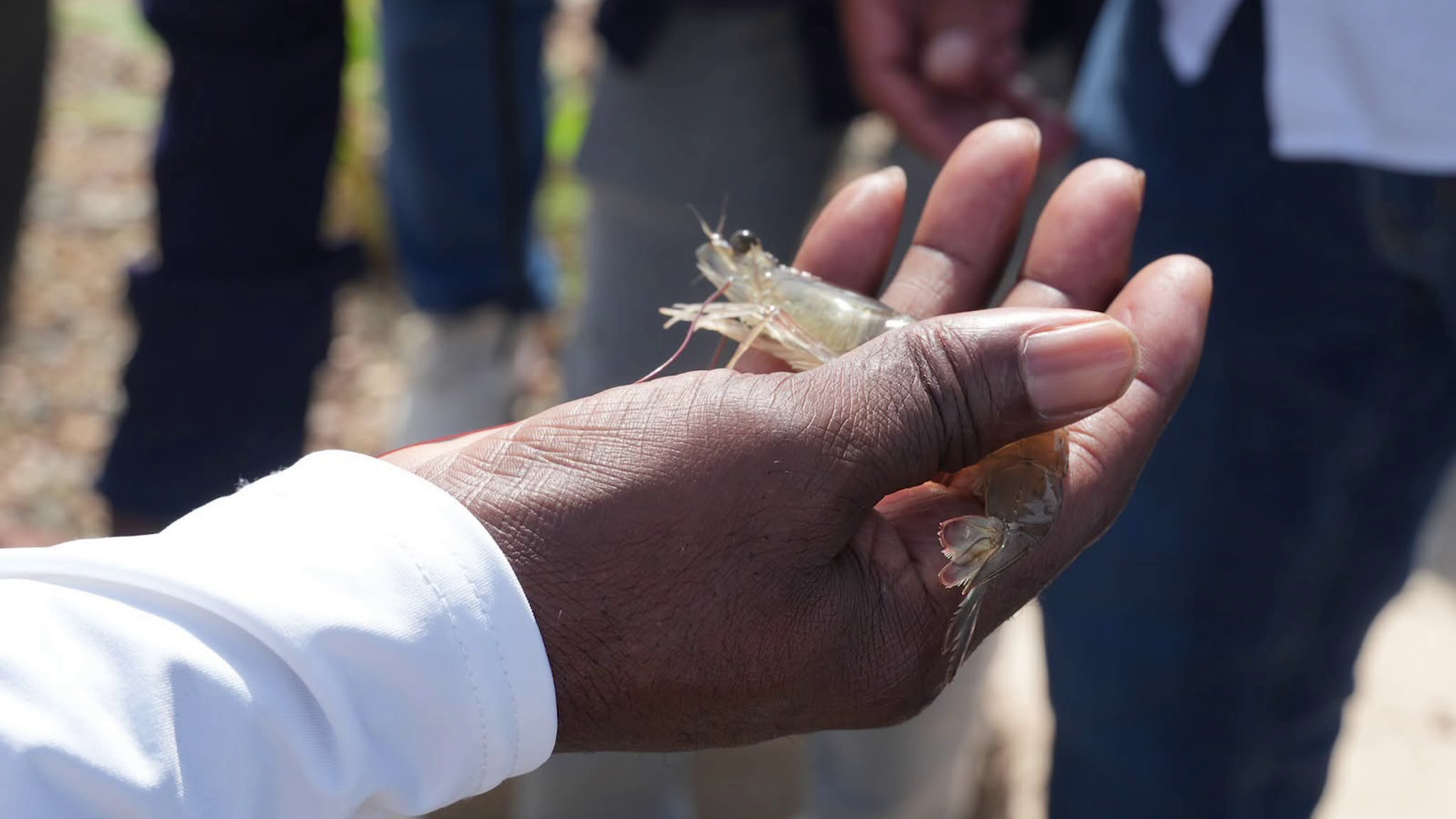
More than 10 years after a deadly early mortality syndrome nearly collapsed Belize’s iconic shrimp aquaculture sector, the industry is staging a remarkable recovery that has exceeded early projections. Since 2020, total shrimp output across the country has tripled, pushing the total market value of the sector to nearly $25 million, according to government data.
On August 11, Belize’s Minister of Agriculture Rodwell Ferguson toured two key industry facilities — Aqua Vista Shrimp Hatchery and the Aqua Mar Belize shrimp farm — to inspect the operations that are leading the sector’s rebound. During the visit, he highlighted how the transformation has been driven by three core shifts: the adoption of modern aquaculture technology, the development of more disease-resistant shrimp genetic strains, and a wave of targeted fresh private investment from international and local stakeholders.
Ferguson shared context on the sector’s devastating decline in a phone interview, recalling that of the 17 operational shrimp farms active before the outbreak, just six remained open by 204. Early mortality syndrome, which killed more than 50% of shrimp populations in affected operations, forced mass closures across the country. Rebuilding the sector has been an uphill battle, Ferguson noted, because shrimp farming is a capital-intensive industry that requires significant upfront investment. Before any shrimp can be harvested, operators must dig and line specialized rearing ponds, purchase heavy machinery and processing equipment, and build on-site housing for security staff to protect stock from theft. That high barrier to entry slowed recovery efforts for years after the initial outbreak.
The turning point came when Indian investor Ravi, who now leads the country’s revitalized shrimp production, acquired three key assets: a hatchery in Dangriga, a farm in Sik Grass, and the Aqua Mar operation in Independence. Ravi has poured extensive capital into upgrading facilities and implementing new disease management protocols, and he projects that by 2028, his operations alone will produce more than 8 million pounds of shrimp annually. That volume will be enough to meet full domestic demand for shrimp in Belize while leaving significant surplus for export to regional and global markets.
Government officials now point to the shrimp industry’s rebound as a promising proof of concept for broader growth across Belize’s agriculture sector. With export expansion now a core goal, the recovery is expected to create new jobs, boost national export revenue, and serve as a model for revitalizing other aquaculture and agricultural sectors hit by disease and market disruption in recent years.