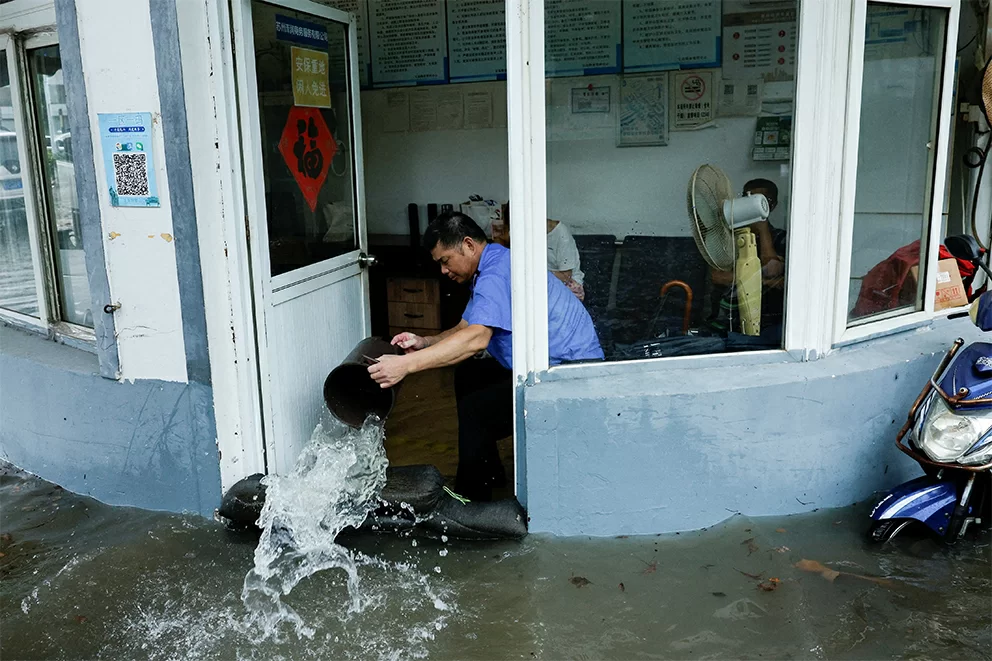
As the most powerful tropical cyclone to make landfall in China this year, Typhoon Dolphin has brought devastating destruction to large swathes of eastern China, leaving a trail of flooded communities, disrupted transport and forced mass relocations. The storm made its first landfall on Sunday evening in Yuhuan, a coastal city in Zhejiang Province, packing maximum sustained wind speeds of up to 150 kilometers per hour alongside torrential, record-breaking rainfall. By August 10, the system had weakened substantially after moving inland, but lingering heavy downpours continued to pose severe hazards of flash floods and mudslides across multiple affected provinces.
The extreme weather event has already forced more than one million residents across eastern China to evacuate their homes in search of safer ground. The storm’s widespread rainfall triggered severe urban and rural flooding as far north as Shanghai, where viral social media content and the trending hashtag #ShanghaiTurnsIntoTheSea highlighted the extent of urban waterlogging. Around 40% of all scheduled flights departing from Shanghai’s airports, totaling more than 1,400 flights, were canceled, while ferry services across the region were suspended and commercial ports rerouted all shipping to avoid catastrophic infrastructure damage. For public safety, major tourist attractions in Shanghai, including portions of the city’s Disneyland and Legoland resorts, were temporarily closed ahead of the storm’s arrival.
Beyond Zhejiang and Shanghai, neighboring provinces including Fujian, Jiangxi, Anhui and Jiangsu also faced intense precipitation that elevated flood and landslide risks, particularly in mountainous and hilly regions that are prone to such hazards. Images from the ground captured entire villages submerged under floodwaters in Yueqing, Zhejiang, with residents using basic tools like buckets to bail water out of inundated residential rooms. Ahead of the storm’s landfall, Chinese authorities had carried out targeted preemptive evacuations: official state news agency Xinhua reported that nearly 99,000 residents in high-risk areas of Fujian were relocated by Saturday evening, and more than 200 ferry routes across Zhejiang and Fujian were suspended in advance to prevent accidents.
The environmental and economic impacts of the disaster extend far beyond immediate disruption to daily life. Thousands of hectares of agricultural farmland have been submerged, threatening standing crops and raising concerns about potential long-term effects on regional food supply chains. Floodwaters have also inundated protected natural areas, putting local native plant and animal species under acute stress as their habitats are damaged or destroyed.
Formed as a tropical depression in the Western Pacific Ocean in late July, Typhoon Dolphin gradually intensified into a powerful typhoon before approaching China’s eastern coastline. The storm’s name, which means “dolphin”, was contributed by Hong Kong to the World Meteorological Organization’s Typhoon Committee, which manages the regional cyclone naming system; names are typically drawn from local wildlife, plants, or cultural symbols of the 14 member nations and territories in the Northwestern Pacific basin. The name references the rare Chinese white dolphin, a iconic marine mammal native to the region’s coastal waters.
Typhoon Dolphin is the latest in a string of severe tropical storms to hit East China in recent months, following Typhoon Bavi just one month prior, which also triggered mass evacuations and caused extensive economic damage. Climate researchers and disaster management experts point to this growing frequency of intense storms as clear evidence of how climate change is amplifying the severity of extreme weather events across East Asia. As Typhoon Dolphin continues to move inland and weaken gradually, Chinese emergency management authorities remain on high alert, prepositioning rescue resources and monitoring water levels to respond to any new flood or landslide emergencies in the coming days.