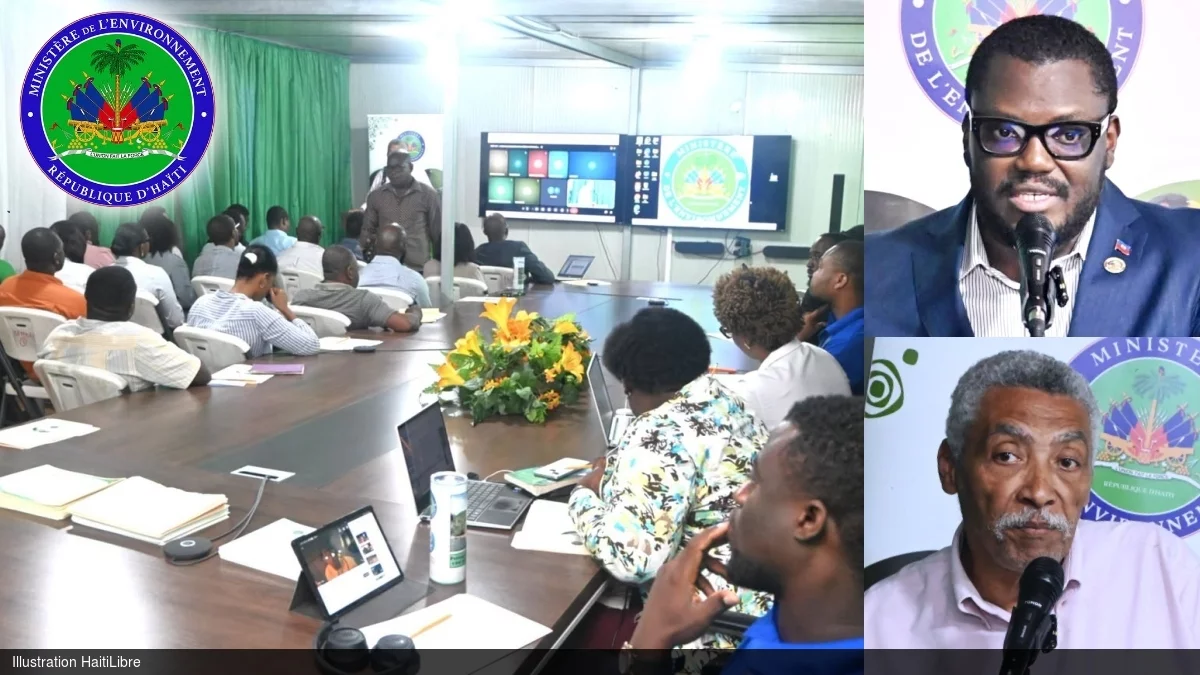
Against a backdrop of growing climate vulnerability and accelerating land degradation across the Caribbean nation, Haiti’s Ministry of Environment (MoE) has convened a key national workshop to evaluate progress on the country’s global anti-desertification commitments and review the implementation of a major landscape management initiative. Scheduled for August 9, 2026, the gathering centered on the launch of the Performance Review and Assessment of Implementation System (PRAIS) report, the primary monitoring tool mandated by the United Nations Convention to Combat Desertification (UNCCD) for tracking member state commitments. The workshop also served as a critical platform to conduct a mid-implementation stocktake of the Integrated Sustainable Landscape and Land Management Project (PISLM), Haiti’s flagship intervention for degraded land recovery.
This event aligns with the core policy priorities set by Haitian Prime Minister Fils-Aimé’s administration, which has identified degraded land restoration, natural resource protection, and boosting community climate resilience as central planks of its national action agenda.
During the opening session, Environment Minister Valéry Fils-Aimé presented official certificates to members of the National Inter-institutional Committee for Sustainable Soil and Surface Management (CNIGSS), technical specialists, and institutional representatives that collaborated on the development of the PRAIS report. He commended the collective work of these stakeholders, noting their contributions have been instrumental in strengthening Haiti’s national environmental monitoring framework and advancing the fight against widespread land degradation.
The workshop brought together a diverse cross-section of stakeholders, including senior representatives from multiple government agencies, international technical and financial partners, local civil society organizations, and leading national environmental experts. Over the course of the meeting, attendees reviewed key outcomes delivered by the PISLM project to date, highlighting how its on-the-ground interventions have advanced degraded land restoration, preserved critical natural habitats, and built greater community capacity to withstand the accelerating impacts of climate change.
A core portion of the workshop was dedicated to walking stakeholders through the full PRAIS reporting process, which was developed with technical and coordination support from CNIGSS. Participants engaged in detailed discussions covering every stage of national data collection, consolidation, and validation, ultimately agreeing on a set of targeted recommendations designed to improve the accuracy and consistency of future national environmental reporting and strengthen cross-institutional coordination across Haiti’s environmental sector.
The event also marked the official launch of the new Haitian Reforestation Guide, a landmark reference document crafted to support ongoing forest landscape restoration initiatives across the country. The guide is designed to promote context-appropriate reforestation practices tailored to Haiti’s unique ecological conditions, and to provide actionable support for national land restoration targets.
Closing out the workshop, Joseph Emmanuel Philippe, Director General of the Ministry of Environment, praised the productive and collaborative nature of the exchanges, and called on all partner institutions to maintain their momentum. He emphasized the need for continued collective action to strengthen national coordination, expand access to reliable environmental data, and scale up adoption of evidence-based sustainable land management practices across Haiti.
Through the organization of this workshop, Haiti’s Ministry of Environment has reaffirmed its commitment to consolidating the country’s national environmental monitoring systems, improving the quality of its international reporting under the UNCCD, and accelerating on-the-ground land restoration actions that directly benefit Haiti’s most climate-vulnerable communities. The institution also renewed its pledge to maintain close collaborative partnerships with all national and international stakeholders, to advance the long-term preservation of Haiti’s natural resources and build more robust national resilience to climate change impacts.