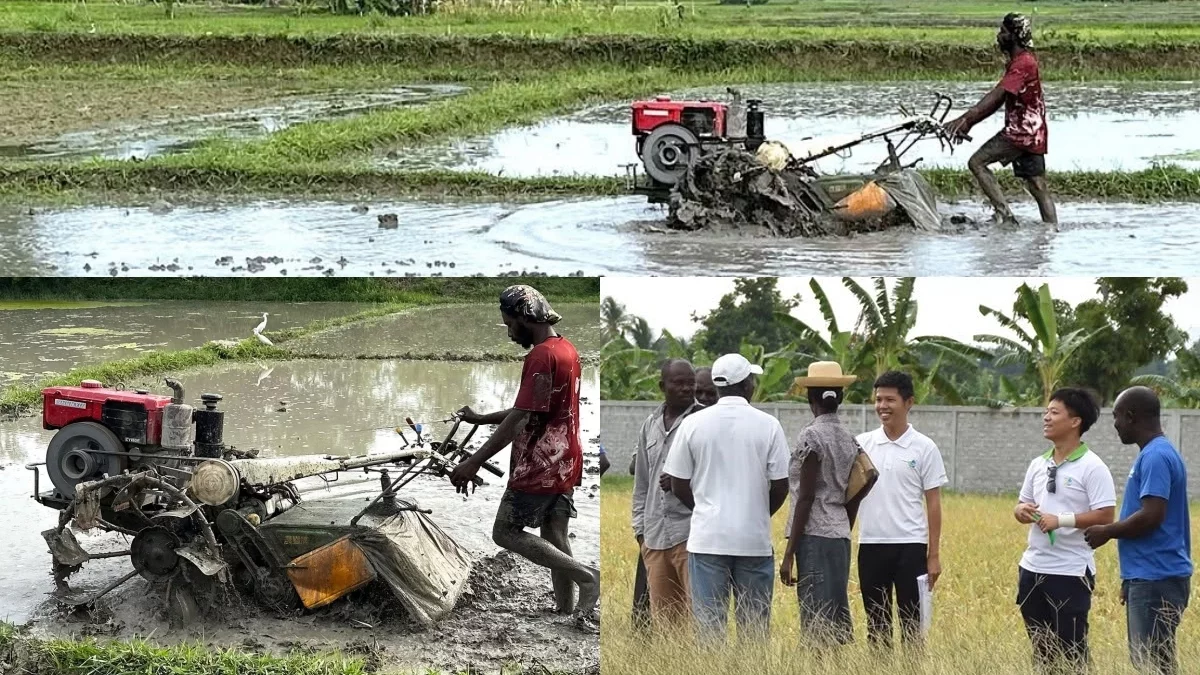
On September 8, 2026, the official launch of the year’s second rice-growing season marked a key milestone for agricultural development in Haiti’s Artibonite Department, backed by the Taiwan International Cooperation and Development Fund (ICDF) through its ongoing Rice Production Improvement Project.
As the initiative gets underway, joint teams from the ICDF and local partner farmers have already moved into the critical pre-planting preparation phase across target plots. Workers are deploying mechanized tillers to break up compacted soil, a step that improves root penetration and water retention, before carefully leveling each paddy to create the uniform growing environment critical for strong rice yields. Parallel to land preparation, nursery operations are already underway, utilizing high-quality seeds harvested from the previous growing season to cultivate robust, disease-resistant seedlings that will underpin the new season’s output.
Project organizers have emphasized that proper paddy leveling is not just a routine task, but a foundational practice that drives long-term productivity. A perfectly leveled field ensures even growth after seedlings are transplanted, eliminating common stressors that cut into harvests: low-lying spots no longer face the risk of root rot from standing water accumulation, while higher, naturally drier areas avoid the unchecked weed growth that outcompetes young rice plants for nutrients and moisture.
For fields with large natural variations in elevation, the project is advising farmers to segment plots into separate growing zones aligned with the natural topography. This targeted adjustment simplifies irrigation management, ensures every section of the field receives the right amount of water, and makes routine crop health monitoring far more efficient for local producers.
Going into the 2026 second season, both the Taiwan-based project technical team and Artibonite’s local farming community have highlighted their commitment to context-appropriate sustainable agricultural practices. Through coordinated preparation and shared expertise, stakeholders are working to transform carefully tended paddies into productive landscapes that will support healthy, high-yield rice crops for Haiti’s domestic food supply.