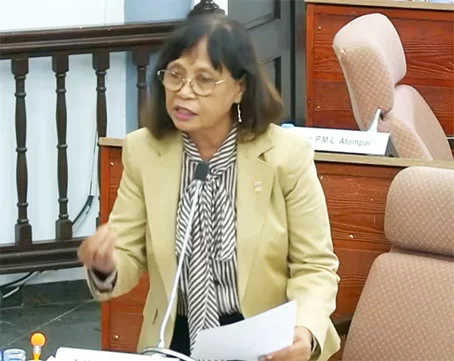
A sitting member of Suriname’s National Assembly has sounded the alarm over the deepening financial crisis facing small ferry operators that maintain critical daily connections between the Commewijne district and the capital city of Paramaribo. Ann Sadi, a legislator from the National Democratic Party (NDP), made an urgent appeal to the national government during a recent question period in the National Assembly, calling for immediate policy action to address the operators’ years-long unmet demands.
According to Sadi, the business owners who run ferry services across key regional routes – including Commewijne-Mariënburg, Nieuw-Amsterdam-Leonsberg, and Meerzorg-Paramaribo – have waited six years for a much-needed adjustment to passenger and cargo fare rates. Beyond stagnant pricing that has failed to keep up with rising operational costs, the operators also continue to deal with delayed subsidy disbursements and unresolved permit applications that have left their businesses in regulatory limbo. To compound these challenges, operators are now also required to cover the cost of mandatory MAS insurance, adding an extra unbudgeted financial burden that many small operations cannot absorb.
Sadi directed her questions and concerns directly to the Minister of Transport, Communication and Tourism as well as the entire cabinet during Thursday’s plenary session, noting that many operators are no longer able to keep their services running. She painted a particularly stark picture of the critical Meerzorg-Paramaribo route: where roughly 40 ferries once operated to serve commuter and passenger demand, only 16 remain in active service today.
“How are these small business owners supposed to keep their operations afloat under these conditions?” Sadi asked during the debate. She closed her appeal by urging the national government to deliver urgent, targeted solutions to stop further decline of river-based passenger transit, which serves as a lifeline for thousands of residents commuting between Commewijne and Paramaribo for work, education, and daily needs.