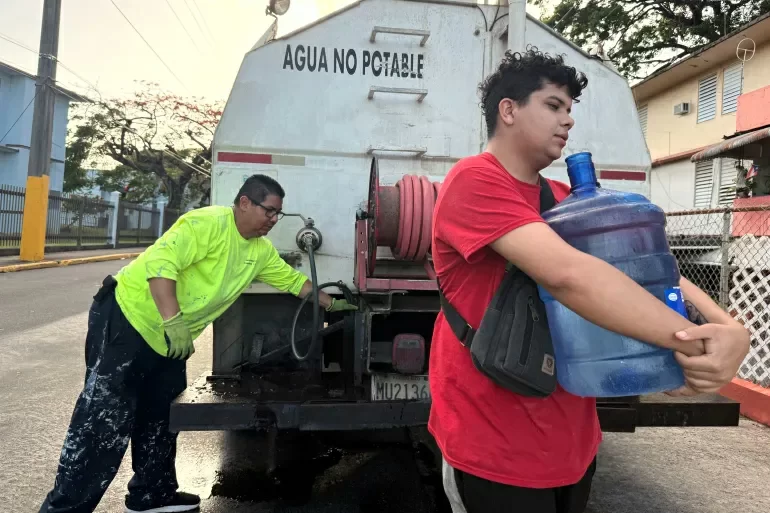
Puerto Rico is grappling with one of its worst droughts in more than a century, forcing authorities to implement strict rolling water restrictions across San Juan and multiple other major urban centers as the deepening water crisis leaves hundreds of thousands of residents without access to piped water for 48-hour rotating periods.
The drought, amplified by the ongoing El Niño climate pattern that has supercharged extreme weather events across the globe, has created an unprecedented emergency for the U.S. territory. Governor Jenniffer Gonzalez announced the new measures during a press address Tuesday evening, warning that the situation is currently beyond officials’ full control and could worsen in the coming weeks. She added that there is no clear timeline for lifting the restrictions, as meteorologists project dry conditions will persist through at least September.
Climate data confirms the severity of the event: July 2026 marked the driest July recorded in San Juan in 120 years, and also ranked as the territory’s second-hottest July on record. According to the latest update from the U.S. Drought Monitor, nearly 25% of Puerto Rico is currently experiencing extreme drought, while an additional 36% of the island is facing moderate drought conditions.
Maria Novoa Garcia, a meteorologist with the National Weather Service’s San Juan office, confirmed that rainfall over the next several weeks is expected to be at least 50% below the historical average for this time of year. She noted that El Niño, a natural climate fluctuation that shifts global weather patterns, has amplified ongoing drought and heat trends driven by long-term human-caused climate change, worsening extreme events including droughts, heatwaves, and floods across the world.
The water crisis is not a sudden development: many residential neighborhoods across the island have already endured months of severe water shortages. Marcia Soler Paris, a 61-year-old community leader in San Juan’s Villa Kennedy public housing complex, described the daily reality for residents as total chaos. She highlighted particular risks for vulnerable groups, including elderly residents who cannot carry heavy containers of water to their homes, a scene captured in associated AP photojournalism showing resident Bryan Perez hauling a 20-liter can of water to his apartment.
In response to the crisis, Luis Gonzalez Delgado, president of the Puerto Rico Water and Sewerage Authority (PRWSA), announced that the government will deploy trucked drinking water to affected communities, prioritizing access for hospitals and nursing homes that care for the most at-risk populations. Beyond San Juan, the new rolling water restrictions are also in effect for municipalities including Carolina, Juncos, Gurabo, Trujillo Alto, Canovanas, and Loiza.
Long-standing structural failures have deepened the current emergency. San Juan’s mayor has already filed a lawsuit against the PRWSA over years of unaddressed water infrastructure issues. Governor Gonzalez echoed that criticism, noting that the island’s water network has suffered from decades of underfunding and inadequate maintenance that left it ill-equipped to withstand a major drought event. This is not the first time Puerto Rico has been forced to implement broad water restrictions: similar measures were rolled out in 2015 and 2020, when hundreds of thousands of residents only received piped water once every three days.
The drought gripping Puerto Rico is part of a larger global pattern of intensifying extreme weather tied to climate change and the 2023-2024 El Niño event. While the U.S. territory faces crippling dry conditions, other regions across the globe are grappling with opposite extremes: parts of Africa and Southern Europe are battling devastating widespread wildfires, while intense monsoon rainfall across South Asia has triggered catastrophic flooding and deadly landslides that have displaced millions.