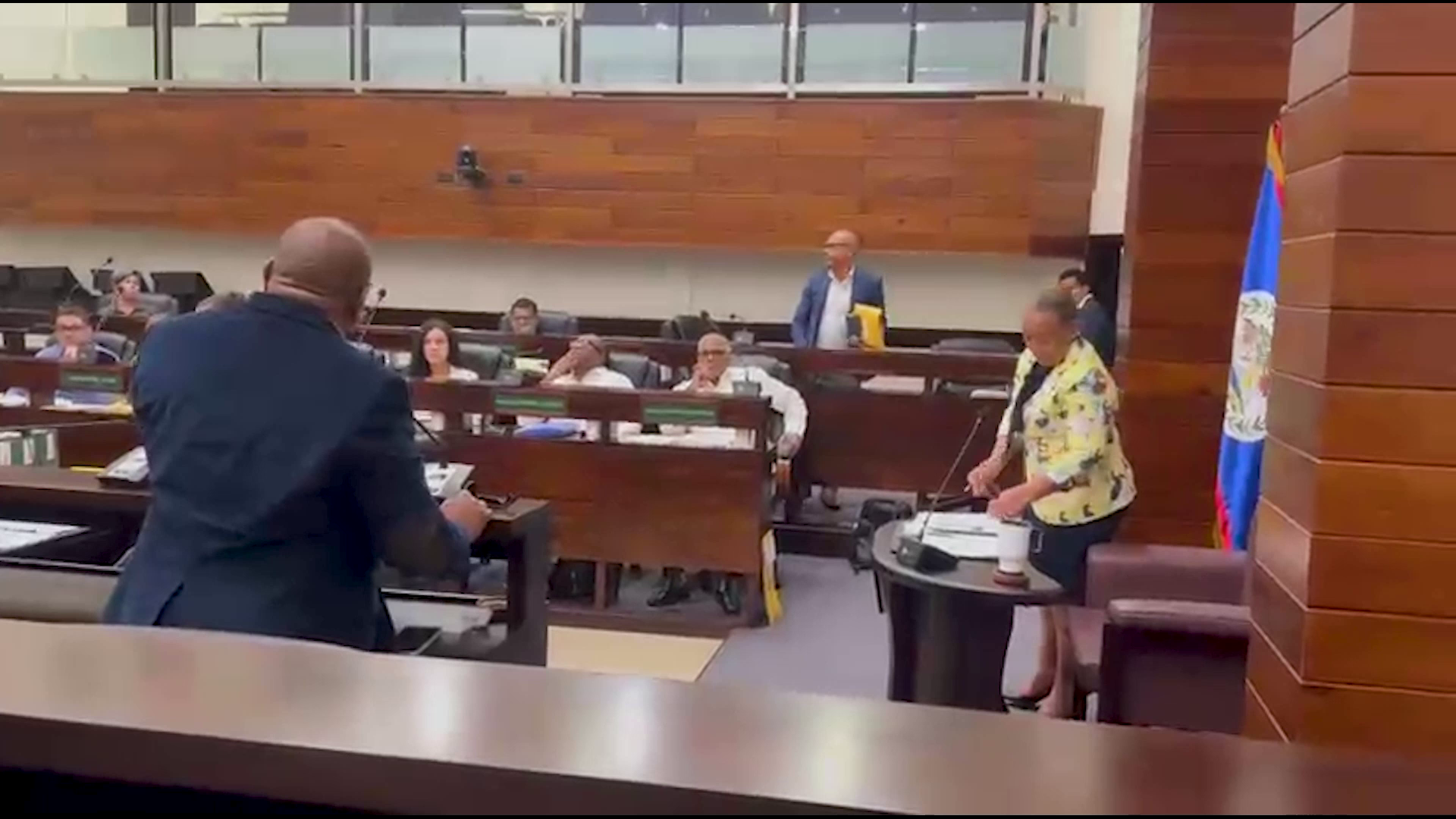
A controversial debate has erupted across Belize’s political landscape following a high-stakes split in the Senate this week, after independent Church Senator Louis Wade broke ranks with fellow opposition and independent lawmakers to remain in the National Assembly chamber during a mass walkout protesting the proposed BTL-Speednet acquisition. The walkout, organized to demonstrate opposition to the buyout that critics warn would recreate a telecommunications monopoly in the country, left Wade isolated and facing sharp backlash, with some detractors even labeling him a political sellout. But the veteran senator has stood firmly by his unprecedented decision, arguing that his choice to stay allowed him to advance a long-stalled piece of pro-worker legislation that has waited nearly two decades for a Senate vote.
In a public explanation of his decision, Wade emphasized that his primary obligation is to the Belizean people and the constituents he represents, not unified political protest tactics. The long-pending Occupational Safety and Health (OSH) Bill, which had already advanced through 22 amendments with 46 still pending, provided a critical reason to remain, he argued. “I do not believe personally that walking out of a meeting where we represent not ourselves, but the people, would have been the best strategy yesterday,” Wade stated. “I believe that independent senators and the opposition has the right to use whatever strategy they believe is necessary to capture the attention of the Belizean people and government. However, I also believe I have the right to use whatever strategy I believe best that represents the church properly and can still get the same message across.”
Wade made clear that he shares the widespread opposition to the BTL-Speednet deal, noting that the acquisition of Smart by BTL to form a new monopoly runs directly counter to the will of the Belizean people and undermines democratic market competition. “We have walked away from that [monopoly] and should never go back there,” he added. “So I felt it necessary to speak, rather than to walk out.”
Despite Wade’s clarifications, key business stakeholders have backed the decision of the business-aligned senator who joined the walkout, doubling down on the view that the threat of a new telecommunications monopoly demands immediate political pushback that outweighs the urgency of the OSH Bill. Giacomo Sanchez, president of the Belize Chamber of Commerce and Industry (BCCI), argued that the gravity of the BTL acquisition gives it higher priority than the decades-old safety legislation, which could withstand a short additional delay. “I think because of the gravity of the BTL acquisition, it ranks a bit higher in priority in terms of importance, at least at this point,” Sanchez explained. “The OSH Bill has been around for so long, we have been on pause for a while. So, we can pick up the pieces on that and ensure we get a good piece of legislation coming out of it.”
Sanchez added that the spontaneous walkout was a necessary, immediate response to the controversial deal, saying “a walkout just suggest, or at least strikes to the heart of the opposition we have to this overall transaction.”
In the end, the OSH Bill passed through the Senate on Tuesday without the votes of the six senators who participated in the walkout — three independents and three opposition lawmakers. The incident has ignited widespread public discussion over legislative priorities, protest tactics, and the risks of the proposed BTL-Speednet monopoly, with divisions remaining deep across political and business circles in the country.