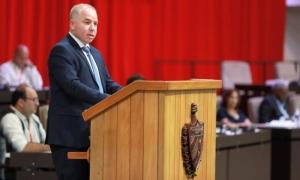
In a recent presentation to the Seventh Ordinary Session of the Tenth Legislature of Cuba’s National Assembly of People’s Power, Minister of Finance and Prices Vladimir Regueiro Ale delivered an updated assessment of the country’s 2026 state budget execution alongside the final settlement for the 2025 fiscal cycle, outlining both progress achieved and persistent challenges facing the nation’s fiscal framework. The core guiding principle of the country’s budgetary policy remains unchanged: protecting the social programs established by the Cuban Revolution while delivering on the macroeconomic stabilization targets laid out in the national Government Program.
Turning first to the 2026 mid-year performance, Regueiro Ale confirmed that early implementation of Law 181/2026, the 2026 State Budget Law, has produced better-than-projected results across several key economic indicators, though significant hurdles remain in the areas of tax collection, persistent tax evasion, and the timely execution of targeted public expenditure. A number of Cuban provinces have recorded particularly strong budget outcomes so far this year, including Pinar del Río, Artemisa, Havana, Mayabeque, Matanzas, Villa Clara and Camagüey, with most other regional territories on track to close out 2026 with positive fiscal balances.
Revenue collection to date has been primarily driven by broad-based tax compliance, but Regueiro Ale stressed the urgent need to more effectively mobilize resources that should be retained at the regional level to fund local development initiatives and underpin ongoing national economic and social transformation efforts. Strengthened fiscal control measures are already being rolled out across the country, the minister noted, but tax evasion and non-compliance remain major barriers to maximizing state revenue, requiring far more coordinated, decisive action from all responsible public institutions. Through the end of the first half of 2026, overall budget execution hit 93% of the projected amount for the period. Minor shortfalls are largely attributed to global and domestic supply chain disruptions that have delayed the delivery of goods for budgeted public activities, as well as missed targets for several government-supported economic plans, most notably in the agricultural procurement sector.
A large share of first-half 2026 budget resources has already been allocated to three core priority areas: financing strategic domestic economic activities, subsidizing residential electricity rates for Cuban households, and funding capital investments to restore national electricity generation capacity and other critical economic sectors. When preparing full-year 2026 projections, the Ministry of Finance incorporated the expected economic impact of recently approved national economic and social transformation policies, which are forecast to boost domestic goods and services marketing, revive agricultural output, and drive stronger budget revenue performance. At the same time, projections also account for increased fiscal pressure from two new policy measures: a partial salary increase for state-sector workers and a hike to the national minimum wage, both of which will contribute to a wider year-end fiscal deficit. Regueiro Ale confirmed that any necessary adjustments to the 2026 budget will be submitted to the National Assembly for approval in line with the requirements of Law 181/2026, as scheduled.
Shifting to the final 2025 budget settlement, Regueiro Ale reaffirmed that the year’s fiscal policy centered the same core priorities: protecting revolutionary social programs and meeting the government’s macroeconomic stabilization goals. The 2025 fiscal deficit closed at 67,642 million pesos, a result that beat official projections, driven by total revenues that came in 2% above target and total public spending that came in 2% below planned levels, demonstrating a new level of rigor in public financial management. Total gross revenue for 2025 reached 463,461 million pesos, with tax revenues accounting for 68.6% of all collected funds. The stronger-than-expected revenue performance was fueled by updated tax rates on fuel, cigarettes and tobacco products, as well as increased tax contributions from non-state sector economic actors, particularly from sales and profit taxes.
Even with this progress, the 2025 settlement report warns that persistent tax evasion and underreporting of income continue to erode the state’s ability to direct additional resources to high-priority social programs. Audits conducted by the National Tax Administration Office uncovered 12.056 billion pesos in outstanding unpaid tax debts in 2025, with 7.14 billion pesos successfully recovered, leaving 4.916 billion pesos still outstanding. The report also highlighted that a small share of taxpayers continue to underutilize mandated tax bank accounts, despite 98% of eligible taxpayers having activated these accounts as part of the national fiscal digitalization process.
In line with the government’s commitment to centered social spending, 64% of all 2025 public expenditure — totaling 518.543 billion pesos, 97.9% of the total annual budget allocation — went to four core social sectors: Public Health, Education, Social Assistance, and Social Security. More than 75 billion pesos was allocated to public health in 2025, funding more than 103 million primary care consultations, nine million specialist appointments, 23 million dental visits, over 825,000 hospital admissions, and supporting the procurement of essential medicines for the public health system. The education sector received 69.133 billion pesos, which supported a total national enrollment of 1.368 million students across all education levels, 266,198 university students, and funded critical infrastructure upgrades and learning environment improvement projects across the country. A further 11.845 billion pesos was allocated to cultural programs aimed at raising public cultural access and supporting accessible recreational activities, while 7.656 billion pesos went to the development of national sports and physical culture initiatives. For social protection, 2025 social assistance spending focused specifically on addressing the needs of vulnerable populations, including older adults, people living with disabilities, and low-income households, as a core tool to advance national social equity.
While acknowledging the significant progress made in both fiscal years, Regueiro Ale noted that persistent challenges remain: gaps in budgetary oversight, ongoing tax evasion, shortages of specialized economic and financial personnel, and unaddressed distortions in the relationship between state and non-state economic sectors. “Overcoming these limitations is imperative to enhance the intrinsic fiscal capacity of the Budget as a development tool,” the minister stated. Moving forward, he reaffirmed the government’s commitment to strengthening fiscal discipline, improving regulatory and control mechanisms, and increasing the efficiency of public spending as core components of the national economic and social transformation agenda. Closing his presentation, Regueiro Ale emphasized that the Cuban state budget will remain an essential foundational tool to drive inclusive economic development, guarantee the long-term sustainability of core social policies, and advance the construction of a more just and equitable socialist model for the Cuban people.