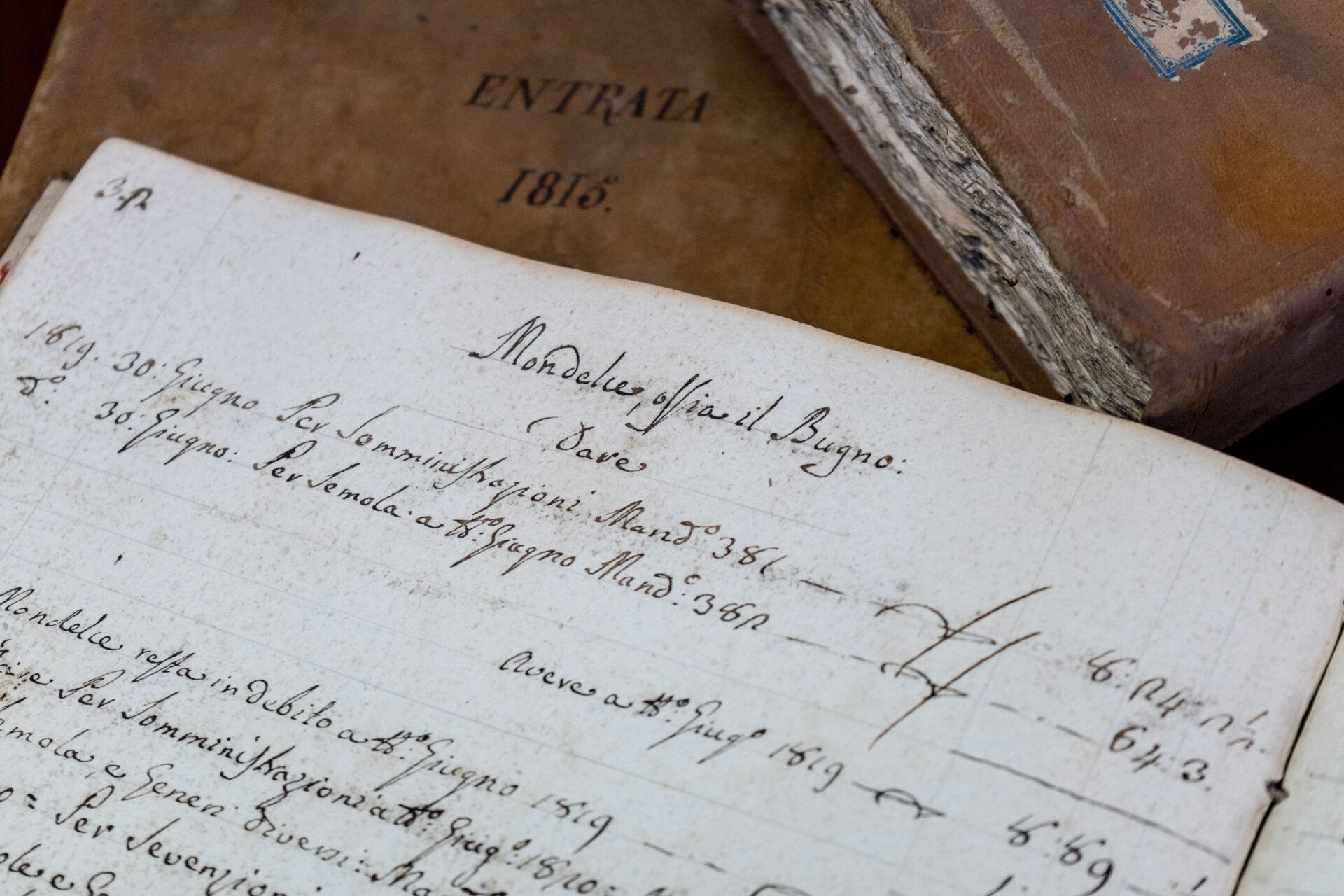
My first introduction to the transatlantic slave trade was not through a chronicle of human suffering, but through an academic deep dive into the history of global finance. As a PhD student tracking the development of modern financial systems from ancient civilizations to the modern era, I stumbled across the little-examined story of Hector Davis, a 19th-century slave trader operating out of Richmond, Virginia. In 1859 alone, Davis’s single auction house generated more than $2.67 million in sales of enslaved human beings – a sum that outstripped the total value of flour exported by Virginia that year, despite Richmond hosting two of the United States’ largest flour mills, and came almost equal to the value of the entire state’s tobacco exports.
Davis’s enterprise operated with the precision and structure of a modern commodity exchange. The *Richmond Enquirer* ran a daily column listing upcoming slave auctions, formatted exactly like the stock market listings that run in contemporary financial newspapers. On an October morning in 1857, Davis placed an advertisement for 15 enslaved people set to go under the hammer at 9:30 a.m., positioned directly between listings from two competing traders offering 10 and 12 people respectively. In his business directory listing, Davis promised to “exert best efforts to secure the highest market prices” for sellers, and even offered lodging for enslaved people waiting to be sold in his “secure and spacious holding jail” for 30 cents per day.
Like any professional broker, Davis distributed standardized price sheets to clients. In a May 1858 letter to a client in North Carolina, he quoted current market rates for enslaved people with the same precision a modern financial broker uses to quote bond prices: prime working men $1,200-$1,275; girls aged 12 to 15, $750-$1,000 “adjusted for size”; a young woman with her child, $1,000-$1,100. He even closed the pricing section with a market update, noting that the trade was “rather sluggish” at that moment. Combined, Richmond’s network of slave traders moved between 8,000 and 10,000 enslaved people through this formal exchange every year. When Davis died in 1863, his estate was appraised at $100,000, a massive fortune for the era.
My research also uncovered correspondence between slave traders that lays bare the normalized commodification of human life. A letter dated January 19, 1854, written by A. J. McElveen, a South Carolina-based purchasing agent for Charleston broker Ziba B. Oakes, offers a striking example. McElveen wrote that he had recently purchased an enslaved man named Isaac, who was trained as a carriage driver, painter, varnisher, and panel door carpenter. “He also plays the violin and other musical instruments exceptionally well,” McElveen noted, adding that Isaac was also a skilled cook. “He is a genius… I honestly think he is smarter than I am.”
McElveen went on to catalog Isaac’s physical attributes with the specificity of a livestock merchant: approximately 28 years old, five feet ten inches tall, weighing 150 to 160 pounds. He calculated that Isaac could be resold for $1,500, a tidy profit for the firm.
These surviving archival records deliver an unflinching, clear-eyed portrait of what Atlantic chattel slavery actually was. It was not merely an expression of racial hatred or cultural prejudice, though those existed to justify it. At its core, it was a large-scale formal industry, operated by professional businesspeople, financed by major banks, priced through open market mechanisms, insured by global underwriters, and accounted for down to the last penny. We need to confront the numerical reality of this system, because cold data cuts through the soft, distorted folk memory that has often obscured slavery’s true scale and nature.
Over the course of roughly 350 years, an estimated 12.5 million African people were forcibly loaded onto transatlantic slave ships, and only 10.7 million survived the deadly Middle Passage crossing. One fact that surprises most people raised on popular American cultural narratives is just how few of those survivors arrived in what would become the United States: fewer than 4% of the total, equal to roughly 389,000 people. Brazil absorbed close to 5 million enslaved people, while the Caribbean received more than 4 million. Jamaica alone took in roughly 1 million.
In the 17th century, Barbados was the economic engine of the entire British slave enterprise. Contrary to common popular framing, the geographic center of gravity of Atlantic slavery was not the American South – it was the Caribbean.
The divergent demand for enslaved labor between the Caribbean/Brazil and the American South can be traced directly to two starkly different business models, based on brutal, unemotional arithmetic. The formula was simple: sugar production killed. On the plantations of Jamaica and Saint-Domingue, annual death rates consistently outpaced birth rates, a built-in structural feature of the industry. Saint-Domingue imported roughly 800,000 African people over its history, but when the Haitian Revolution began in 1791, the colony only held about 500,000 enslaved people – the rest had been worked to death. Planters explicitly calculated the costs: it was cheaper to work an enslaved person to death and purchase a replacement than it was to provide adequate food, rest, and care to sustain a long working life. Enslaved people were formally recorded on plantation books as depreciating capital equipment, expected to lose value over time until they were entirely consumed.
The United States developed a second, equally monstrous model. Starting from that initial base of 389,000 imported enslaved people, the enslaved population grew through natural birth to nearly 4 million by 1860. This was the only major slaveholding society in the hemisphere where natural growth replaced ongoing importation, creating a system rooted in human beings as appreciating capital: children were a source of future yield. When the cotton boom opened new lands in the Deep South, more than 1 million enslaved people were sold and force-marched south from Virginia and Maryland in a domestic second Middle Passage, with Hector Davis’s Richmond auction house serving as one of the primary hubs for this trade.
Around this singular asset class grew the entire edifice of 19th-century American capital. By 1860, the total assessed value of enslaved people in the United States hit $3.5 billion, exceeding the combined value of all the nation’s railroads and factories. Enslaved people were the young republic’s largest single asset class. Cotton made up more than 60% of all U.S. exports by value. In Louisiana, enslaved people were used as collateral for the majority of mortgage lending by value: planters borrowed against the lives of enslaved people exactly as modern homeowners borrow against their property. Global underwriters insured all slave-related cargoes. When the crew of the British ship Zong threw 132 living enslaved Africans overboard in 1781 to preserve the ship’s water supply, the subsequent court case was not a murder trial – it was an insurance dispute, *Gregson v Gilbert*, where claimants sought 30 pounds per person compensation, argued before England’s highest commercial court.
Even when the institution of slavery was formally abolished, the financial system settled its accounts in favor of the former slave owners. Britain’s 1833 Slavery Abolition Act allocated 20 million pounds (equal to roughly 40% of the British government’s entire annual budget at the time) in compensation to 46,000 enslavers for the loss of their human property. Enslaved people who had gained their freedom received no compensation at all – instead, they were forced to work another four years of unpaid “apprenticeship” for their former owners. The government debt issued to fund these compensation payments was only fully paid off in 2015, within the lifetime of every adult alive today reading this analysis.
Surviving archival records list every claimant, estate by estate, across what is now the CARICOM bloc. Starting in Barbados, where the modern sugar plantation system was first developed: on May 16, 1836, the owners of Drax Hall estate, which has remained in the same family since the 1640s to the present day, received 4,293 pounds, 12 shillings, and sixpence in compensation for 189 enslaved people. Barbados as a whole received 1.7 million pounds for 82,807 people. In British Guiana, compensation payouts were even larger, as newer plantations held younger enslaved populations that commanded higher market prices. Commissioners paid roughly 50 pounds per person in British Guiana, compared to just 20 pounds per person in soil-exhausted Jamaica.
Location dictated price, exactly as it does for any other commercial asset. The Anna Regina estate on the Essequibo coast collected 40,353 pounds for 805 people, with the payout processed through the London banking house of Bevan, Barclay and Tritton – even compensation required the services of the financial sector. The single largest claimant in the Caribbean was John Gladstone of Liverpool, who received 106,769 pounds across nine claims for 2,508 enslaved people held in Demerara and Jamaica, including the Success estate where the major 1823 slave rebellion broke out. His son William later served four terms as Prime Minister of the United Kingdom. In Jamaica, Gladstone also appears as a mortgagee on the Holland estate in St Elizabeth, collecting 5,624 pounds in compensation for 300 enslaved people pledged as collateral against a loan. While the people who had been held as collateral gained their freedom, the lender was made entirely whole.
Antigua, the only British colony that freed enslaved people immediately without the transitional apprenticeship system, still paid full compensation to former enslavers. The Pares estate received 2,551 pounds for 170 people. In St Vincent, the Grand Sable estate claimed 17,753 pounds, five shillings, and seven pence for 704 people, meaning each person was valued at just under 25 pounds on the compensation rolls – and every name on that list is somebody’s ancestor.
We are approaching Emancipation Day, a holiday that marks the formal abolition of chattel slavery. This year, let us not only celebrate the joy of liberation. Let us also confront the cold, unyielding financial reality that made abolition a transaction that enriched enslavers at the expense of the people they had enslaved. The debt from that original compensation payout was not settled in 1834, or in 1865 – it was paid off within our own lifetimes. The formal ledgers are closed, and the official accounts are balanced, but the work of historical reckoning belongs to us.
Tomorrow, Part 3: The Business of the Plantation.
This article is written by Professor C. Justin Robinson, Pro Vice-Chancellor and Principal of The UWI Five Islands Campus.