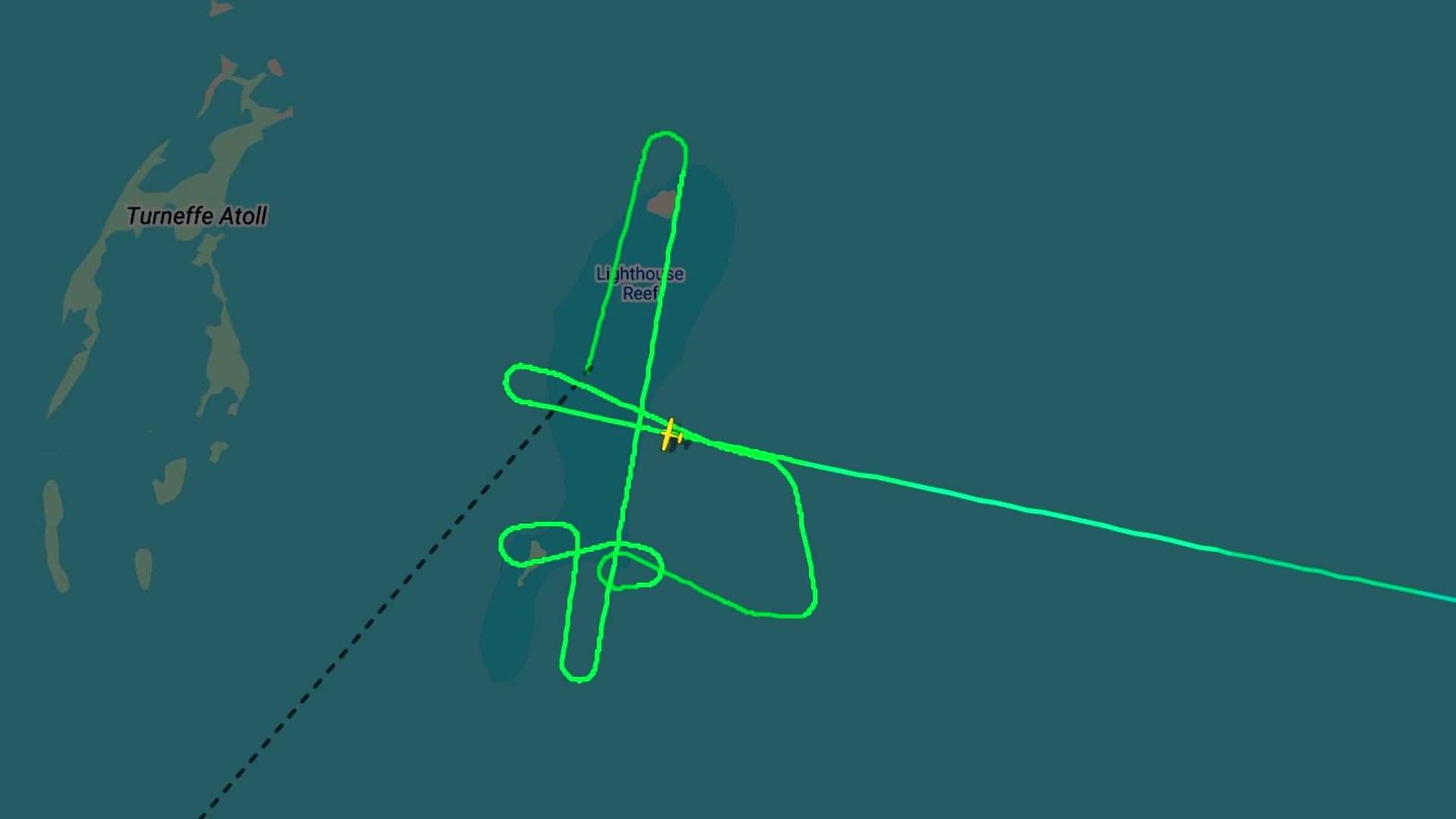
A diplomatic and security crisis is unfolding in Central America after an unauthorized Guatemalan military aircraft spent more than an hour traversing Belize’s sovereign airspace on a Thursday night in September 2026, leaving Belizean officials probing the incident’s purpose and raising uncomfortable questions about the small nation’s ability to defend its airspace against its larger neighbor’s far more powerful air forces.
Belizean military units were able to track the incursion and collect actionable intelligence on the aircraft’s movements as it crossed into their territory, but no air-based response was ever launched. This passive reaction has fueled public debate across the country, with many citizens questioning whether Belize possesses the critical military resources required to safeguard its skies from unwanted incursions by Guatemala, which maintains a vastly superior air capability.
Addressing public concerns, Francis Usher, CEO of Belize’s Ministry of Foreign Affairs, confirmed that authorities have launched full investigations into the incursion and have pre-planned response protocols for different security scenarios. “We do, quite often what we call war gaming, which is when we look at various different scenarios, what could occur and what are our responses, the most likely, the most dangerous,” Usher explained in an interview, noting that the government maintains multiple response options for such events while declining to share sensitive operational details to protect national security.
To date, Guatemala has not offered any clear explanation for why its military aircraft entered Belizean airspace, leaving Belizean officials to consider a range of potential motives. One key working theory is that the incursion was a deliberate attempt to disrupt ongoing bilateral cooperation between the two nations, which is mediated through the Organization of American States (OAS).
The incident comes at a particularly sensitive moment in the long-running territorial dispute between Belize and Guatemala. Both countries are currently preparing for oral hearings before the International Court of Justice (ICJ), scheduled to take place between February and March 2027, that will deliver a final resolution to their decades-long border conflict. Additionally, Guatemala is set to hold national general elections between June and August 2027, a period that typically sees a rise in nationalist rhetoric on both sides of the shared border.
Oscar Arnold, another CEO at Belize’s Ministry of Foreign Affairs, outlined the government’s formal response to the incursion, confirming that Belize has already sent a strongly worded diplomatic protest note to Guatemala demanding a full explanation, with further escalatory steps planned if answers are not forthcoming. Arnold emphasized that the government views the incident not as an isolated event, but as part of a broader pattern of rising tensions in the lead-up to the ICJ hearings and Guatemalan elections.
“There may be individuals who want to derail the project we have with the OAS and the ICJ and we are nearing a resolution of this dispute,” Arnold noted, adding that “in so far as the Government of Belize, the Ministry of Defense, the Ministry of Foreign Affairs, we have to act responsibly and we will always act with the facts that we have available to us. We cannot be derailed. We will not be discouraged or distracted, in so far as presenting the evidence we have.” Arnold also confirmed that Belizean officials are currently at the United Nations, where they are holding consultations with allied nations about the incident.
Arnold pointed to a recent statement from the Commonwealth that condemned earlier September 10 activities by Guatemalan Armed Forces in the Sarstoon River border region as proof that Belize retains broad international support for its position in the ongoing territorial dispute. Despite the rising tensions, Belizean officials have reaffirmed their commitment to moving forward with the ICJ process to reach a peaceful, binding resolution to the conflict.