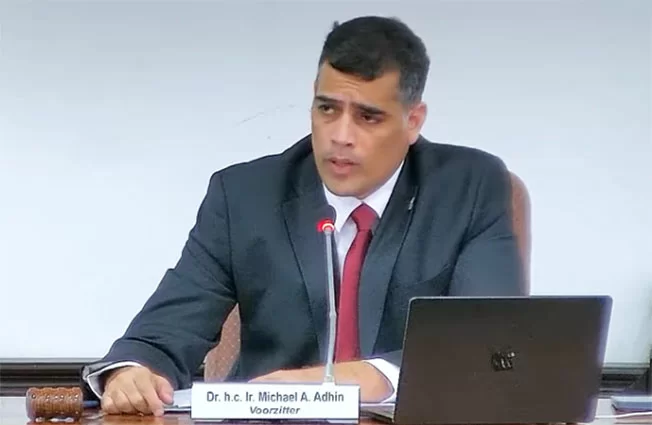
PARAMARIBO, Suriname – July 29 – The National Assembly of Suriname (DNA) has announced a postponement of further deliberations on a draft law to ratify a landmark border protocol between Suriname and France, bowing to longstanding calls from Indigenous traditional authorities for meaningful input on an agreement that directly shapes their ancestral territories.
National Assembly Speaker Ashwin Adhin confirmed the delay Tuesday, explaining that the decision was made to give traditional Indigenous leadership space to deliver their formal positions on the protocol during two upcoming community consultative assemblies, known locally as *krutu*. The Aukaner people’s granman (paramount chief) will host the first consultation, the Liba-Krutu, this Sunday on Stoelmanseiland, while the Paramaccaan people will hold their own community gathering this Saturday in Langa Tabiki. Legislative deliberations will not resume until after both events conclude, with a new official notice convening the debate to be issued at a later date.
“Out of respect for traditional authority, we have made the decision to delay deliberations until after these community consultations,” Adhin told members at the opening of this week’s public sitting.
The agreement in question formalizes the official border between Suriname and French Guiana (an overseas department of France) along the Marowijne and Lawa Rivers, updating a century-old border treaty first signed in Paris on September 30, 1915. Beyond clarifying territorial boundaries, the protocol also establishes frameworks for joint management of the two transboundary rivers and plans for cooperative economic and infrastructure development across the border region. The draft ratification law has been before Suriname’s parliament since December 2021, with public deliberations first launching in November of last year.
Adhin pushed back against any suggestions that the legislature had stalled progress on the file, noting that extensive pre-consultation work has already been completed over recent months. All relevant stakeholder groups have already been heard by parliamentary committees, and the Ministry of Foreign Affairs, International Business and International Cooperation has conducted its own series of cross-sector consultations. Just weeks ago, a parliamentary delegation met directly with the Aukaner granman to discuss core community priorities, with a key focus on preserving the right of free movement for Indigenous residents living on both banks of the border rivers.
Traditional leaders from the Marowijne-Lawa border region have for years demanded formal inclusion in the protocol’s ratification and implementation process, arguing that the agreement’s terms will have direct, long-term impacts on their communities’ livelihoods, land access, and cultural heritage on both sides of the waterway. Adhin emphasized that the delayed legislative timeline creates the necessary space to resolve the issue “in a peaceful manner and in harmony” with all affected communities. Once the two krutu have concluded and traditional leadership have shared their formal positions, the National Assembly will restart its deliberation process on the draft ratification law.